EU Launches Ambitious Bid for AI Dominance with €30 Billion Gigafactory Plan
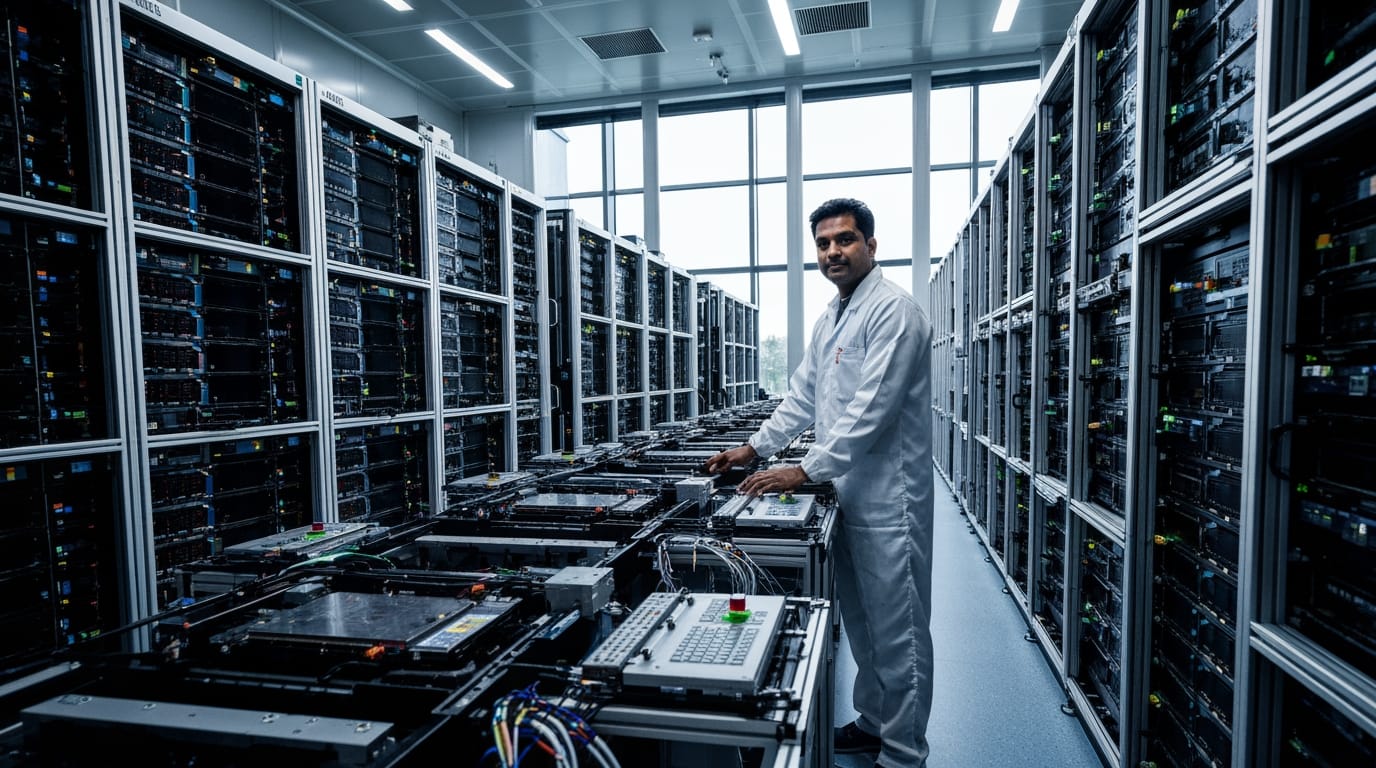
BRUSSELS – The European Union has unveiled an ambitious initiative to establish up to seven "AI Gigafactories" across the continent, committing over €30 billion in combined public and private investment. This monumental undertaking aims to significantly bolster Europe's computing power, cultivate domestic artificial intelligence capabilities, and crucially, reduce the bloc's reliance on foreign technological infrastructure, particularly from the United States and China. The move signals a decisive push by the EU to secure its digital sovereignty and position itself as a global leader in the rapidly evolving AI landscape.
The Vision for a Self-Reliant "AI Continent"
At the heart of the EU's strategy is the concept of technological sovereignty, a drive to ensure Europe can develop and deploy advanced technologies on its own terms and according to its own values. The newly envisioned AI Gigafactories are central to this objective, defined as advanced, large-scale facilities capable of managing the entire lifecycle of very large AI models and applications, from initial development to large-scale inference within a single, integrated site. These facilities are designed to combine AI-optimized computing power with over 100,000 accelerator chips, robust data centers for high-capacity storage and networking, secure data spaces, and the extensive power and cooling infrastructure necessary to sustain such operations. These gigafactories are projected to be approximately four times more powerful than any data centers currently operating within the EU.
The initiative is a cornerstone of the EU's broader "AI Continent" agenda, driven by the recognition that access to vast, sovereign computing power is a strategic necessity. European officials emphasize that the development of AI technologies within these facilities will adhere strictly to EU standards concerning data protection, safety, security, and ethics, distinguishing Europe's approach from other global players. This emphasis aims to foster a trustworthy AI ecosystem that aligns with the bloc's foundational principles.
Mobilizing Billions for Next-Generation AI Infrastructure
To bring the AI Gigafactories to fruition, the European Union plans to inject up to €10 billion in public funding from both EU and national sources. This public investment is strategically designed to attract at least an additional €20 billion in private capital, bringing the total estimated investment to more than €30 billion. The financing model for these projects is structured to encourage significant private sector participation, with the Union's contribution covering up to 17% of the capital expenditure for each gigafactory's computing infrastructure, requiring participating Member States to at least match this contribution, and consortia to cover the remaining investment and operational costs.
The European Commission has recently launched a call for tenders, inviting consortia comprising companies, public entities, and investors to bid for the establishment of these cutting-edge facilities. The plan outlines support for up to seven gigafactories, categorized into two lots: four smaller facilities, each equipped with at least 75,000 AI chips and eligible for up to €500 million in public funding, and three larger gigafactories, each requiring a minimum of 100,000 AI chips and qualifying for up to €1 billion in public support. While an informal call for expressions of interest in mid-2025 garnered 76 submissions covering 60 sites across 16 EU Member States, the successful bidders are expected to be announced in early 2027. These new facilities will significantly expand upon Europe's existing network of 19 "AI Factories," which currently provide shared access to AI-optimized supercomputing for startups, small and medium-sized businesses, and researchers.
Integrating Across Europe's Digital Strategy
The AI Gigafactories are more than standalone data centers; they represent an integrated component of a broader, cohesive strategy to strengthen Europe's digital infrastructure and reduce external dependencies. Each gigafactory is envisioned as a comprehensive AI computing environment, featuring advanced data centers, high-capacity storage, ultra-fast networks, secure cloud access, and specialized AI support services.
This initiative is closely coordinated with other critical European legislative efforts. The Cloud and AI Development Act (CADA) aims to enhance Europe's cloud and AI ecosystem, with a goal of tripling the EU's data center capacity within the next five to seven years. CADA seeks to streamline permitting processes, improve access to essential resources like energy and land, and ensure sufficient computing capacity for AI and data-intensive applications. Furthermore, the gigafactories are expected to act as a powerful catalyst for the European semiconductor ecosystem. By creating a predictable and substantial demand for high-end computing components, the initiative aims to stimulate the domestic design and eventual manufacturing of indigenous EU AI processors, contributing to a full-stack technological sovereignty. This ambition is also tied to proposed revisions in the EU's Chips Act, which seeks to bolster Europe's role in global semiconductor production.
Navigating the Challenges Ahead
Despite the ambitious vision and substantial investment, the path to realizing Europe's AI gigafactory aspirations is not without its challenges. One immediate hurdle lies in the current global supply chain for advanced semiconductors. The gigafactories will initially rely heavily on advanced processors designed by non-European companies, such as Nvidia, AMD, and Qualcomm, and predominantly manufactured in Asia. The European Commission has acknowledged this reality, signing letters of intent with these U.S. chipmakers to ensure access to necessary hardware.
Moreover, the operational costs of these massive facilities present a significant consideration. Electricity costs in the EU can be substantially higher than in regions like the U.S. and China, potentially impacting the long-term economic viability and competitiveness of these energy-intensive operations. Attracting the required private investment, despite the public funding incentives, and cultivating a robust talent pool capable of developing and managing such complex AI infrastructure will also be critical for the initiative's success. Some critics also suggest that focusing solely on manufacturing chips without simultaneously boosting domestic demand for AI applications could lead to an outflow of European-subsidized products, undermining the goal of sovereignty.
In conclusion, the European Union's investment in AI Gigafactories represents a pivotal moment in its strategy to establish technological independence and solidify its position in the global AI race. By creating state-of-the-art computing infrastructure, fostering a domestic AI ecosystem rooted in European values, and strategically integrating these efforts with broader digital policies, the EU aims to shape its own future in the artificial intelligence era. The success of this multi-billion euro endeavor will hinge on its ability to overcome significant technological, economic, and logistical hurdles, ultimately determining Europe's standing in the next wave of global innovation.


