EU Leaders Grapple with Dual Crises: Iran and Ukraine Dominate Cyprus Summit
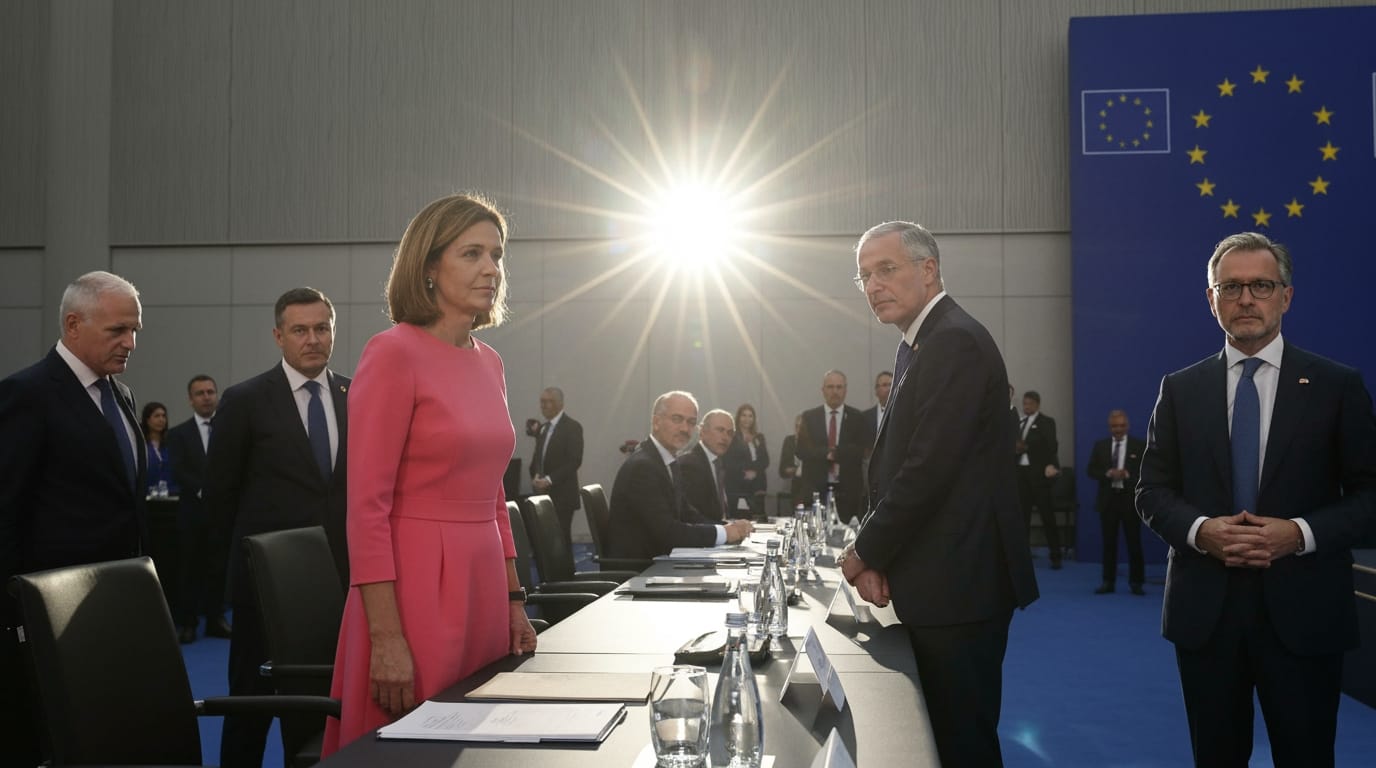
NICOSIA, Cyprus – European Union leaders convened an informal summit in Cyprus this week, facing a complex and increasingly volatile geopolitical landscape marked by escalating tensions in the Middle East and the protracted conflict in Ukraine. The two-day gathering, unprecedented in its location and critical agenda, aimed to forge a unified European response to these pressing challenges, which threaten to reshape global stability and impact the economic well-being of the bloc's 450 million citizens. Hosted by Cypriot President Nikos Christodoulides and chaired by European Council President António Costa, the summit underscored the urgent need for strategic coordination amidst a "worsening geopolitical situation" surrounding Iran and the ongoing imperative of supporting Ukraine.
Geopolitical Storm: Cyprus Hosts Critical EU Summit
The picturesque backdrop of Cyprus, hosting its first-ever EU leaders' summit, belied the gravity of the discussions underway. From April 23-24, heads of state and government grappled with simultaneous crises, acknowledging Europe's vulnerability to global upheavals. A significant highlight of the summit was the in-person attendance of Ukrainian President Volodymyr Zelenskyy, a late change from a planned video address, signaling the depth of EU commitment to Kyiv and the urgency of its needs. His presence, alongside French President Emmanuel Macron's historic first official visit to the island, reinforced the high stakes of the meeting, which extended beyond immediate crisis management to include the initial political debate on the EU's next long-term budget for 2028-2034. The gathering itself, with nearly all 27 leaders present, projected a message of European unity and resolve in the face of daunting external pressures.
Navigating the Middle East Labyrinth: Iran and Regional Stability
At the forefront of discussions was the "worsening geopolitical situation" centered around Iran and the broader Middle East. Leaders focused on Europe's role in de-escalation, acknowledging the profound impact on energy prices, shipping, and regional stability. The ongoing blockade of the Strait of Hormuz, a critical choke point for roughly a fifth of the world's oil and gas supplies, underscored Europe's deep-seated dependency on imported fossil fuels and the economic ramifications of regional conflict.
The EU's position emphasized diplomatic solutions, with members explicitly rejecting direct involvement in the Iran war that followed recent military strikes by the United States and Israel. French President Emmanuel Macron notably urged Israel to "renounce its territorial ambitions" in its parallel conflict in Lebanon, highlighting a concerted effort to foster de-escalation across multiple fronts. Discussions also touched upon ongoing negotiations between Washington and Tehran, with Iran reportedly demanding the inclusion of Lebanon in any ceasefire as a prerequisite for peace talks. The urgent need to restore freedom of navigation in the Strait of Hormuz was deemed "of paramount importance" by European Commission President Ursula von der Leyen, reflecting the substantial economic strain already felt across the EU due to higher energy costs since the escalation of the Middle East conflict.
Sustaining Solidarity: The Ukraine Imperative
The ongoing war in Ukraine remained a central pillar of the summit's agenda, with EU leaders reaffirming their unwavering support for Kyiv. President Zelenskyy's physical presence served as a potent reminder of the conflict's continued intensity and the human cost. His visit followed a crucial agreement by EU member states' permanent representatives (Coreper) to grant Ukraine a significant €90 billion loan, a testament to the bloc's sustained financial commitment. This substantial aid package underscores the EU's determination to ensure Ukraine's resilience and capacity to defend itself, even as other global crises demand attention. The discussions implicitly recognized that the "no end in sight yet for the Ukraine crisis" continues to exert pressure on European economies and security frameworks.
Energy Security and Economic Resilience
The intertwined nature of geopolitical tensions and economic stability was acutely felt in discussions concerning energy security. High energy costs, exacerbated by the Middle East conflict and the Strait of Hormuz blockade, dominated much of the dialogue. Europe's reliance on imported fossil fuels has led to significant financial outlays, with the EU spending an additional €24 billion on energy imports due to higher prices since the recent escalation in the Middle East.
In response to this vulnerability, the European Commission proposed a comprehensive "AccelerateEU" package. This initiative aims to protect European households and industries from the volatility of energy markets while simultaneously accelerating the transition to clean, homegrown energy sources. The measures include both short-term interventions and structural reforms designed to strengthen Europe's resilience through electrification and reduced dependence on external fossil fuel supplies. Furthermore, the summit initiated the critical "opening political debate" on the EU's Multiannual Financial Framework (MFF) for 2028-2034. This long-term budget framework will regulate future EU spending, focusing on competitiveness, security, defense, and continued support for Ukraine, aiming to equip the Union for future challenges.
Eastern Mediterranean Diplomacy and the Path Forward
Beyond the immediate crises, the Cyprus summit also featured a significant regional diplomatic component. On the second day, EU leaders were joined by key regional partners from the Middle East, including representatives from Egypt, Jordan, Lebanon, and Syria, for an informal working lunch. This external-facing session aimed to foster dialogue on shared challenges and explore potential areas of cooperation, recognizing the Eastern Mediterranean's pivotal role in broader geopolitical stability.
Discussions also touched upon the practical application of Article 42(7) of the Treaty on European Union, the bloc's mutual defense clause. Cyprus, having invoked the clause following a drone incident in March, actively pushed for a clearer operational plan for its implementation and its interaction with NATO's Article 5 for dual-member states. This focus highlights the EU's evolving security architecture and its readiness to respond to diverse security threats. The summit's collective efforts sought to provide "political guidance" for navigating a world increasingly defined by simultaneous shocks and to consolidate a unified European stance on critical global issues.
Conclusion
The informal EU summit in Cyprus served as a crucial forum for European leaders to confront a confluence of urgent global crises. From the volatile situation in the Middle East, particularly concerning Iran and energy security, to the enduring conflict in Ukraine, the discussions underscored the intricate challenges facing the bloc. The summit's emphasis on both immediate crisis management and long-term strategic planning, including the next EU budget and energy independence initiatives, showcased a concerted effort to fortify Europe's resilience and influence on the world stage. As leaders departed, the shared understanding was that navigating these complex geopolitical storms will require sustained unity, diplomatic ingenuity, and a robust commitment to European values and interests.


