Exiled Iranian Prince Reza Pahlavi Calls for Regime Change from Berlin, Urging European Action
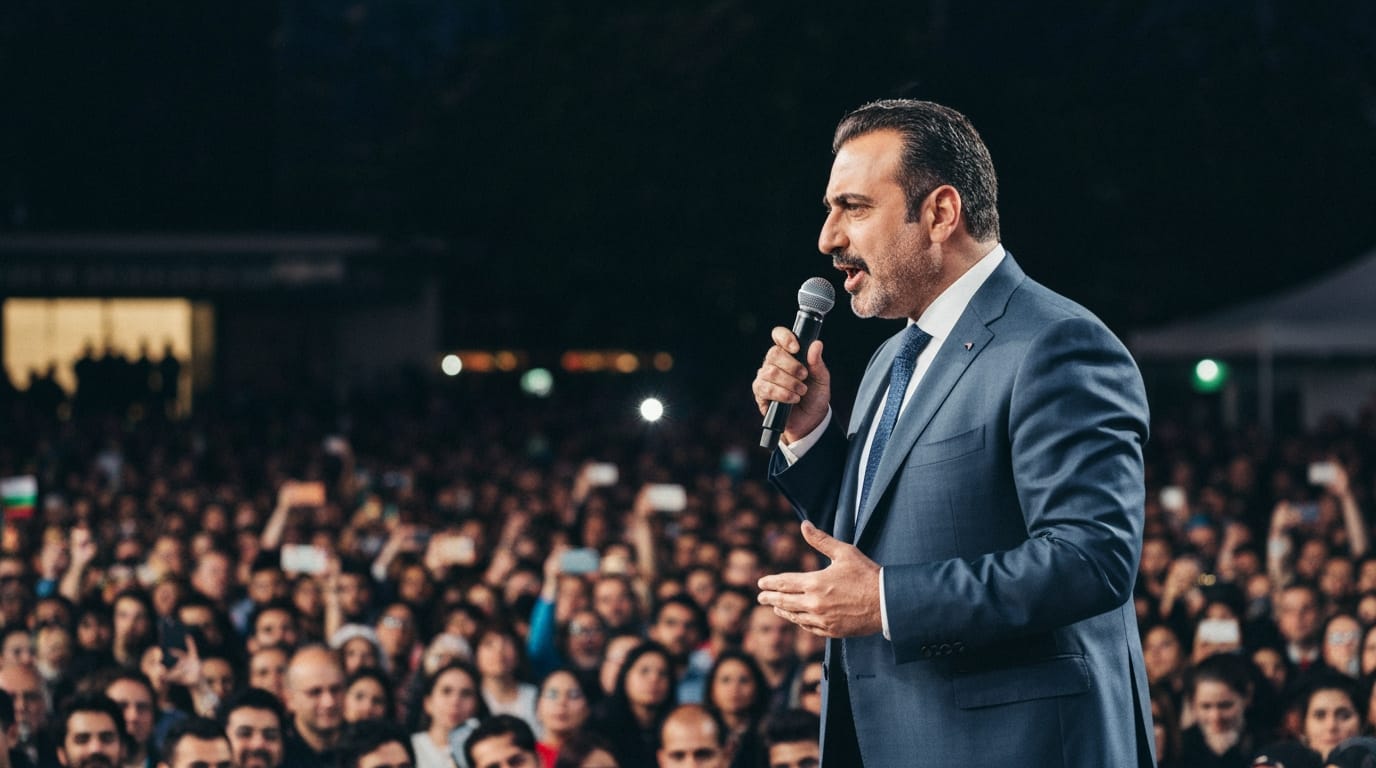
Berlin, Germany – Exiled Iranian Crown Prince Reza Pahlavi recently delivered a potent call for fundamental change in Iran during his visit to Berlin, likening the current political climate to a "Berlin Wall moment" and urging European governments to abandon what he described as a policy of appeasement toward the Islamic Republic. His remarks, made during a press conference and meetings with German lawmakers, underscored a growing push for a democratic transition in Iran amid escalating internal dissent and regional tensions.
Pahlavi, a leading figure in the Iranian opposition, presented a stark vision of a nation at a crossroads, contending that the Iranian regime is "crumbling" under the weight of repression and international isolation. He maintained that the time has come for the international community, particularly Europe, to actively support the Iranian people's aspirations for a free and democratic future.
Pahlavi's Urgent Plea for a Democratic Transition
During his April 23 visit to the German capital, Reza Pahlavi engaged with members of the Bundestag's Foreign Affairs Committee and addressed the press at the Haus der Bundespressekonferenz. His central message revolved around the necessity of a regime change in Iran, advocating for a peaceful, democratic, and secular system to replace the current Islamic Republic. Pahlavi articulated his belief that the regime's foundations are "cracking" and that a united Iranian nation is demanding change.
He specifically criticized the European Union's perceived "mixed signals" and reluctance to take a stronger stance against Tehran, asserting that neutrality in such a critical period risks sliding into "complicity." Pahlavi argued that European governments have allowed themselves to be "blackmailed" by the Iranian authorities through tactics such as hostage-taking. He called for a shift in European policy, demanding the expulsion of Iranian ambassadors, a refusal to legitimize any political structures centered on the Islamic Revolutionary Guard Corps (IRGC), and a readiness to recognize a future transitional authority in Iran. As preconditions for any future negotiations, Pahlavi insisted that Tehran must halt executions, release political prisoners, and lift restrictions on internet access, stating that a regime unable to meet these basic demands cannot be trusted.
Context of Intensifying Dissent and Regional Unrest
Pahlavi's visit to Berlin occurred amidst a backdrop of significant internal upheaval within Iran and heightened geopolitical tensions in the wider Middle East. Recent US airstrikes on Iranian nuclear sites preceded his remarks, though Pahlavi emphasized that the primary conflict was not external but rather "the regime's war against the nation." He dismissed the effectiveness of a temporary US-Iran ceasefire, pointing to ongoing executions of political prisoners and teenagers, as well as continued internet blackouts, as evidence that the "war on the Iranian people has never stopped."
The Crown Prince painted a grim picture of human rights abuses, citing reports of numerous executions and death sentences linked to anti-government protests. He also noted the disappearance and deaths of young detainees, whose families often face uncertainty and evidence of severe mistreatment. These internal pressures, Pahlavi suggested, indicate a regime in decline, weakened by years of repression and isolation, and facing a population increasingly unified in its demand for fundamental change.
A Vision for a Free Iran and the Role of the Diaspora
Pahlavi, as the son of the last Shah of Iran, Mohammad Reza Pahlavi, has consistently positioned himself as a leading voice for a secular and democratic Iran. He outlined a vision for a future Iran that would act as a stabilizing force in the region rather than a source of instability. He characterized Iran's current negotiators as merely "different faces of the same machine" that suppresses the Iranian people, underscoring his belief that no deal or negotiation with the current leadership would resolve the fundamental issues.
The Iranian diaspora also formed a crucial part of Pahlavi's outreach. He called for unity among exiles and professionals across various sectors to support a coordinated transition. To this end, he announced plans for a National Unity Summit to bring together key figures from business, civil society, academia, and political groups. Pahlavi also directly appealed to members of Iran's armed forces and police, presenting them with an opportunity to disassociate from the regime and align with the people, while warning of future accountability for those who remain loyal to the current system. He has expressed his intention to return to Iran as soon as conditions permit, even before a full regime change occurs, believing his presence could encourage defections.
International Engagement and Prospects for Change
Pahlavi's Berlin visit is part of a broader international campaign to garner support for his vision, building on previous engagements in Paris and an invitation to the Munich Security Conference earlier in the year. His persistent appeals to Western nations highlight a strategic effort to shift international policy from what he perceives as appeasement to active support for democratic forces. He views the global situation as one demanding decisive action, where the choice for Europe is "between a dying regime that endangers us all and a free Iran that can become a partner for stability."
The urgency in Pahlavi's message reflects his assessment that the "final call" for mass demonstrations against the regime is drawing nearer. He has stated his conviction that the current system will inevitably disappear, with the Iranian people ultimately prevailing to rebuild and prosper.
The Berlin visit by Reza Pahlavi serves as a significant moment, crystallizing the opposition's arguments for regime change and placing a direct challenge before European leaders. His calls for an end to appeasement and robust international support for a democratic transition underscore the profound internal and external pressures facing Iran. As the situation evolves, the global community watches closely to see how these appeals will resonate and whether they will usher in the "Berlin Wall moment" that Pahlavi envisions for Iran's future.


