EU Leaders Grapple with Geopolitical Storms, Vow Steadfast Support for Ukraine
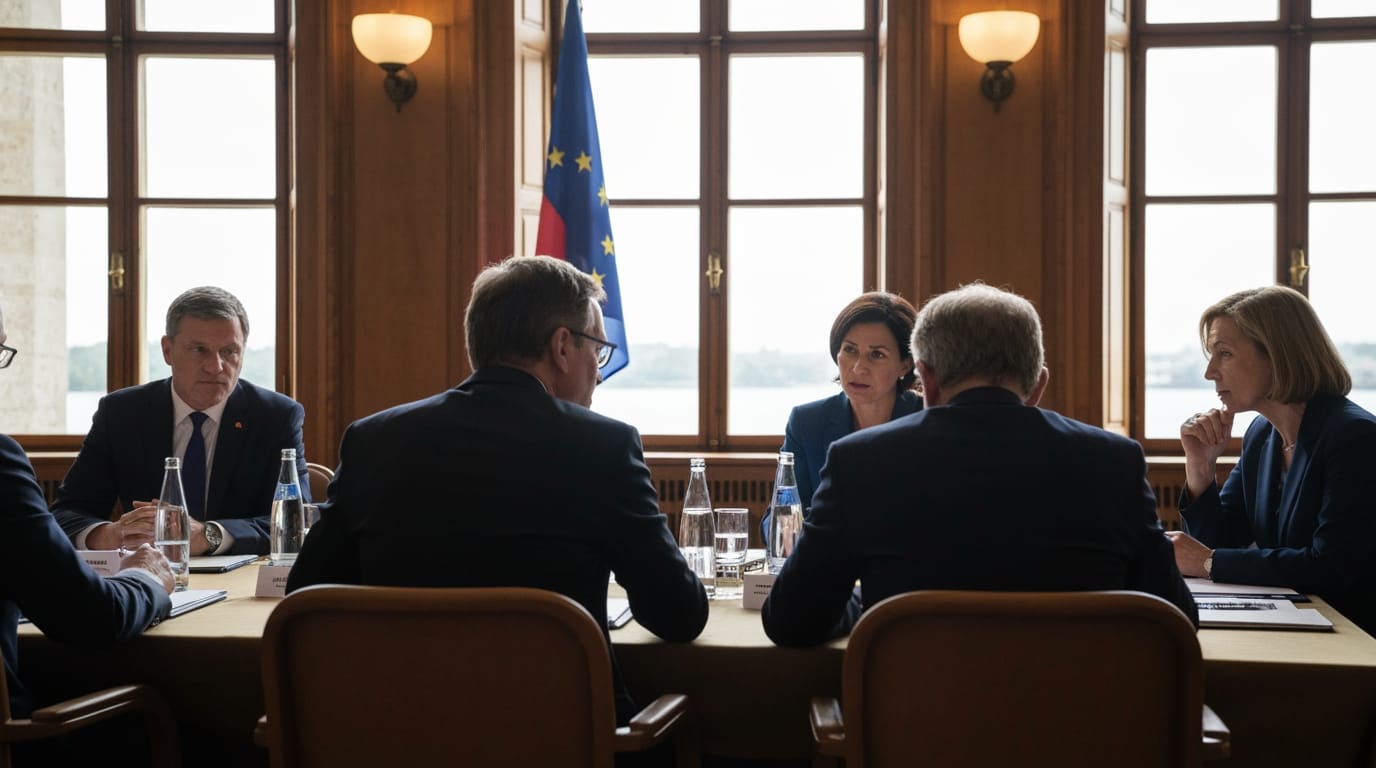
BRUSSELS — European Union leaders convened in Brussels on June 18-19, 2026, for a critical summit addressing a complex agenda dominated by Russia's ongoing war against Ukraine, pressing global economic challenges, and escalating regional crises. The high-stakes meeting, attended by Ukrainian President Volodymyr Zelenskyy, aimed to solidify the bloc's unwavering commitment to Kyiv while navigating a turbulent international landscape. A notable development at this summit was the renewed unity among the 27 member states regarding support for Ukraine, a consensus facilitated by a recent change in Hungary's leadership.
The European Council's discussions underscored the multifaceted pressures facing the Union, ranging from geopolitical instability and economic competition to internal cohesion and long-term strategic planning. Leaders sought to translate broad political commitments into concrete actions, emphasizing the need for robust defense capabilities, economic resilience, and a coherent foreign policy in an increasingly unpredictable world.
Unwavering Commitment to Ukraine's Future
Central to the summit's deliberations was the enduring conflict in Ukraine. EU leaders reaffirmed their steadfast political, financial, military, and humanitarian support for Ukraine, emphasizing that European security is intrinsically linked to Ukraine's ability to resist Russian aggression. A significant financial commitment materialized in the form of a €90 billion loan designated for 2026 and 2027, intended to cover Ukraine's financial needs and bolster its defense industrial capacities. Of this substantial sum, €30 billion is allocated to support the Ukrainian budget, with the remaining €60 billion earmarked for strengthening the nation's defense sector. The agreement stipulates that defense products financed by this loan should primarily originate from the EU, the European Economic Area, the European Free Trade Association, or Ukraine itself.
Beyond financial aid, the Council focused on accelerating military assistance, particularly the urgent provision of air defense systems, ammunition, and missiles crucial for protecting Ukraine's population and critical infrastructure. Discussions also revolved around the implementation of the 21st sanctions package against Russia, targeting key sectors such as energy, trade, finance, and cryptocurrencies, aimed at further debilitating Russia's war economy.
A pivotal moment for Ukraine's European aspirations came with the welcome of the official opening of the first negotiation cluster for its accession to the EU, alongside Moldova. This progress in the enlargement process was significantly aided by a shift in Hungarian political leadership, which had previously presented obstacles to unanimous EU decisions concerning Kyiv. President Zelenskyy, participating in the meeting, discussed the timetable for opening subsequent negotiation clusters and underscored the importance of continued international support, including military and economic assistance.
Navigating Global Economic Headwinds and Future Financing
The summit dedicated substantial time to Europe's economic future, addressing global economic challenges, enhancing competitiveness, and shaping the next Multiannual Financial Framework (MFF) for 2028-2034. Leaders engaged in a strategic debate on global macroeconomic imbalances, with particular attention paid to trade relations with China and the imperative to shield European industries from potentially unfair competition. The discourse extended to internal economic policies, including efforts to reduce bureaucracy, lower energy costs, and foster an ambitious trade agenda.
Recognizing the need for significant investment to maintain global leadership, the EU aims to unlock private capital and support innovative firms, with analysts suggesting annual investments of up to €800 billion are necessary. The discussions on the MFF for 2028-2034 represent the initial steps in determining the bloc's future financing priorities, with the goal of creating a budget commensurate with the EU's ambitions for security, climate action, and social cohesion.
Addressing Regional Crises and Bolstering European Security
Beyond Ukraine, the European Council tackled a range of pressing global issues, reaffirming the EU's commitment to multilateralism and its role as a global actor. The Middle East remained a critical focus, with leaders discussing the constantly evolving situation in the region, particularly concerns stemming from Iran and its wider implications for regional and global security. There was welcome for a reported agreement between the U.S. and Iran to solidify a ceasefire and reopen the Strait of Hormuz, recognizing its potential to bring much-needed relief to the global economy.
European defense and security capabilities were another significant topic. Leaders reviewed progress on initiatives aimed at strengthening the EU's military readiness, accelerating military mobility, and enhancing defense innovation through proposals like AGILE. The goal is to ensure the EU is better equipped to act independently when needed and to engage partners from a position of strength, complementing rather than replacing existing alliances.
Migration policies also featured prominently, with discussions touching upon the implementation of the new EU Migration and Asylum Pact, the comprehensive management of migration flows, and the need to balance enforcement with asylum rights. The fight against illicit drug trafficking and organized crime was also on the agenda, reflecting the EU's commitment to internal security. Other topics included support for Moldova's European path, the situation in the Western Balkans, election results in Armenia, and collective efforts to combat the spread of Ebola in Africa.
Conclusion: A Union Under Pressure, Finding Renewed Unity
The June 2026 EU summit underscored a European Union under considerable pressure from both internal and external forces. The extensive agenda, encompassing everything from war in Ukraine to global economic competitiveness and regional instability, highlighted the bloc's complex role in a multipolar world. The renewed unanimity in supporting Ukraine, however, marked a significant diplomatic achievement, signaling a stronger, more cohesive European stance on a defining geopolitical challenge.
As leaders departed Brussels, the central question remained whether the Union could consistently match its ambitious public declarations with sustained political unity, adequate financial resources, and effective implementation. The summit served as a measure of the EU's capacity to confront crises, manage enlargement, protect its citizens, and defend its economic interests while upholding its values on the global stage. The decisions made and directions set at this gathering will have long-term implications for the continent's trajectory and its standing in the international order.


