EU Leaders Pledge Increased Defense Spending Amid Ukraine War, Trump's Shifting Stance
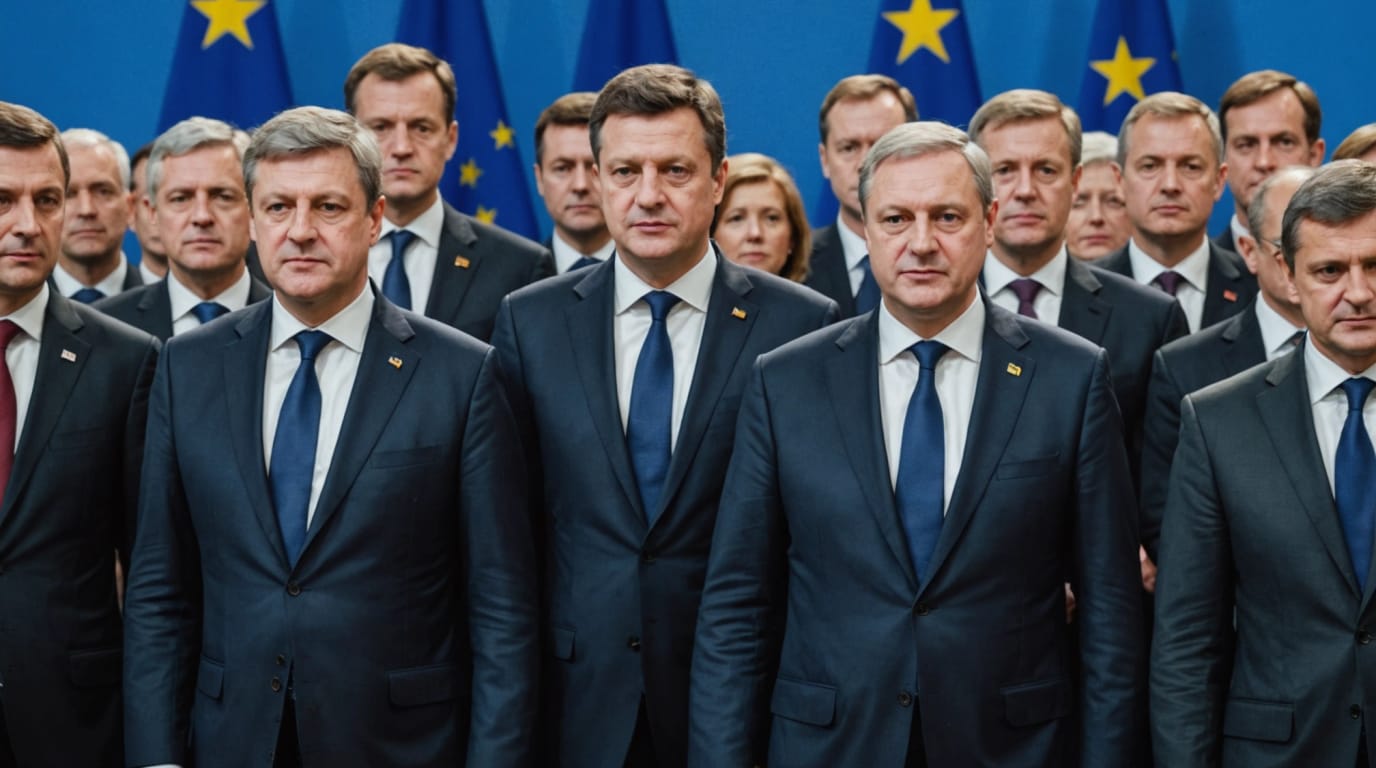
BRUSSELS – European Union leaders have committed to bolstering the continent's defense capabilities and increasing military spending, spurred by the ongoing war in Ukraine and growing uncertainty surrounding the United States' commitment to European security under President Donald Trump. At a summit in Brussels on Thursday, leaders of the 27 EU member states agreed to loosen budget restrictions to allow for greater investment in defense and explored new mechanisms to facilitate significant military spending across the bloc.
The move comes as European nations grapple with the implications of Trump's repeated suggestions that the U.S. might not defend NATO allies who do not meet defense spending targets. His administration has also suspended military aid and intelligence sharing with Ukraine, adding urgency to Europe's efforts to strengthen its own security architecture.
A "Watershed Moment" for European Defense
European Commission President Ursula von der Leyen characterized the agreement as a "watershed moment" for both Ukraine and the EU, emphasizing the "clear and present danger" facing the continent. She stressed the need for Europe to be able to protect and defend itself and to put Ukraine in a position to achieve a lasting and just peace.
The EU's executive branch estimates that approximately 650 billion euros ($702 billion) could be freed up through the loosening of budget restrictions. Leaders also considered a European Commission proposal for a 150 billion euro ($162 billion) loan package to finance the purchase of new military equipment.
Polish Prime Minister Donald Tusk echoed von der Leyen's sentiments, stating that Europe must "take up this challenge, this arms race. And it must win it." He asserted that Europe is capable of winning any military, financial, or economic confrontation with Russia.
France's Nuclear Arsenal in the Spotlight
French President Emmanuel Macron ignited debate by suggesting a "strategic debate" on using France's nuclear deterrent to protect European allies. While some Eastern European nations welcomed the proposal, Moscow dismissed it as "extremely confrontational." German Chancellor Olaf Scholz expressed reservations, emphasizing NATO's existing deterrence system and advocating for increased defense spending across Europe instead.
Ukraine's Plea for Continued Support
Ukrainian President Volodymyr Zelenskyy addressed the EU leaders, expressing gratitude for their support and urging them to continue providing military, financial, and political assistance. He emphasized the importance of strengthening Ukraine's own defense industry, which he said can produce weapons more cheaply and closer to the front lines than other European manufacturers.
Zelenskyy also called for a new package of sanctions against Russia and urged the EU to move forward with plans to admit Ukraine into the bloc by 2030. He stressed that achieving "peace through strength" requires Ukraine to have robust military and defense capabilities.
Obstacles to Unity
Despite the broad consensus on the need for increased defense spending, some divisions remain within the EU. Hungarian Prime Minister Viktor Orbán, a staunch supporter of Trump and considered to be Russian President Vladimir Putin's closest ally in Europe, refused to endorse part of the summit statement in favor of Ukraine.
Luxembourg's Prime Minister, Luc Frieden, acknowledged the potential for disagreement but argued that those countries willing to move forward with enhanced defense cooperation should do so, even if some member states are not on board.
Spain's Commitment to Increased Spending
Spain, the eurozone's fourth-largest economy, has pledged to increase its defense spending to meet NATO's target of 2% of GDP by 2029. Prime Minister Pedro Sánchez told reporters that Spain would make an "expedited effort" to reach this goal. In 2024, Spain's defense spending was estimated at 1.28% of GDP, the lowest among NATO members.
A Shift in Transatlantic Relations?
The EU's renewed focus on defense spending reflects a growing recognition that Europe must take greater responsibility for its own security, particularly in light of the shifting dynamics in transatlantic relations. Trump's "America First" policies and his skepticism towards NATO have raised concerns about the reliability of the U.S. as a security partner.
While the EU has collectively pledged more financial and military support to Ukraine than the U.S. since the start of Russia's full-scale invasion, the suspension of U.S. aid has created a critical gap that European nations are now scrambling to fill.
Conclusion: A More Self-Reliant Europe?
The EU summit marks a significant step towards greater European self-reliance in defense. While challenges remain in achieving complete unity and overcoming budgetary constraints, the commitment to increased defense spending signals a determination to strengthen the continent's security architecture and to provide unwavering support to Ukraine in the face of Russian aggression. The coming months will reveal whether these pledges translate into concrete action and whether Europe can effectively address the evolving security landscape.


