EU Navigates Complex Currents: Southeast Asia's Trust Rises Amidst Calls for Deeper Engagement
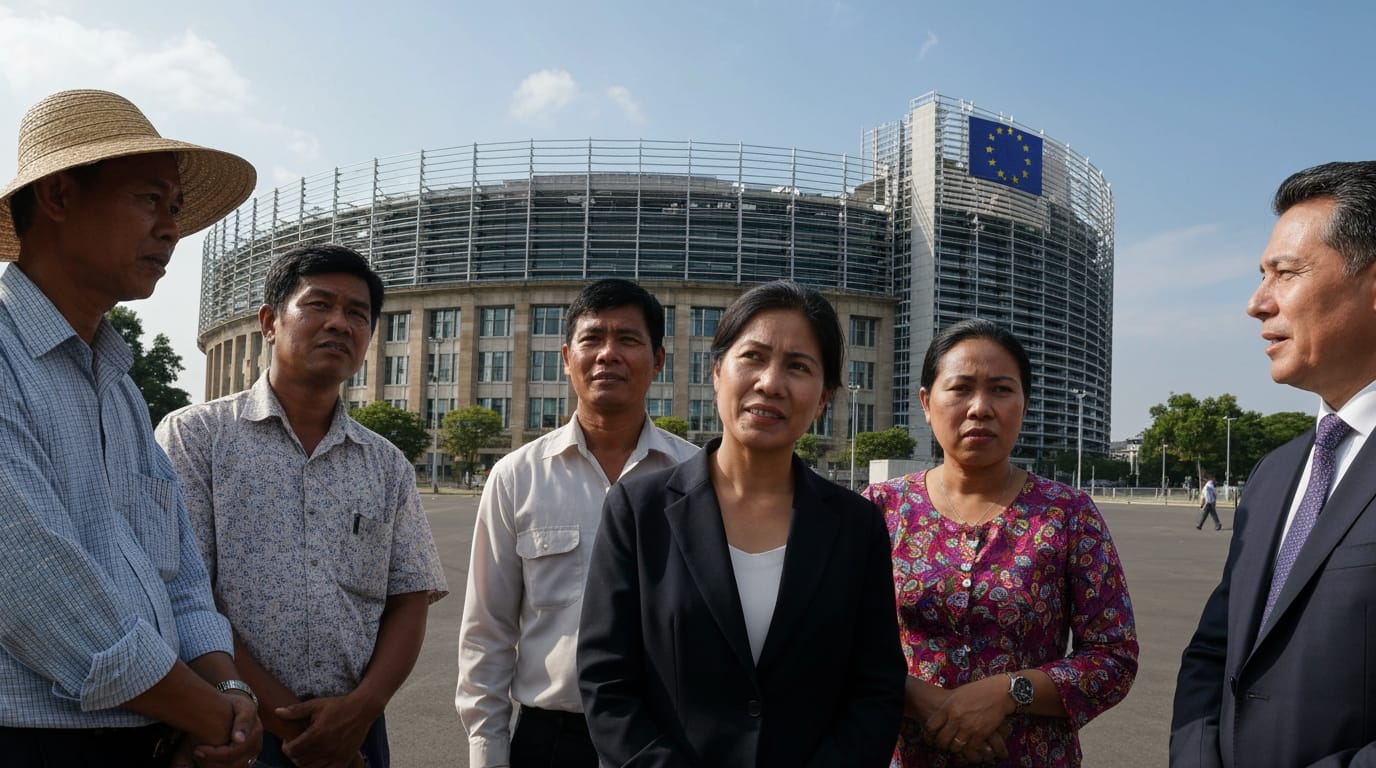
Brussels' engagement with Southeast Asia is experiencing a paradoxical period, with recent surveys indicating a notable rise in trust towards the European Union among regional stakeholders, even as calls for Brussels to intensify its strategic commitment resonate across the Association of Southeast Asian Nations (ASEAN). While the EU is increasingly viewed as a preferred "third party" amidst U.S.-China rivalry, a closer look reveals persistent challenges that demand more proactive and tailored diplomacy from the European bloc.
Southeast Asia, a region of immense geopolitical and economic significance, has shown increasing confidence in the European Union's role as a global actor. Since 2021, the EU has consistently topped surveys as the preferred and most trusted "third party" for countries in the region seeking to navigate the complexities of strategic competition between the United States and China. This perception underscores the EU's image as a reliable partner committed to upholding a rules-based international order and contributing to global peace and security. Indeed, in the 2026 "State of Southeast Asia" survey, the EU secured a 55.9% trust rating, positioning it closely behind Japan as the region's most trusted partner.
The Foundations of Growing Confidence
The burgeoning trust in the EU is anchored in several key aspects of its engagement with ASEAN. The elevation of their relationship to a Strategic Partnership in December 2020 marked a significant milestone, formalizing a shared commitment to regular high-level dialogues and cooperation. This partnership is underpinned by common values such as multilateralism and a dedication to a rules-based international system, which resonate strongly with Southeast Asian nations. The region has expressed growing confidence in Brussels' capacity to champion global free trade and uphold international law.
Economically, the EU is a formidable presence in Southeast Asia. It stands as ASEAN's third-largest trading partner and a crucial source of foreign direct investment (FDI). In 2022, trade between the two blocs reached US$295.2 billion, representing a substantial 9.6% year-on-year growth, with the EU contributing US$24 billion in FDI. Beyond trade, the EU has committed significant resources to regional cooperation, earmarking €180 million for the 2021-2027 period to support areas aligned with the Strategic Partnership. Further demonstrating its commitment, the EU has pledged to mobilize €10 billion for connectivity projects in ASEAN under its Global Gateway initiative, focusing on sustainable infrastructure, green energy, and digital resilience. Cooperation also extends to critical security challenges, including counterterrorism, cyber, and maritime security.
Navigating the Hurdles: Unfulfilled Potential
Despite the positive sentiment, a nuanced picture emerges from recent assessments, indicating that the EU still faces significant challenges in fully leveraging its influence and fulfilling its strategic aspirations in Southeast Asia. Surveys reveal that while Southeast Asians trust the EU to "do the right thing," many do not perceive it as an actor with substantial political and strategic influence in the region. In the 2023 survey, only 4.9% of respondents believed the EU wielded significant political and strategic influence.
Moreover, trust in the EU has reportedly reached its lowest point since the launch of its Indo-Pacific Strategy in 2021. This decline is attributed, in part, to the EU's perceived preoccupation with domestic and European issues, such as the war in Ukraine, which some in Southeast Asia view as diverting attention from global concerns. Unresolved disputes, particularly concerning palm oil and the EU's carbon policies, have also fueled distrust, notably with major producers like Indonesia and Malaysia. These nations view some EU environmental legislation as protectionist and a disregard for their own climate efforts. The EU's stance on the Israel-Hamas conflict has also been cited as damaging to its image in Southeast Asia, with many finding its "unfettered support for Israel and the bloodshed in Gaza as unacceptable."
A recurring criticism is the EU's occasional absence from key regional ministerial meetings, leading some to perceive a lack of consistent commitment compared to other dialogue partners. This sentiment is echoed by European businesses in Southeast Asia, with a 2024 survey indicating that a record 59% felt the EU was not adequately supporting their interests in the region. Furthermore, the EU's insistence on embedding extensive labor and environmental standards into trade negotiations is seen by some Southeast Asian countries as imposing non-trade demands, slowing down the conclusion of crucial agreements.
The Path Forward: Balancing Principles and Pragmatism
For Brussels, the imperative is clear: to solidify and deepen its engagement, it must recalibrate its approach to better align its normative aspirations with the practical realities and priorities of Southeast Asian nations. While its commitment to a rules-based order and sustainable development is valued, there is a need to understand and accommodate the varying economic capacities and regulatory landscapes within ASEAN.
The strategic importance of this relationship cannot be overstated. For the EU, a robust partnership with ASEAN is crucial for diversifying supply chains, bolstering geopolitical influence, and advancing global objectives like climate protection and the maintenance of free trade routes. For Southeast Asia, the EU offers a vital partner for economic growth, investment, and a valuable counterweight in an increasingly contested geopolitical environment.
Moving forward, the EU can enhance its relevance by focusing on areas of strength such as non-traditional security, offering capacity-building programs to harmonize regulatory standards, and ensuring consistent high-level representation at regional forums. By embracing a more pragmatic approach that balances its principles with a deeper understanding of regional dynamics, the European Union can transcend its current challenges and forge an even more impactful and enduring partnership with Southeast Asia. The foundation of trust has been laid, but sustained, nuanced effort will be essential to build upon it.


