EU Navigates Diplomatic Minefield in Talks with Taliban on Afghan Migrant Returns
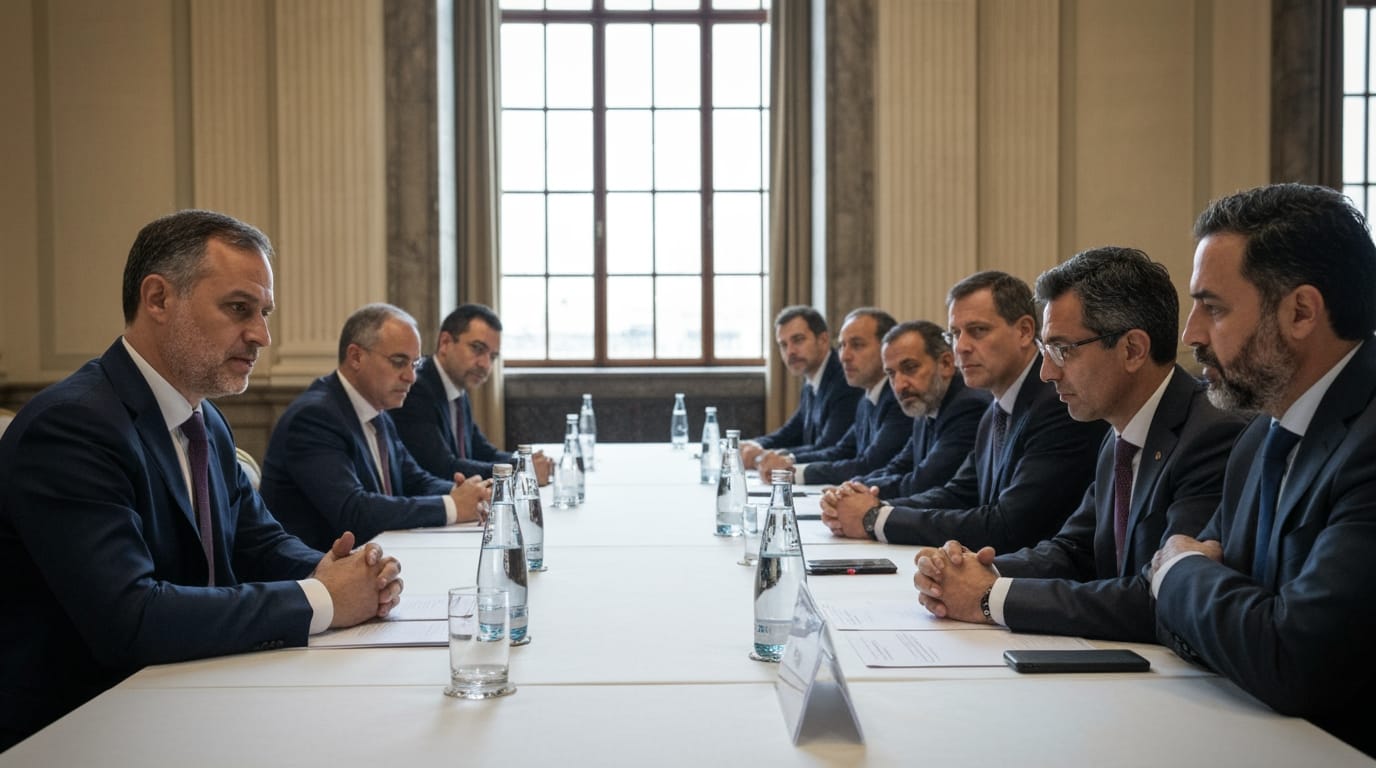
BRUSSELS — The European Union is hosting a Taliban delegation in Brussels this week for crucial talks centered on the contentious issue of returning Afghan migrants and asylum seekers, marking the first such visit to EU institutions since the group seized power in Kabul in August 2021. The discussions, deemed "technical" by EU officials, highlight Europe's intensifying focus on curbing irregular migration and boosting deportations, even as the engagement draws fierce condemnation from human rights organizations worldwide.
The closed-door meetings underscore a profound dilemma for the EU: the pragmatic necessity of engaging with Afghanistan's de facto rulers on migration management versus upholding the bloc's fundamental commitments to human rights and democratic values. The talks are unfolding against a backdrop of increasing migration pressures across Europe and a severe humanitarian crisis within Afghanistan, creating a complex and ethically fraught diplomatic landscape.
A Controversial Welcome in the European Capital
A five-member Taliban delegation arrived in Brussels on Tuesday, June 23, after Belgium granted single-day visas for the specific purpose of these discussions. Belgian Foreign Minister Maxime Prévot openly expressed his opposition to hosting the Taliban representatives but noted that Belgium, as the seat of EU institutions, could not refuse the visas issued at the European Commission's request. The visas are strictly limited to Belgium and do not permit travel within the broader Schengen area.
The European Commission has consistently maintained that these are "technical discussions" and explicitly do not constitute formal recognition of the Taliban administration. The talks are described as a follow-up to earlier engagements held between European representatives and Taliban authorities in Kabul in January. The primary objective for the EU is to establish practical mechanisms for the return and readmission of Afghan nationals who have had their asylum claims rejected, lack legal residency, have committed serious crimes, or are considered security threats within the bloc.
Europe's Growing Migration Imperative
The EU's outreach to the Taliban reflects a broader shift in European migration policy, characterized by a hardened stance on irregular migration and a strong impetus to increase deportations. Public opinion across the continent, often fueled by the rise of far-right political parties, has pressured governments to adopt more stringent measures.
Afghan nationals constitute one of the largest groups of asylum seekers in the European Union. Between 2013 and 2024, approximately one million asylum applications were filed by Afghans across EU countries, with about half of those eventually approved. However, a significant number of EU member states, reportedly around 20, have advocated for concrete pathways to deport Afghans without legal residence or those deemed a security risk. Magnus Brunner, the EU's migration chief, underscored the practical imperative, stating that engaging with the Taliban administration is currently the only viable option for discussing the return of irregular migrants from Afghanistan. This position highlights the pragmatic reality that, despite the Taliban's international isolation, cooperation from the de facto authorities is essential for facilitating any large-scale returns.
A Human Rights Firestorm
The EU's decision to engage the Taliban has ignited a firestorm of criticism from a broad coalition of human rights organizations, including Human Rights Watch, Amnesty International, and the International Federation for Human Rights (FIDH). These groups argue that cooperating with the Taliban, even on a technical level, risks granting political legitimacy to a regime that has systematically dismantled fundamental rights and freedoms since 2021.
Critics point to the Taliban's egregious human rights record, particularly the severe and systematic repression of women and girls, which some United Nations experts have described as a potential "gender apartheid." Women are largely excluded from public life, denied education beyond the sixth grade, barred from working with international organizations, and subjected to severe restrictions on movement and expression. Furthermore, reports detail arbitrary detentions, torture, and a lack of fair trials for dissenting voices and former government employees.
Human Rights Watch researcher Fereshta Abbasi articulated the widespread concern, stating that EU countries "are undermining their credibility by condemning Taliban abuses and accountability on one hand, while cooperating with the Taliban to forcibly return Afghans on the other." Organizations also emphasize that two senior Taliban leaders face arrest warrants from the International Criminal Court for alleged crimes against humanity, further complicating the ethical standing of such engagements.
A central tenet of the opposition's argument rests on the principle of non-refoulement under international refugee and human rights law, which prohibits returning individuals to countries where they face a real risk of persecution, torture, or other serious harm. Richard Bennett, the UN Special Rapporteur on human rights in Afghanistan, explicitly urged the EU not to deport Afghan nationals, citing the "genuine risk" of torture and other human rights violations under Taliban rule. Civil society groups argue that Afghanistan, under its current governance, cannot be considered a safe country for returns.
The Dire Realities of Afghanistan and Returnee Challenges
The humanitarian situation in Afghanistan remains dire, presenting significant challenges for any large-scale return operation. Millions of Afghans are grappling with widespread food insecurity, chronic poverty, and a collapsed economy. The country has also seen immense internal displacement and has struggled to absorb millions of Afghans forcibly returned from neighboring Iran and Pakistan since 2023, often under harsh conditions and without adequate support systems.
For returnees, reintegration into Afghan society is fraught with difficulties. Many face a lack of sustainable livelihoods, inadequate housing, and limited access to essential services like healthcare and education. Women returnees, in particular, often face compounded disadvantages due to the Taliban's restrictive policies. The absence of robust institutional safeguards and the constant risk of persecution or reprisal mean that individuals sent back often encounter acute vulnerability. The EU currently provides substantial humanitarian aid to Afghanistan, totaling over €161 million in 2025 and an initial €162 million for 2026, though its effectiveness is often hampered by the challenging operational environment and the Taliban's restrictions.
A Balancing Act with Uncertain Outcomes
The EU's engagement with the Taliban in Brussels reflects a complex and controversial balancing act. On one side are the pressing domestic political demands within Europe to manage migration flows and return individuals lacking legal status. On the other are the fundamental human rights principles that underpin the EU's external policy and the stark reality of the humanitarian and human rights crisis in Afghanistan under Taliban rule.
While EU officials emphasize the technical nature of the discussions and reiterate that they do not imply formal recognition, critics contend that the act of hosting the delegation itself lends a degree of legitimacy to the Taliban. The outcome of these talks, and the extent to which they facilitate the return of Afghan nationals, will have significant implications not only for the individuals directly affected but also for the future trajectory of the EU's engagement with Afghanistan and its broader standing on human rights globally. The delicate dance between practical necessity and principled diplomacy in Brussels will continue to be closely watched.


