EU Sidesteps Hungary Veto as Ukraine Support Remains Paramount
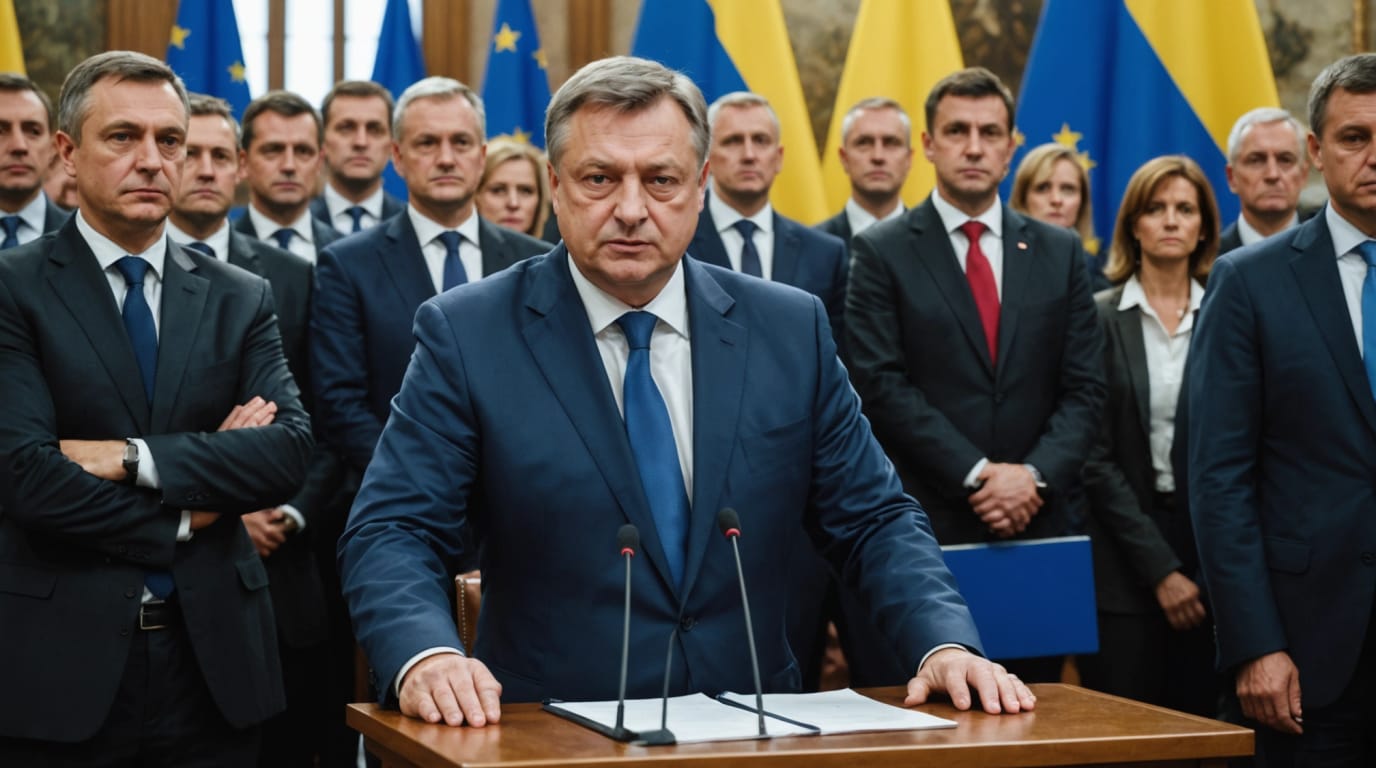
Brussels – The European Union, in a display of unity despite persistent internal divisions, has found ways to circumvent Hungary's opposition to further aid for Ukraine, signaling a continued commitment to Kyiv amidst the ongoing conflict with Russia. While Hungarian Prime Minister Viktor Orbán remains a vocal dissenting voice, the other 26 EU member states have forged ahead, employing workarounds to ensure financial and political support for Ukraine remains uninterrupted.
The move comes as Ukraine faces increasing pressure on the battlefield and as the prospect of diminished aid from the United States looms large. The EU's commitment is seen as crucial to maintaining Ukraine's ability to defend itself and to ensuring the country's long-term stability.
A Show of Unity, Minus One
At an emergency summit on March 6, 26 of the 27 EU member states issued a joint resolution denouncing Russian aggression and pledging unwavering support for Ukraine. Hungary dissented, highlighting the deep divisions within the bloc regarding the approach to the conflict and the relationship with Russia. This was not an isolated incident, as Thursday's summit in Brussels saw a repeat of the scenario, with Hungary declining to sign a joint statement backing Ukraine.
Despite Hungary's refusal to endorse the collective statement, the EU has made it clear that it will not allow one member state to hold the entire bloc hostage. Conclusions reaffirming the EU's “continued and unwavering support for Ukraine's independence, sovereignty and territorial integrity” were “firmly supported” by the vast majority of leaders, according to a press statement.
Workarounds and the "Coalition of the Willing"
Recognizing the need to act decisively, EU leaders have explored alternative mechanisms to bypass Hungary's veto. One such approach involves utilizing a "coalition of the willing," where a group of member states can move forward with specific initiatives without requiring unanimous approval. This allows countries that are strongly committed to supporting Ukraine to take concrete action, even if Hungary remains opposed.
Kaja Kallas, the EU's top diplomat, suggested this approach ahead of the March 6 summit, indicating a growing willingness to circumvent Hungary's obstructionism. This strategy was successfully employed when a text agreed upon by the other 26 countries was appended to other resolutions, which were unanimously agreed upon. While Hungary opted out, the statement was still issued as a formal European Council conclusion.
Financial Support Continues
Despite the political maneuvering, the EU has reaffirmed its commitment to providing substantial financial assistance to Ukraine. While a proposal to commit a new 20-billion-euro package ($22 billion) was dropped from the declaration, the EU has pledged to continue providing already promised support in 2025. This includes 12.5 billion euros ($13.5 billion) under the Ukraine Facility and 18.1 billion ($19.6 billion) as part of the G7 loan covered by frozen Russian assets.
This financial lifeline is crucial for Ukraine, which is facing significant economic challenges as a result of the war. The funds will help to support the country's budget, maintain essential services, and rebuild infrastructure damaged by the conflict.
Orbán's Isolation and Trump's Influence
Viktor Orbán's stance on Ukraine has increasingly isolated Hungary within the EU. His government has repeatedly held up the passage of multibillion-euro aid packages and sanctions against Russia, often citing concerns about the impact on Hungary's economy and energy security.
Orbán's position is further complicated by his close relationship with former U.S. President Donald Trump, who has been critical of U.S. aid to Ukraine and has called for a ceasefire. Trump has blamed Ukraine for Russia's invasion, creating further division within the international community.
Future Showdowns Loom
While the EU has successfully navigated Hungary's veto on several occasions, the underlying tensions remain. Hungary can still block major decisions that require a unanimous vote, such as the six-month extension of sanctions against Russia. This creates the potential for future showdowns and could further complicate the EU's efforts to support Ukraine.
Moreover, Hungary has consistently vetoed the extension of EU sanctions on Russia, agreeing to unblock the decision only in exchange for concessions from Brussels. After lifting the veto, Prime Minister Orbán issued a list of 12 demands, including that Ukraine not be accepted into the EU.
The Path Forward
The EU's ability to sidestep Hungary's veto is a testament to the strong desire among most member states to support Ukraine. However, the underlying divisions within the bloc remain a challenge. The EU will need to continue to find creative solutions to overcome these obstacles and ensure that Ukraine receives the assistance it needs to defend itself and rebuild its country.
The situation has led to discussions about potentially stripping Hungary of its voting rights, a move that Estonia has openly supported. Article 7 of the Lisbon Treaty, the EU's de facto constitution, provides for such a possibility, though it would require the approval of four-fifths of the EU member states.
Ultimately, the EU's commitment to Ukraine is not just about financial and military aid. It is also about sending a strong message to Russia that its aggression will not be tolerated and that the EU stands firmly behind Ukraine's right to choose its own future. The coming months will test the EU's resolve as it navigates the complex political landscape and works to ensure that Ukraine receives the support it needs to prevail.


