EU Unlocks €16.4 Billion for Hungary as New Government Pledges Sweeping Reforms
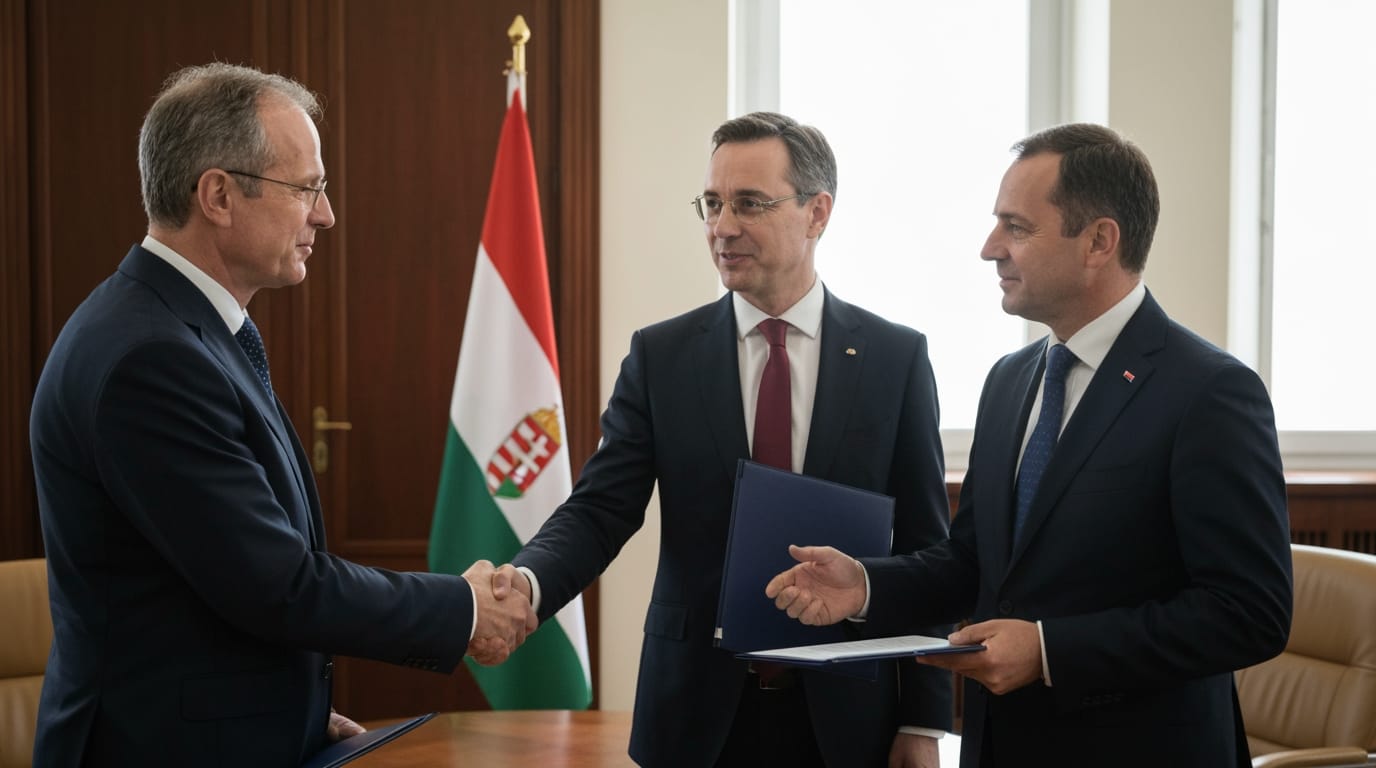
BRUSSELS, Belgium – The European Union announced Friday the unblocking of approximately €16.4 billion in frozen funds for Hungary, a move signaling a dramatic shift in relations between Brussels and Budapest under the leadership of newly elected Prime Minister Péter Magyar. The decision comes swift on the heels of Magyar's government taking office, which has pledged and initiated a series of rapid reforms aimed at bolstering the rule of law, judicial independence, and anti-corruption measures that had been at the core of the EU's concerns.
This significant financial injection, which includes €10 billion from the NextGenerationEU recovery fund and €4.2 billion in cohesion funds, with an additional €2.2 billion contingent on further academic freedom and governance reforms, is expected to provide a crucial boost to Hungary's economy, which has experienced years of stagnation. European Commission President Ursula von der Leyen lauded the "strong wind of change" emanating from Budapest, emphasizing the rapid progress made in a short timeframe.
A Decisive Break from Past Disputes
For years, the relationship between the European Union and Hungary was characterized by escalating tensions and protracted disputes over democratic backsliding and rule of law issues under the previous government of Viktor Orbán. The EU had progressively frozen significant portions of the funds allocated to Hungary, citing concerns over judicial independence, corruption, and restrictions on academic and media freedoms. These blockages, implemented through various mechanisms, underscored the EU's commitment to upholding its fundamental values among member states.
The concerns that led to the freezing of funds were extensive. They encompassed deficiencies in judicial independence, including inadequate supervision within the judiciary, and issues related to the Kúria (Supreme Court) and challenges to preliminary rulings by the Court of Justice of the EU. Furthermore, the EU highlighted systemic corruption risks, particularly concerning the allocation of EU funds and public procurement, with some reports suggesting misappropriation of funds. The previous government's refusal to join the European Public Prosecutor's Office (EPPO) was also a point of contention, seen as hindering the fight against financial crimes against the EU budget.
Magyar's Swift Reform Agenda
Prime Minister Péter Magyar, whose Tisza party secured a supermajority in the April election, campaigned on a platform promising closer ties with the EU and a commitment to address the very issues that had led to the funding freeze. Within weeks of taking office, his government moved decisively to enact reforms. Key changes include measures to restore judicial independence, bolster academic and media freedom, and launch comprehensive anti-corruption initiatives.
A cornerstone of these reforms is Hungary's formal request to join the European Public Prosecutor's Office (EPPO), an independent EU body dedicated to combating crimes against the Union's budget. This step, long resisted by the previous administration, signifies a willingness to cooperate with EU oversight bodies. Additionally, Magyar's government has committed to strengthening the national Integrity Authority, revising public procurement rules, and phasing out public interest trust structures, which were previously identified as vulnerable to "state capture." These actions directly address the deficiencies highlighted by the European Commission as conditions for releasing the frozen funds.
EU's Embrace and Economic Implications
European Commission President Ursula von der Leyen, speaking alongside Prime Minister Magyar, commended the new government's rapid implementation of "long-overdue reforms." She emphasized that the release of funds was a recognition of Hungary's commitment to democratic principles and a signal that the country is "turning the page." Magyar, for his part, hailed the agreement as a "historic breakthrough," asserting that the previous delays were due to corruption concerns, not political disagreements.
The financial assistance arrives at a critical time for Hungary. Its economy has faced stagnation for three years, and the new government has inherited a significant budget deficit, projected to reach 6.2% of GDP in 2026. The infusion of EU funds is expected to stimulate economic growth, support public services, and strengthen the competitiveness of Hungarian businesses. The funds are crucial for investments in sectors such as energy, housing, transport, and small and medium-sized enterprises.
Navigating Future Challenges and Scrutiny
While the unblocking of funds marks a new chapter in EU-Hungary relations, the path forward is not without its complexities. Some voices within the EU have expressed caution, suggesting that the Commission might be acting too swiftly in releasing funds based on initial commitments rather than waiting for the full implementation and proven durability of reforms. Concerns have been raised that this could risk repeating past mistakes, potentially diminishing the EU's leverage for sustained rule of law restoration. The European Parliament, for instance, had previously filed a complaint with the Court of Justice of the European Union, arguing that a prior decision to release funds in 2023 was premature given lingering concerns over judicial independence.
The agreement stipulates that the funds will be disbursed subject to the implementation of agreed reforms, indicating ongoing monitoring by the European Commission. The long-term success of this reset will depend on Hungary's continued commitment to robust democratic institutions and the effective enforcement of the newly adopted measures. The restoration of trust between Budapest and Brussels is seen as a mutual endeavor, with both sides acknowledging the significance of this moment for Hungary's place within the European Union.
Conclusion: A New Era of Cooperation?
The unblocking of €16.4 billion in EU funds for Hungary represents a pivotal moment, symbolizing a potential return to a more cooperative relationship between Budapest and Brussels. Prime Minister Péter Magyar's government has demonstrated a clear intent to align with EU values through rapid and far-reaching reforms, particularly in areas of rule of law and anti-corruption. While the immediate financial relief is substantial for Hungary's economy, the enduring impact will hinge on the sustained implementation of these reforms and the EU's continued vigilance. This development sets a precedent for how the Union navigates internal challenges to its foundational principles, balancing financial aid with the imperative of democratic integrity.


