Euclid Telescope Unveils First Data, Offering Unprecedented Glimpse into the Dark Universe
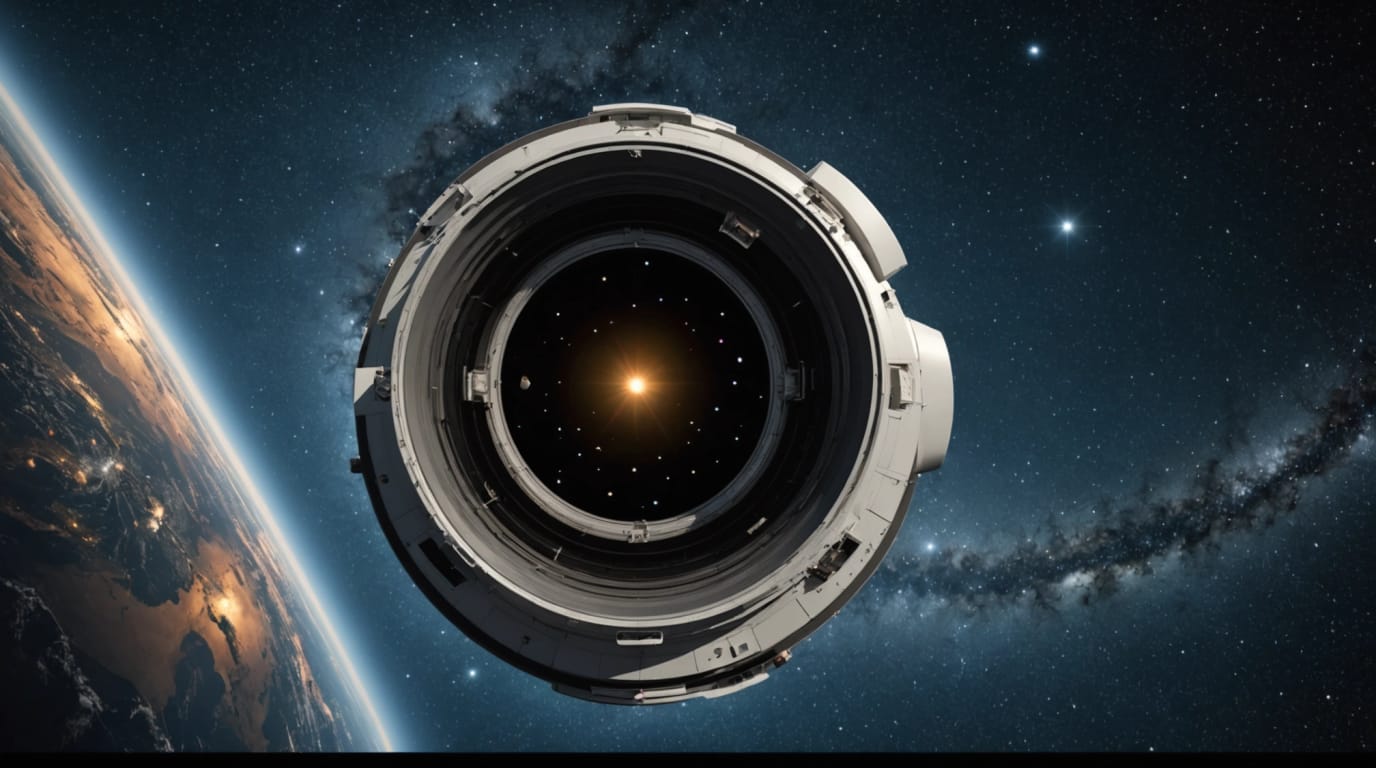
The Euclid space telescope, launched in July 2023, has released its first comprehensive set of data, providing astronomers with an unprecedented view of the cosmos and a tantalizing peek into the mysteries of dark matter and dark energy. This initial data dump includes stunning images and a wealth of information that promises to revolutionize our understanding of the universe's structure and evolution.
Mapping the Cosmic Web
Euclid's primary mission is to map the large-scale structure of the universe, observing billions of galaxies across 10 billion light-years to create the most extensive 3D cosmic map ever made. By observing the shapes, distances, and motions of these galaxies, Euclid aims to reveal the unseen influence of dark matter and dark energy, which together constitute about 95% of the universe's total mass-energy content. The telescope will survey approximately one-third of the sky during its six-year mission.
The initial data release includes previews of Euclid's deep fields, covering 63 square degrees of the sky, an area equivalent to 300 times the full moon. These deep fields contain hundreds of thousands of galaxies of varying shapes and sizes, offering a glimpse into the "cosmic web," the large-scale network of filaments and voids that characterize the universe's structure.
Unveiling Dark Matter and Dark Energy
One of the key objectives of the Euclid mission is to probe the nature of dark energy, the mysterious force driving the accelerated expansion of the universe. By measuring the shapes of galaxies at different distances from Earth, Euclid will help scientists accurately measure the universe's acceleration and better understand dark energy's properties.
Euclid will also investigate the distribution of dark matter, the invisible substance that makes up a significant portion of the universe's mass. By studying how dark matter affects the shapes and motions of galaxies through gravitational lensing, scientists can map its distribution and gain insights into its nature.
A Treasure Trove of Data
The first data release from Euclid includes a classification survey of 380,000 galaxies, 500 new gravitational lens candidates, and a wealth of other cosmic objects, such as galaxy clusters and active galactic nuclei. This data represents a goldmine for astronomers, providing a wealth of information to study galaxy evolution, refine cosmic history models, and explore galaxy formation within dark matter halos.
Euclid's ability to capture images in both visible and near-infrared light, combined with its exceptionally large field of view, allows it to observe a wide range of cosmic objects with unprecedented detail. The telescope's image quality is at least four times sharper than that achieved by ground-based sky surveys.
Complementary Missions
Euclid's mission complements other space telescopes, such as NASA's Hubble and James Webb. While Hubble and Webb are designed to study smaller areas of the sky in finer detail, Euclid's wide field of view allows it to map large-scale structures and identify targets for further investigation by other telescopes.
NASA's upcoming Nancy Grace Roman Space Telescope will also benefit from Euclid's findings. Roman will use Euclid's data to inform its own dark energy studies, extending the kind of science Euclid enables by studying fainter and more distant galaxies.
Early Discoveries
Even in its early stages, Euclid has already made some notable discoveries. The telescope recently captured a stunning Einstein ring, a phenomenon where light from a distant galaxy is bent and distorted by the gravity of a massive object in the foreground. This discovery allowed researchers to "weigh" the dark matter at the heart of a galaxy almost 600 million light-years away.
Euclid has also observed a globular cluster called NGC 6397, the second-closest globular cluster to Earth. Euclid is the only telescope that can observe an entire globular cluster in a single observation while distinguishing so many stars within the cluster. These faint stars provide information about the history of the Milky Way and the location of dark matter.
The Future of Euclid
Euclid is expected to release its first year of observations next year, consisting of 2 petabytes of data. Over the next six years, the telescope will continue to survey the sky, observing billions of galaxies and collecting a vast amount of data that will keep astronomers busy for decades to come.
Euclid's mission promises to revolutionize our understanding of the universe, shedding light on the mysteries of dark matter and dark energy and providing a comprehensive map of the cosmos. As the telescope continues its survey, scientists anticipate many more exciting discoveries that will challenge our current understanding of the universe and its evolution.


