Europe Engulfed: Wildfires Force Mass Evacuations, Merging Blazes Challenge Responders
Europe is currently gripped by an unprecedented wave of wildfires, forcing tens of thousands to evacuate homes and holiday destinations as extreme heat and dry conditions fuel rapidly spreading infernos across France, Spain, and Italy. With some blazes merging into colossal firefronts and communities fleeing by land and sea, emergency services are stretched to their limits, marking one of the most severe wildfire seasons in recent memory. The escalating crisis underscores the growing vulnerability of the continent to the intensifying impacts of climate change, turning idyllic summer landscapes into scenes of devastation.
A Continent Under Siege: Unprecedented Firestorms Rage
From the Atlantic coast of France to the sun-baked Mediterranean shores of Spain and the volcanic landscapes of Sicily, Europe is confronting a summer of fire. In southwestern France, the Cap Ferret peninsula, a cherished holiday spot near Bordeaux, has witnessed an "intense, highly unpredictable" wildfire consume over 12,500 hectares (30,900 acres) of forest. This blaze is part of a larger firefront in the Gironde department that has ravaged more than 25,000 acres, necessitating the evacuation of some 40,000 people.
Meanwhile, Spain is grappling with its own dire situation, with two major blazes reportedly merging into one outside Madrid, and a third on the verge of joining them. The central province of Guadalajara has seen approximately 32,000 hectares (80,000 acres) scorched in a single fire over the past week, making it one of Spain's largest wildfires on record. Spanish authorities have declared a national emergency for wildfires for the first time, giving the interior ministry oversight of firefighting efforts as multiple blazes rage across the country. In Italy, the island of Sicily is battling dozens of wildfires, with the eastern province of Catania and areas around Agrigento particularly hard hit. Temperatures across these affected regions have consistently topped 40 degrees Celsius (104 Fahrenheit), and in some areas of Sicily, exceeded 45 degrees Celsius, creating tinder-dry conditions exacerbated by strong winds and low humidity.
The Human Exodus: Fleeing by Land and Sea
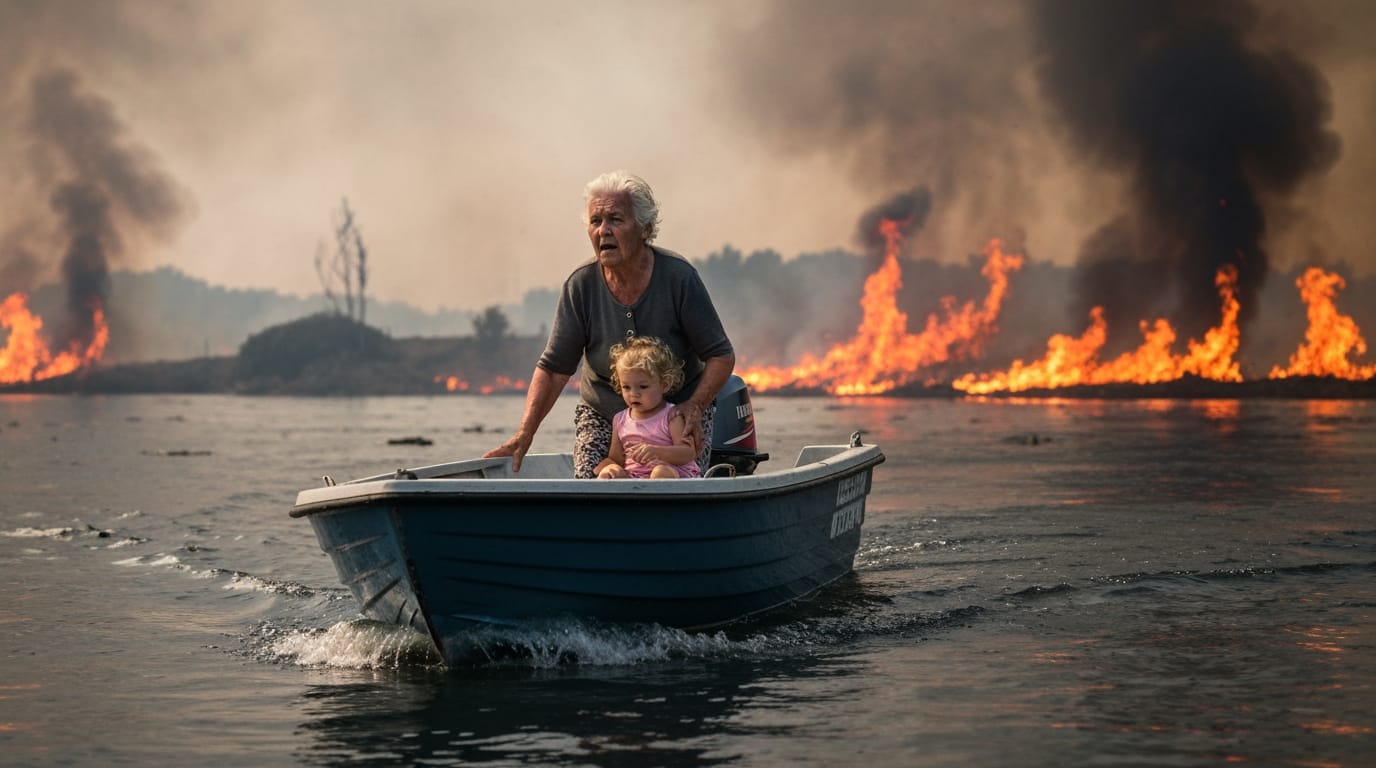
The human cost of these fires is immense, characterized by dramatic evacuations and tragic losses. In Cap Ferret, France, thousands of residents and tourists, many carrying luggage, were forced to flee by boat as flames threatened to cut off the only road access to the peninsula. An unprecedented operation saw about 1,500 people arriving by sea in the city of Arcachon. Further south, an additional 23,000 people have been ordered out of homes and campsites in the Landes region.
In Spain, more than 10,000 people were evacuated from towns in the mountains west of Madrid and in the neighboring Avila province, with the total number across the country exceeding 20,000. Eyewitnesses describe "unbreathable" smoke and fear for their homes, with some having mere minutes to grab belongings before fleeing. The wildfires have also claimed lives, with three firefighters confirmed dead across Southern Europe, one in Sicily and others in France. The scale of displacement and the suddenness of the evacuations have left communities in distress, underscoring the immediate and terrifying threat posed by these blazes.
A Battle on Multiple Fronts: Challenges and International Response
Firefighting efforts are ongoing across multiple nations, stretching resources and personnel to their limits. In France, hundreds of firefighters, backed by water-bombing aircraft, are battling the blazes, with President Emmanuel Macron activating the European Union's civil protection mechanism to request international assistance. This has prompted other EU member states, including Croatia, Portugal, the Czech Republic, and Slovakia, to deploy aircraft and helicopters to aid the French efforts.
Spain, facing its first national emergency for wildfires, is also receiving aid, with Italy and Greece each sending two Canadair water-dumping planes to support the embattled Spanish crews. In Sicily, nearly 6,000 emergency responders, including firefighters and forest guards, are mobilized, with 20 aircraft conducting operations, though nearly 50 of the 344 reported fires remain unextinguished. The extreme heat, rugged terrain, and erratic winds make containment incredibly challenging, pushing firefighters to their physical and logistical limits.
Beyond the Flames: Environmental and Economic Toll
The immediate devastation of the wildfires extends far beyond the active fire zones, leaving a significant environmental and economic toll. Thousands of hectares of forests, vital ecosystems, and agricultural land have been incinerated. The long-term environmental consequences are severe, including habitat destruction, loss of biodiversity, and increased risks of soil erosion and flash floods in the aftermath of the fires. Burned areas are far more susceptible to rapid water runoff, making them vulnerable to intense rainfall, a dangerous cascade effect of climate change.
Economically, the tourism sector, a cornerstone of many affected regions, faces immense disruption. Popular destinations like Cap Ferret and the areas surrounding Madrid have seen mass evacuations, leading to cancelled bookings and significant financial losses for local businesses. While some past incidents, like the 2023 Rhodes wildfires, saw offers of free future holidays to displaced tourists as a recovery measure, the current widespread nature of the crisis presents an even greater challenge to regional economies. Experts warn that the increasing frequency and intensity of these events are reshaping travel patterns, with tourists becoming more cautious about booking holidays in traditionally popular summer destinations during peak season.
Europe's wildfire crisis in July 2026 is a stark illustration of the direct and devastating consequences of a changing climate. The merging infernos, mass evacuations by any available means, and the immense strain on emergency services paint a grim picture of a continent struggling to adapt. As the flames continue to rage, the immediate priority remains the protection of lives and property. However, the long road to recovery will necessitate not only rebuilding efforts but also a renewed focus on climate resilience, sustainable land management, and international cooperation to mitigate the increasing threat of future wildfire seasons.