Europe Engulfed: Wildfires Force Mass Evacuations, Threatening Cities and Livelihoods in France and Spain
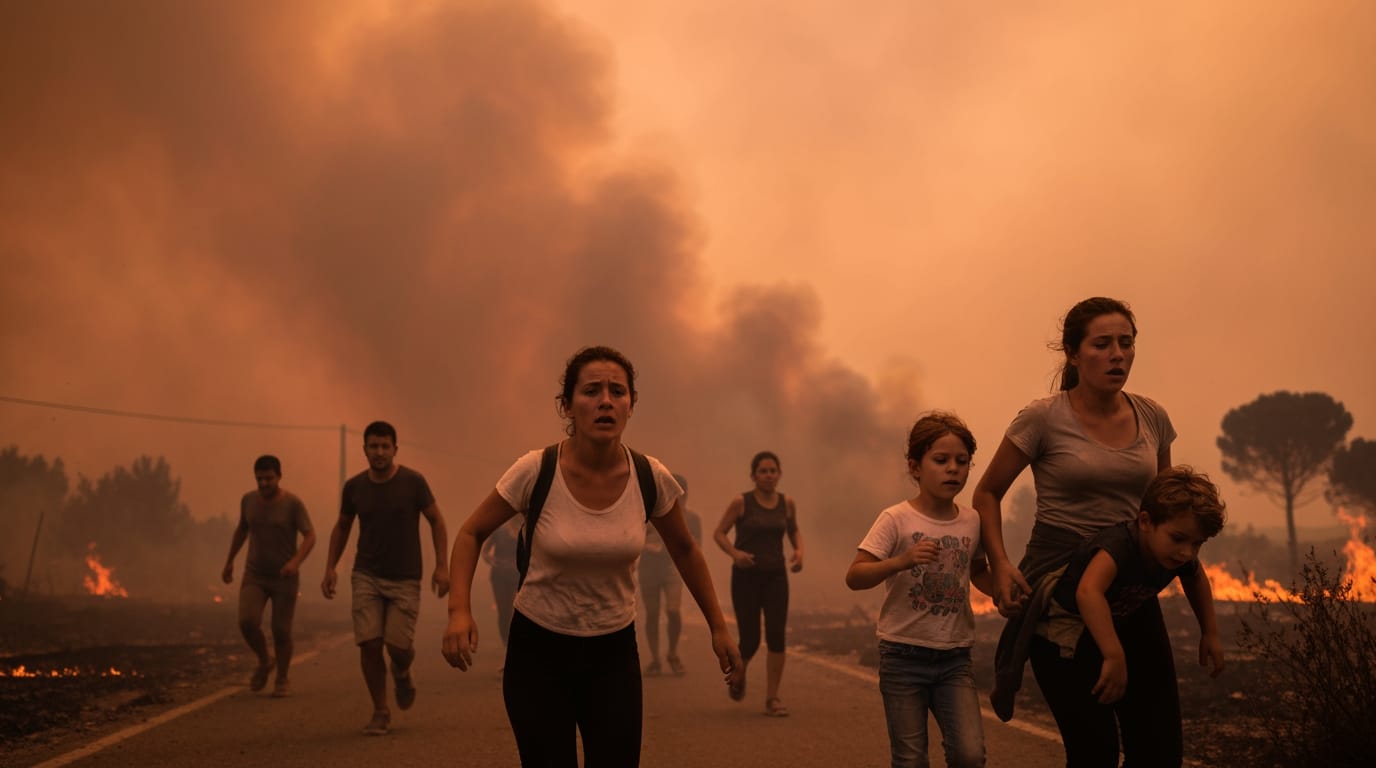
BORDEAUX, France & MADRID, Spain – Unprecedented wildfires are sweeping across France and Spain, forcing the evacuation of over 300,000 people and straining emergency services as blazes intensify under persistent heatwaves and arid conditions. The dual crises have turned vast swathes of European landscape into scorched earth, disrupting daily life and threatening major urban centers and vital industries. As firefighters battle relentless infernos, officials in both nations point to the escalating climate crisis as a primary driver of the increasingly severe and frequent fire seasons.
A Continent Ablaze: The Scale of Destruction and Displacement
The scale of the current wildfire emergency is staggering, marking 2026 as France's worst wildfire year on record and Spain's most destructive season in recent history. In France, the southwestern Gironde region, home to the renowned Bordeaux wine country, has been particularly hard-hit, with a massive blaze near the city burning an estimated 42,000 hectares (162 square miles). This single fire alone has forced the evacuation of approximately 197,000 people from areas including the Cap Ferret peninsula and communities southwest of Bordeaux. Another significant fire in the adjacent Landes region has displaced an additional 36,000 people, bringing the total number of evacuees in southwest France to well over 250,000. French Interior Minister Laurent Nunez described the evacuations as "probably" the largest peacetime displacement the country has ever witnessed.
Across the Pyrenees, Spain is grappling with its own firestorms, with a national emergency declared. Villages west of Madrid, including San Martin de Valdeiglesias and Valdemaqueda, have seen approximately 70,000 to 75,000 residents evacuated. Further east, a new fire front near the Mediterranean city of Valencia forced the evacuation of at least 15,000 people, and tragically, one person has died in Manises, a town near Valencia, after being found in a car in a ravine. The fires have already consumed more than 130,000 hectares across Spain this year, a figure significantly higher than the annual average over the past decade.
The Human Toll: Stories from the Front Lines of Displacement
For those caught in the path of the flames, the experience has been one of sudden disruption and fear. Tens of thousands of holidaymakers, along with local residents, have been forced to flee popular tourist areas in southwestern France, some even escaping by boat as fires threatened to cut off access roads. In Spain, authorities issued stay-indoors orders for thousands of people in communities near Madrid due to heavy smoke and advancing flames. Emergency shelters have been established in cities like Bordeaux, converting exhibition centers to accommodate thousands of evacuees, including vulnerable populations from care homes. The psychological and economic toll on these displaced communities is immense, with many uncertain when, or if, they will be able to return to their homes and livelihoods. Beyond direct displacement, the pervasive smoke plumes have led to air quality warnings, impacting public health across affected regions and even beyond national borders.
A Coordinated, Yet Challenged, Response
Both France and Spain have mobilized extensive resources to combat the blazes. Hundreds of firefighters are on the ground, augmented by military personnel and a fleet of water-dropping aircraft. France has deployed 1,500 soldiers to assist firefighters, provide logistical support, and aid in evacuations. The military is also providing specialist equipment, including bulldozers, helicopters, drones, and A400M military transport aircraft equipped for aerial firefighting. In Spain, the government has taken charge of coordinating firefighting efforts, deploying 1,201 military personnel, 400 ground vehicles, and 20 aircraft.
International solidarity has also been evident, with the European Union activating its RescEU fleet. European Commission President Ursula von der Leyen confirmed that five planes and two helicopters from the RescEU fleet have been deployed to France, and four planes are assisting Spain. Copernicus, the EU's Earth observation program, is providing emergency mapping services to support response efforts in both countries. Despite these concerted efforts, shifting winds and extremely dry conditions continue to hamper containment, with some fires proving so virulent they generate their own unpredictable wind patterns. The French Interior Minister, Laurent Nunez, has described the situation as "very unfavorable," acknowledging the "long and very difficult" battle ahead. Even the final stage of the Tour de France was shortened to redeploy security personnel to assist with the wildfires.
The Shadow of Climate Change and Future Outlook
Officials and experts are increasingly drawing a direct link between the intensity and frequency of these wildfires and climate change. Spain's Prime Minister Pedro Sánchez has called for a "state pact against climate emergency," emphasizing that the growing scale and intensity of fires, fueled by extreme weather, demand policies grounded in climate science. Record-breaking heatwaves in June and July 2026 have created exceptionally dry conditions, making forests and scrubland highly flammable. Scientists note that warmer temperatures extend the fire season, while more frequent and intense heatwaves create perfect conditions for rapid fire spread. The EU has recently adopted a recommendation to strengthen preparedness and enhance prevention strategies for wildfires, acknowledging the growing threat across Europe.
As the continent endures this severe wildfire season, the immediate focus remains on protecting lives and property. However, the recurring nature of these crises underscores a pressing need for long-term strategies that address climate change mitigation, sustainable land management, and enhanced cross-border cooperation in emergency response. The unprecedented events of July 2026 serve as a stark reminder of Europe's vulnerability to extreme weather and the urgent imperative to adapt to a changing climate.


