Europe Grapples with Future Defense as U.S. Reliability Wanes

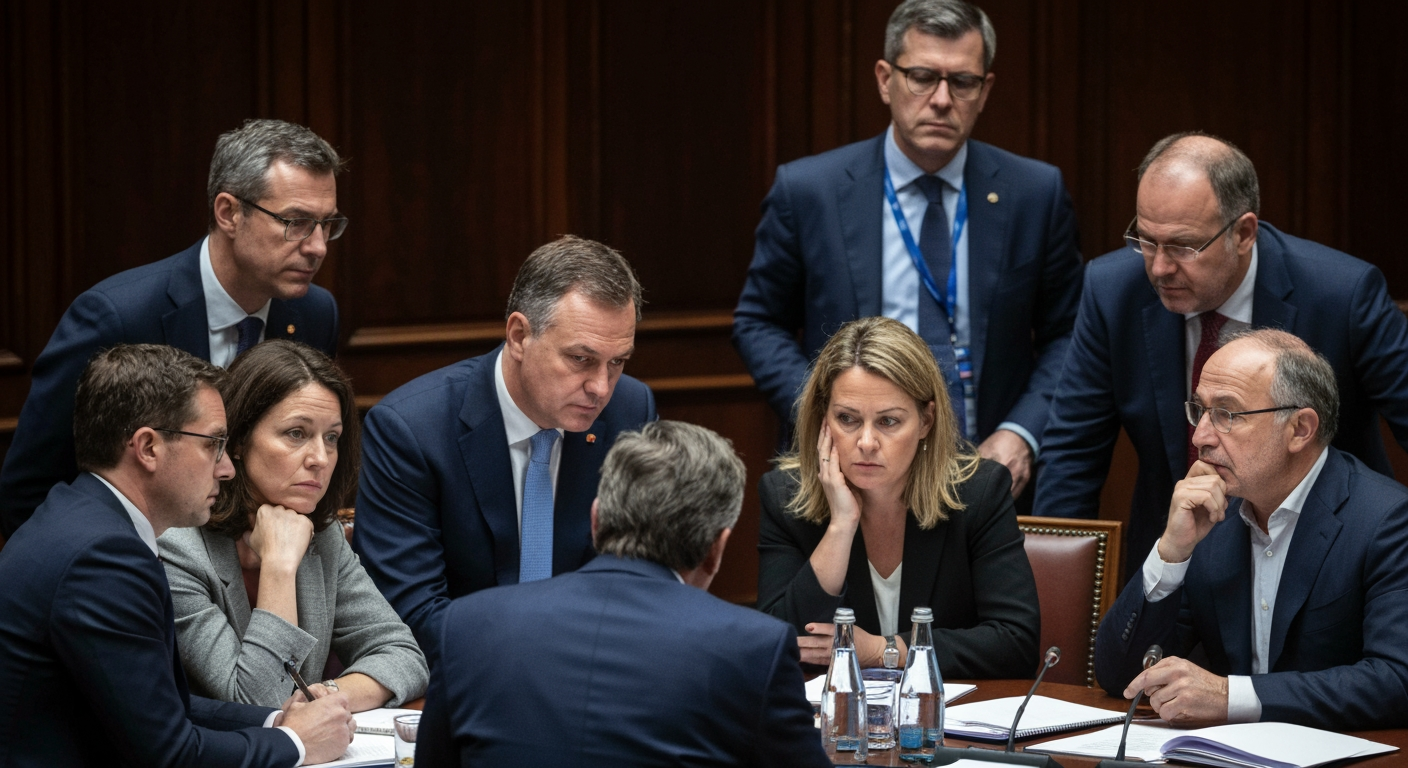
BRUSSELS — Europe finds itself at a critical juncture, actively contemplating a future where its collective defense might operate with significantly less, or even without, direct military leadership and substantial contributions from the United States. This strategic re-evaluation is fueled by mounting concerns over the long-term reliability of American security commitments, particularly in the wake of recent assertive rhetoric from Washington and shifting geopolitical priorities. The discussions, once theoretical, have accelerated into tangible planning, with European leaders acknowledging the urgent need to bolster their own military capabilities and forge a more autonomous defense posture.
The specter of a diminished U.S. role within the North Atlantic Treaty Organization (NATO) has prompted a profound reassessment across the continent. High-level officials from key European powers, including the UK, France, Germany, and Nordic nations, are engaged in structured, albeit informal, discussions to chart a path toward greater European defense self-sufficiency. This includes crafting a proposal to present to the United States, outlining a gradual transfer of defense responsibilities to European states over the next five to ten years. Such initiatives are seen as crucial steps to prevent potential chaos should Washington's commitment to the nearly eight-decade-old transatlantic alliance further recede.
The Shifting Sands of Transatlantic Security
For decades, European security has largely rested on the bedrock of NATO, with the United States serving as its indispensable foundation. The alliance's collective defense clause, Article 5, which stipulates that an attack on one member is an attack on all, has been a cornerstone of stability. However, recent statements from figures like former President Donald Trump, who has openly questioned NATO's value and threatened withdrawal, have eroded this long-held assumption of unwavering U.S. support. Secretary of State Marco Rubio has also indicated a need to "re-examine" the U.S. relationship with NATO, particularly after incidents where European allies exhibited reluctance to support American military actions outside the collective defense framework. This sentiment has led many European officials to conclude that the reliability of the United States is no longer a given.
This perceived unreliability, amplified by the ongoing conflict in Ukraine and broader global instabilities, has galvanized Europe to accelerate its pursuit of strategic autonomy. While NATO Secretary-General Mark Rutte initially dismissed the idea of Europe defending itself without the U.S. as a "silly thought," many European officials now consider it a default expectation, underscoring the dramatic shift in perception.
Bridging the Capability Gap: Europe's Uphill Battle
Building a robust, independent European defense capable of deterring and responding to modern threats is an immense undertaking, laden with significant challenges. Europe currently relies heavily on the U.S. for critical high-end capabilities that are not easily replicated. These include sophisticated intelligence, surveillance, and reconnaissance (ISR) assets, strategic airlift, advanced missile defense systems, and integrated command-and-control structures. The sheer fragmentation of European forces, distributed across numerous national armies, also presents a hurdle to effective collective action.
Experts estimate that replacing the conventional military capabilities currently provided by the U.S. could cost between $226 billion and $344 billion in new systems and platforms, with the overall long-term cost potentially reaching $1 trillion or more over 25 years. For instance, preventing a theoretical Russian assault on the Baltic states alone would require an arsenal of 1,400 tanks, 2,000 infantry fighting vehicles, and 700 artillery pieces, exceeding the combined firepower of French, German, Italian, and British land forces. Beyond hardware, Europe must also invest substantially in developing its own transport, missile, drone, communications, and intelligence capabilities.
Despite these daunting figures, European defense spending is on an upward trajectory. NATO figures for 2025 indicate that Europe and Canada collectively account for 48% of NATO spending, a notable increase from 40% in 2024. While the U.S. still contributes a larger share, the balance is shifting. European NATO members have committed to increasing defense spending, with some aiming to reach 5% of GDP by 2029 (comprising 3.5% for pure defense and the remainder for security research and development), a significant leap from the previous 2% target. The European Union has launched initiatives like the European Defence Fund (EDF), with a budget of nearly €7.3 billion for 2021-2027, to foster collaborative defense research and development and reduce fragmentation. Furthermore, the "ReArm Europe" plan aims to mobilize €800 billion for defense investment, supported by instruments like Security Action for Europe (SAFE), which will provide up to €150 billion in loans to member states for defense capabilities.
The Nuclear Question and Strategic Autonomy
A critical component of any truly independent European defense would be a credible nuclear deterrent. France, as Europe's primary nuclear power, is already taking steps to upscale its national nuclear arsenal, aiming to strengthen both French and broader European defense autonomy and deterrence capabilities. France is also exploring structured security relationships with other European countries to facilitate forward deterrence, though the specifics of broadening any deterrent beyond the existing nuclear states raise complex questions about command and control.
Beyond nuclear capabilities, the broader concept of "strategic autonomy" seeks to enhance Europe's ability to assess situations, make decisions, equip its forces, and act independently to defend its interests. This involves not only military capabilities but also strengthening resilience in critical infrastructure like energy, transport, and food supply, aligning with a "total defense" approach.
The Path Forward: A More European NATO?
While a formal U.S. withdrawal from NATO in the immediate future is considered unlikely due to bureaucratic processes and potential negative impacts on U.S. negotiating positions, the discussion has fundamentally altered the transatlantic security landscape. Even if the U.S. maintains formal membership, a significant reduction in its practical commitment could damage its credibility in European security irreparably.
European leaders, including General Francois Lecointre, former chief of France's armed forces, suggest that Europe must be capable of "thinking of NATO without the Americans." This future could involve a "Europeanization of NATO," where Europeans lead the alliance, even if the U.S. retains formal membership. This rebalancing would not necessarily mean an end to NATO, but rather its transformation. Without the U.S., NATO would still possess substantial military weight, with millions of troops and advanced aircraft. However, it would become less integrated, slower to respond, and less capable of fighting a modern multi-domain war at scale without the advanced enabling capabilities provided by the U.S.
The economic and strategic strain on Europe from a reduced U.S. presence would be significant, requiring not only increased defense spending but also greater cohesion among European nations to overcome historical divisions and national interests. Despite these formidable hurdles, the ongoing discussions and tangible steps toward enhanced European defense capabilities signify a resolute shift, as the continent prepares to assume greater responsibility for its own security in an increasingly unpredictable world.
Related Articles


Landmines Resurge Globally, Shattering Two Decades of Progress
The global effort to eradicate antipersonnel landmines, once heralded as a monumental success in humanitarian disarmament, is facing a perilous reversal. Despite an international treaty banning these indiscriminate...


Disinformation Campaigns Cloud Michigan's Critical US Senate Race
LANSING, Mich. — The fiercely contested Democratic primary for the U.S. Senate in Michigan has become a battleground not just of policy and ideology, but of pervasive disinformation, with progressive candidate Abdul...