Europe Grapples with Potential Troop Deployment in Ukraine Amidst Complex Security Calculus
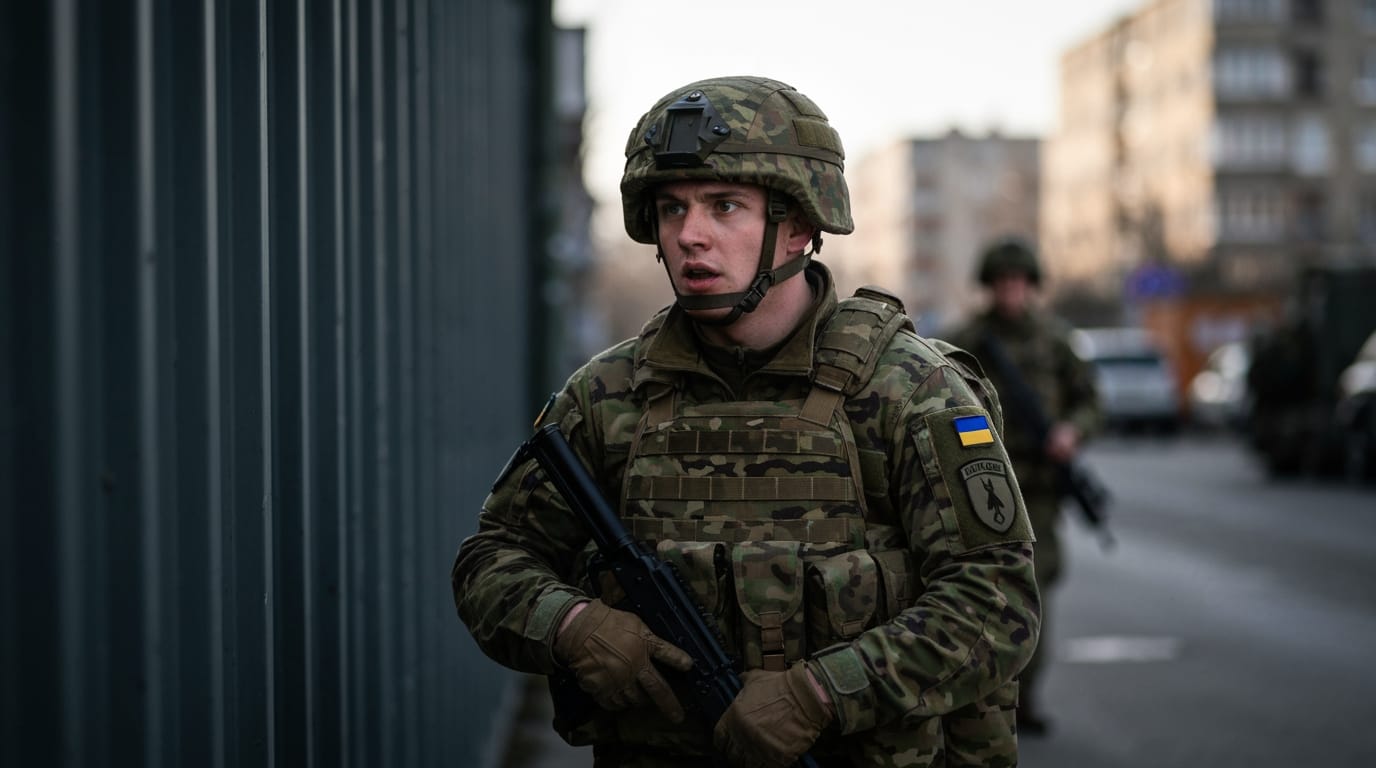
The prospect of European troops deploying to Ukraine has emerged as a significant point of discussion among allied nations, reflecting a profound shift in strategic thinking as the conflict with Russia continues. While direct combat involvement remains largely off the table during active hostilities, leaders are increasingly examining scenarios for post-ceasefire security, aiming to deter future aggression and stabilize the region. This evolving dialogue, spearheaded by nations like France and the United Kingdom, underscores a complex geopolitical calculation involving military capacity, political will, and the delicate balance of escalation.
The Evolving Discussion: From Aid to Presence
For much of the ongoing conflict, Western support for Ukraine has primarily focused on military aid, financial assistance, and sanctions against Russia. However, a notable shift began to materialize with French President Emmanuel Macron's assertions about not ruling out the deployment of foreign troops to Ukraine, particularly for enforcing a potential peace deal or serving as a "deterrence force" after the cessation of active hostilities. This stance was echoed by UK Prime Minister Keir Starmer, who indicated a willingness for Britain to contribute to a peacekeeping force. These statements have since propelled a broader European debate on the feasibility, implications, and modalities of such a military presence. The underlying objective for many proponents is to establish robust security guarantees for Ukraine, preventing a recurrence of conflict and ensuring stability in the event of a future peace agreement.
Diverse Visions for Deployment: Roles and Numbers
Discussions surrounding European troop deployment outline various potential roles, largely centered on post-conflict stabilization and deterrence rather than current frontline combat. One primary function envisioned for a multinational force is acting as a "reassurance" or "deterrence" measure, aimed at strengthening Ukraine's long-term defense capabilities and preventing renewed Russian attacks. French President Macron has suggested that foreign forces could serve as a second line of defense, positioned in the air or at strategically important areas, away from the front lines. Other proposed roles include training Ukrainian military personnel, overseeing the construction of protected facilities for weapons and equipment storage, and providing logistical infrastructure support. There has also been consideration for deploying forces to protect key Ukrainian cities, critical infrastructure, and potentially establishing joint air defense zones, particularly over western regions, to shield against missile and drone attacks.
The scale of such a deployment has been a subject of considerable discussion and recalibration. Initial proposals from British military figures reportedly suggested a force of up to 64,000 troops as part of a broader "coalition of the willing." However, this figure has been significantly scaled back due to concerns over capacity and readiness within European militaries. Current plans from the UK and France consider deploying up to 15,000 troops combined in the event of a peace agreement, a number deemed more realistic given the current strength of national armies. Indeed, some European defense officials privately admit that assembling even 25,000 troops across the continent would be a significant challenge, citing manpower and funding shortages, particularly without large-scale U.S. involvement. Ukraine's President Volodymyr Zelenskyy noted that support could also come through advanced weapons, technology, and intelligence.
A Continent Divided: Opposition and Concerns
Despite the calls for a potential European troop presence, the idea has met with considerable resistance and division across the continent. Several key European nations have explicitly ruled out or expressed strong reservations about deploying their own forces to Ukraine. Germany, through statements from Chancellor Friedrich Merz, has indicated being "far from" discussions on troop deployment, prioritizing diplomatic efforts for a ceasefire. While Merz later suggested not ruling out certain options, he also proposed stationing German troops in countries bordering Ukraine rather than inside Ukrainian territory. Italy, under Prime Minister Giorgia Meloni, has also consistently rejected sending Italian forces, emphasizing the need for Western unity and focusing on ending hostilities.
One of the most vocal opponents has been Hungary, whose Foreign Minister Peter Szijjarto warned that seeking a military presence in Ukraine risks triggering a "direct confrontation with Russia," stating that Hungary would "stay out of this." Poland and Spain have similarly ruled out direct troop deployments, while Finland generally opposes the idea.
A central concern driving this opposition is the inherent risk of escalation. Many fear that any deployment of European troops, regardless of their non-combat mandate, could draw European nations directly into a wider war with Russia. NATO, as an alliance, has officially stated that it has no plans for combat troops on the ground in Ukraine. However, NATO Secretary General Mark Rutte has acknowledged that several European states may send troops if Russia breaches a potential peace agreement, working towards a "coalition of the willing" with U.S. backing. Conditions for such a NATO-sanctioned deployment would include an absolute ceasefire respected by both sides, a strong mandate preferably under UN auspices, and a multinational force of sufficient numbers to ensure a significant presence along the Russian-Ukrainian border.
The Shadow of Washington and Moscow
The prospect of European troop deployment is inextricably linked to the stances of both the United States and Russia. The U.S. position has been a source of complexity and uncertainty. While the Trump administration has explicitly ruled out sending U.S. troops to Ukraine, European Commission President Ursula von der Leyen indicated that former President Donald Trump "reassured" an American presence as part of the "backstop" for European deployments. The U.S. is also expected to lead a ceasefire monitoring and verification mechanism with European participation, suggesting a continuing, albeit indirect, role in post-conflict security. However, the reliability of these assurances, especially under a potentially unpredictable U.S. administration, has been questioned by some observers, who warn that Europe might be asked to assume significant risk without firm U.S. commitments.
Russia's reaction to any proposed European military presence has been consistently and vehemently negative. Moscow has repeatedly declared that the deployment of armed forces from other countries in Ukraine under any pretense would be "absolutely unacceptable" and would be regarded as "preparations for foreign military intervention." Russian Foreign Ministry spokeswoman Maria Zakharova warned that Moscow would consider any such deployment as "external intervention" and that all foreign units and facilities would be deemed "legitimate military targets" by Russian forces. The Kremlin has also warned that a direct conflict between NATO and Russia would become "inevitable" if the alliance were to send combat troops to Ukraine. This hardened stance from Moscow poses a significant hurdle, as any UN-mandated peacekeeping mission, often a prerequisite for such deployments under international law, would likely be blocked by Russia.
Conclusion: A Precarious Path Forward
The discussion surrounding European troop deployment in Ukraine illustrates the profound challenges and high stakes involved in charting a path toward lasting security in the region. While the intent to create a deterrent force and provide robust post-ceasefire guarantees for Ukraine is clear for some European leaders, the practicalities are fraught with military, political, and diplomatic complexities. The varied perspectives among European nations, coupled with the explicit threats from Russia and the ambiguous role of the United States, create a precarious environment for decision-making.
Any move towards a European military presence in Ukraine would necessitate navigating a delicate balance between reassuring Kyiv and avoiding direct escalation with Moscow. The logistical demands, the potential for unforeseen contingencies, and the need for a unified international mandate underscore the intricate nature of this ongoing debate. As leaders continue to deliberate, the ultimate form and impact of any European troop deployment in Ukraine remain subject to geopolitical dynamics and the evolving realities on the ground.