Europe Navigates Complex Path Toward Tech Independence, Weighing Severance from Chinese Giants
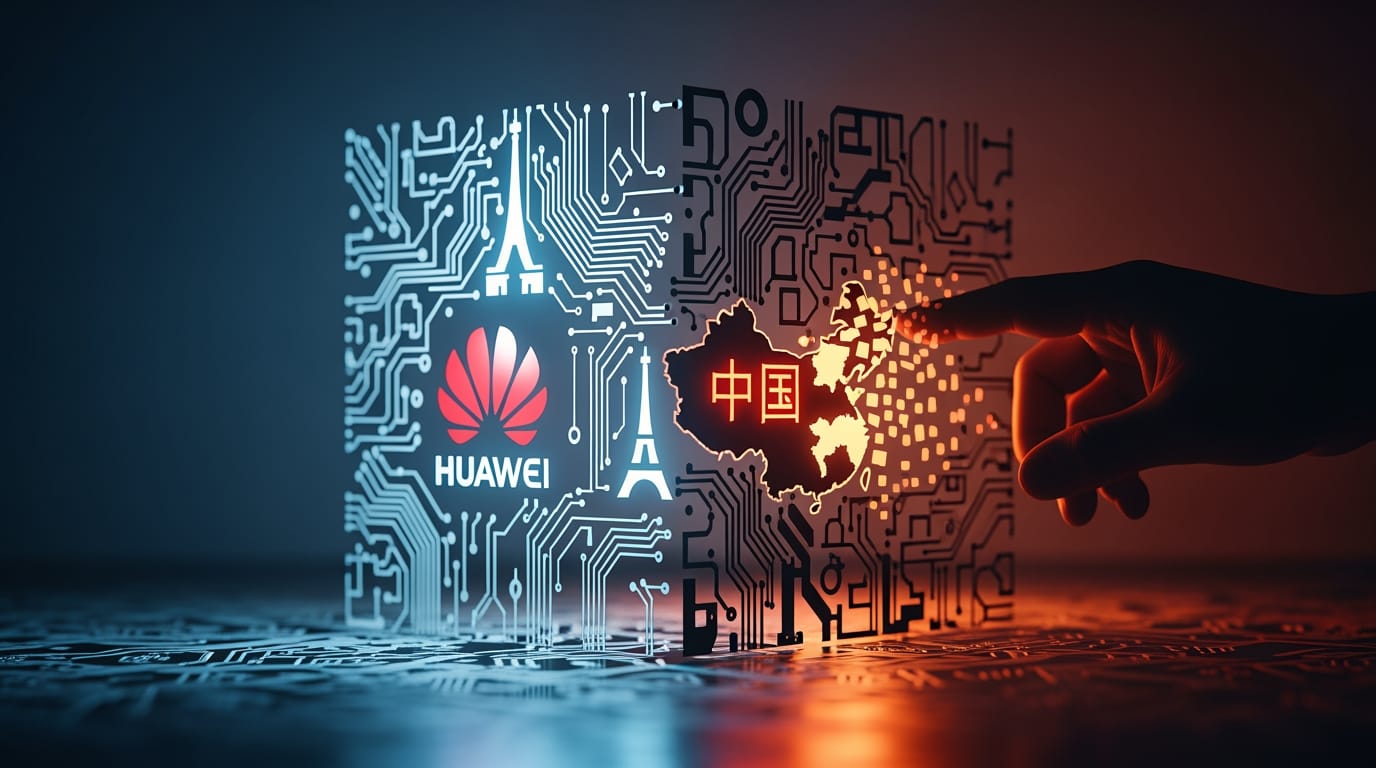
BRUSSELS — Europe is embarking on a pivotal and complex journey to redefine its technological landscape, increasingly signaling a move to distance itself from Chinese technology giants like Huawei. Propelled by mounting national security concerns, geopolitical tensions, and an assertive drive for digital sovereignty, the continent is debating and enacting measures aimed at reducing its profound reliance on Chinese tech, especially in critical infrastructure. This strategic recalibration marks a significant shift, challenging decades of deep economic integration and setting the stage for a fragmented global technological future.
The Deepening Chasm: Security Fears and Geopolitical Realities
The impetus for Europe’s reevaluation of its relationship with Chinese technology is multifaceted, rooted primarily in escalating national security anxieties. At the forefront of these concerns is Huawei's extensive involvement in the build-out of 5G telecommunications networks across the continent. Critics, including the European Commission, have consistently flagged the potential for state-backed surveillance and unauthorized data access, citing China's National Intelligence Law of 2017, which can compel Chinese companies to cooperate with state intelligence operations regardless of their stated intentions. This statutory framework, combined with China's "military-civil fusion" strategy, blurs the lines between commercial enterprise and national security objectives, presenting a systemic risk to European data and infrastructure.
Beyond 5G, European apprehensions have expanded to encompass a broader spectrum of critical infrastructure. Concerns have been raised about Chinese state-linked entities securing footholds in strategic assets such as ports, rare earth mineral supply chains, and undersea cables, which are vital to Europe's security and defense. Recent discoveries of vulnerabilities in Chinese-manufactured components, such as undocumented cellular radios in solar cell inverters and software weaknesses in electric buses that could allow remote disabling, underscore the potential for sabotage or espionage within European energy grids and transportation systems. Furthermore, a series of sophisticated cyberattacks, including those attributed to Chinese state-sponsored groups like "Volt Typhoon" and "Salt Typhoon," targeting European networks, have intensified the focus on supply chain integrity. The ongoing scrutiny has also led to corruption allegations, with probes linking Huawei to alleged bribery of EU lawmakers, further complicating the company's standing. The United States has been a vocal proponent of curbing Chinese tech, and its consistent pressure has influenced several European nations to reconsider their engagements.
The Huawei Huddle: Europe's Phased Disengagement from 5G
The journey to disentangle from Huawei’s 5G technology has been gradual and, at times, uneven across the European Union. Initial steps included the European Commission’s "5G Cybersecurity Toolbox" in 2020, which provided recommendations for member states to manage security risks, specifically identifying "high-risk vendors" that might be subject to pressure from non-EU countries. This has since evolved into more forceful calls from the Commission to phase out equipment from companies like Huawei and ZTE from critical 5G networks, with the Commission even considering making these recommendations legally binding.
A growing number of European countries have already taken definitive action. The United Kingdom, though no longer an EU member, banned Huawei from its 5G networks in 2020, with a deadline to remove existing equipment by the end of 2023. Germany, a significant economic power, proposed in September 2023 that telecommunications operators must remove all critical components made by Huawei and ZTE from their 5G core networks by 2026. Other nations, including France, Sweden, Estonia, Denmark, Lithuania, Latvia, Portugal, and Romania, have implemented various forms of restrictions or outright bans on Chinese 5G equipment. France, for instance, informed operators in 2020 that licenses for Huawei equipment would not be renewed upon expiry, effectively phasing the company out of mobile networks.
Despite these concerted efforts, a complete, unified stance remains elusive. Some member states, notably Spain and Greece, continue to utilize Huawei and ZTE network solutions, highlighting the internal divisions and economic complexities of such a broad-reaching policy. The economic reality often presents a challenge: Chinese state-owned banks have historically offered highly favorable, long-term financing to countries and operators that choose Huawei or ZTE, creating a cost advantage that Western competitors struggle to match. To counteract this, the European Commission is now reportedly considering withholding "Global Gateway" loans for infrastructure projects in developing countries that involve Huawei equipment, aiming to influence technology choices beyond its immediate borders.
Beyond Telecoms: Broadening the Scope of "De-risking"
The shift away from Chinese technology extends far beyond 5G infrastructure, encompassing a wider strategy of "de-risking" from China across multiple critical sectors. Europe's vulnerability to supply chain disruptions, particularly for critical raw materials essential for its green and digital transitions, has become a pressing concern. The continent's heavy dependence on China for these materials has prompted initiatives like the EU's Critical Raw Materials Act, designed to bolster resilience and reduce reliance on single suppliers.
The EU's broader "Economic Security Package," unveiled in December 2025, reflects a proactive, anticipatory mindset. Its three main goals are to effectively utilize existing tools, support high-risk industrial sectors, protect sensitive data, and prevent disruptions to physical and cyber critical infrastructure, while also bolstering collaboration with international partners. This strategy emphasizes "soft decoupling" in sensitive areas, which means Chinese companies operating in Europe may face higher technological barriers, more stringent security screenings, and increased competition in sectors like semiconductors and new energy. The China Chamber of Commerce to the EU (CCCEU) acknowledges this shift, predicting a "precision decoupling" that will lead to a European market with more politicized rules for Chinese businesses. This balancing act involves navigating the complexities of reducing strategic dependencies without fully severing economic ties, a move that could lead to significant trade losses and higher costs for European consumers. Concerns also persist regarding intellectual property theft and industrial espionage, further fueling the drive for greater economic autonomy.
Forging Digital Sovereignty and Cultivating European Alternatives
Central to Europe's long-term strategy is the pursuit of "digital sovereignty," which aims to carve out a "Third Way" for digital governance—distinct from both the American laissez-faire approach and China's state-controlled model. This ambition is underpinned by robust regulatory frameworks such as the General Data Protection Regulation (GDPR), the Digital Markets Act (DMA), and the upcoming AI Act, which collectively aim to protect fundamental rights and foster a human-centric digital environment.
To achieve this, the EU is investing heavily in strengthening its own digital infrastructure and innovation capabilities. Initiatives like the Digital Decade Programme aim to boost digital skills, infrastructure, and the digitalization of businesses. There is also a push for a potential second EU Chips Act to bolster domestic semiconductor production and reduce reliance on external suppliers. Europe possesses strong network equipment manufacturers like Nokia and Siemens, which are poised to fill the void left by Chinese vendors. The strategy involves not only reducing dependence on China but also on the United States in critical technological areas. However, scaling up European tech companies and ensuring access to vast datasets and computing infrastructure remains a significant challenge, with Europe currently lagging behind the US and China in areas like artificial intelligence. For businesses, navigating this transition can be costly, potentially forcing them into separate operations for China and the rest of the world.
A Complex Balancing Act in a Fragmented World
Europe's evolving stance on Chinese technology represents a profound shift, driven by a convergence of national security imperatives, geopolitical competition, and a resolute pursuit of digital autonomy. While a complete "decoupling" from China, its largest trading partner for goods, is viewed as economically unfeasible and undesirable, a "selective" or "precision decoupling" is firmly underway. The continent is grappling with the intricate task of balancing the undeniable economic benefits of engagement with China against the perceived long-term risks to its security, values, and technological independence.
The implications of this recalibration are far-reaching, shaping Europe's industrial policy, trade relations, and its role in a multipolar world. As the EU strives to build resilient supply chains, foster domestic innovation, and establish its unique model of digital governance, it faces the formidable challenge of uniting its diverse member states and overcoming significant economic hurdles. Europe's journey towards tech independence from China is set to redefine the global technological landscape, marking a decisive move towards securing its future in an increasingly fragmented and competitive digital era.