Europe Navigates Perilous Waters as US-Israel War with Iran Escalates
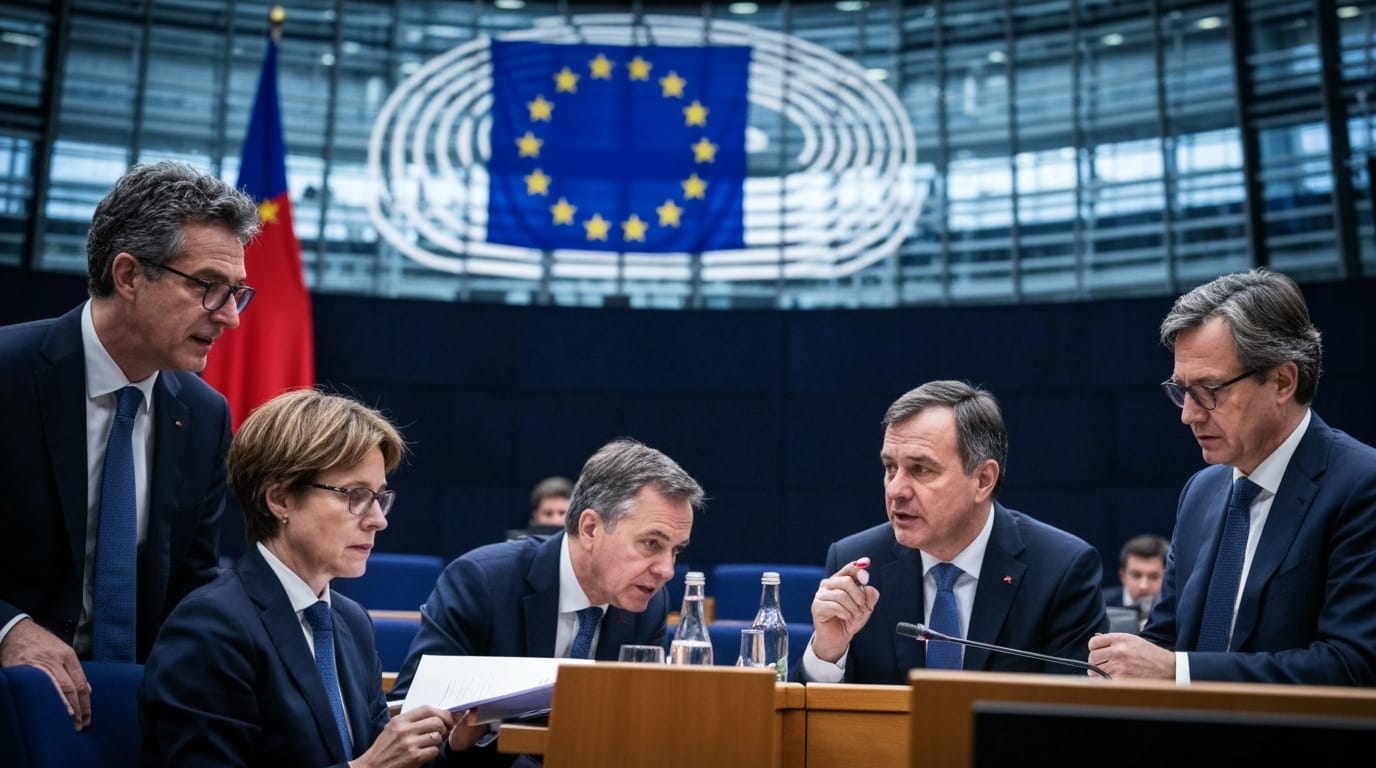
Brussels, March 6, 2026 – Europe finds itself precariously positioned amidst the rapidly escalating military conflict between the United States, Israel, and Iran, which began with joint US-Israeli strikes on February 28. As the region plunges deeper into instability, European nations are attempting a delicate balancing act: condemning Iran's aggressive actions while largely distancing themselves from the initial offensive, all while grappling with severe economic repercussions and a burgeoning humanitarian crisis on their southern flank. The continent's traditional diplomatic leverage in the Middle East appears diminished, forcing a reactive stance as global energy markets reel and the specter of wider regional conflagration looms.
The Diplomatic Tightrope: Unity Tested Amidst Escalation
The outbreak of hostilities on February 28, marked by coordinated US-Israeli military actions against Iran, has thrust Europe into a complex diplomatic challenge. While the European Union has consistently urged de-escalation and a return to diplomacy, a unified response has been elusive. On March 1, the E3 nations—France, Germany, and the United Kingdom—issued a joint statement condemning Iran's ongoing nuclear program, ballistic missile development, and destabilizing regional activities. Critically, the statement also clarified that these European powers "did not participate in these strikes" initiated by the US and Israel.
However, the neutrality has proven difficult to maintain as Iran's retaliatory strikes have spread across the region, targeting Gulf Cooperation Council (GCC) countries and even a British military base in Cyprus. The United Kingdom, initially hesitant, has reversed course, now permitting the US to use British bases for "defensive purposes" and deploying additional RAF Typhoon jets, Wildcat helicopters, and a Royal Navy destroyer to the region. British Prime Minister Keir Starmer stated that while the UK did not join the initial strikes, Iran's subsequent attacks on regional partners necessitated a change in posture. Similarly, France has authorized temporary access for US aircraft on French soil and is engaged in defensive operations to counter Iranian projectiles. Germany, while not openly criticizing the US on international law, is reportedly supportive of the call for Iranian regime change. In contrast, Spain has adopted a more principled stance, labeling the war as illegal and lacking an effective strategy. This spectrum of responses highlights the internal divisions within Europe, struggling to reconcile Alliance commitments with a desire to avoid direct entanglement in a conflict they did not initiate.
The European Commission, led by President Ursula von der Leyen, has warned of "shockwaves" across energy, nuclear stability, transport, migration, and security, reiterating that a diplomatic solution remains the only lasting path. Despite these calls, the EU's direct leverage in resolving the conflict has notably diminished, a consequence of the US withdrawal from the Joint Comprehensive Plan of Action (JCPOA) in 2018, which undercut years of European diplomatic efforts.
Economic Tremors: Europe's Vulnerable Energy Lifelines
The economic fallout from the escalating conflict has been immediate and severe, particularly for Europe. On March 2, oil prices surged by approximately 8%, while European natural gas prices spiked by around 20%. The primary concern stems from the disruption of maritime traffic through the Strait of Hormuz, a critical chokepoint through which about 20% of global oil and all liquefied natural gas (LNG) exports from Qatar and the UAE transit. Since the initial strikes, shipping through the strait has slowed to a near standstill, with some reports indicating it is essentially unnavigable.
Europe's energy security, already strained by efforts to reduce reliance on Russian supplies, is acutely vulnerable. The continent entered 2026 with significantly lower gas storage levels compared to previous years—46 billion cubic meters (bcm) at the end of February 2026, versus 60 bcm in 2025 and 77 bcm in 2024. A prolonged disruption in LNG flows from the Gulf would force Europe to compete with Asian buyers, driving up prices and potentially jeopardizing industrial competitiveness. Economic analysts project that the US-Israeli actions are expected to increase inflation and negatively affect Europe's already slow economic growth, potentially delaying further interest rate cuts by the European Central Bank and the Bank of England. Beyond energy, the conflict has disrupted commercial goods flow, particularly through the Suez Canal, forcing rerouting around Africa and increasing freight costs.
Diplomatic Impasse and Sanctions Landscape
Europe's long-standing efforts to engage Iran diplomatically, particularly through the JCPOA, have been largely sidelined. The original nuclear deal, a significant achievement of EU diplomacy, has been in decline since the US withdrawal in 2018, and Iran has subsequently reactivated aspects of its nuclear program. While the E3 nations continue to call for a negotiated solution and for Iran to curb its nuclear ambitions, Tehran has reportedly lost confidence in the EU as a key implementer of the JCPOA.
Simultaneously, the EU has intensified its sanctions regime against Iran. In January 2026, new human rights sanctions were adopted in response to the regime's brutal repression of protests, and the Islamic Revolutionary Guard Corps (IRGC) was formally designated as a terrorist organization, subjecting it to comprehensive asset freezes and financial prohibitions across the EU. Additional sanctions target Iran's involvement in drone and missile programs, particularly in light of its military support to Russia in the war against Ukraine. These measures, while signaling strong disapproval of Iran's actions, also underscore the deep chasm that has developed between Europe and Tehran, complicating any potential mediating role.
Humanitarian Crisis and Regional Destabilization
The human cost of the escalating conflict is profound and reverberates across the Middle East, directly impacting Europe's stability concerns. Coordinated military strikes and retaliatory missile and drone attacks have spread across multiple countries, leading to a surge in civilian casualties and widespread displacement. Hospitals and clinics in affected areas face overwhelming demand, coupled with fuel shortages, damaged infrastructure, and disrupted supply chains, severely limiting their ability to provide essential care.
The United Nations Office for Project Services (UNOPS) warns that fragile civilian infrastructure across the region is under immense pressure, threatening basic services for millions. Displacement continues to surge, notably in Lebanon, with tens of thousands forced from their homes. For Europe, these developments raise serious concerns about potential migratory flows and broader regional security. The EU has emphasized the protection of civilian life, respect for international law, and the safeguarding of maritime routes, including in the Strait of Hormuz, recognizing the far-reaching consequences of sustained instability.
Conclusion: A Continent on Edge
Europe's position in the US-Israel war with Iran is defined by a complex interplay of diplomatic caution, economic vulnerability, and humanitarian concern. While European leaders advocate for de-escalation and a negotiated settlement, the continent's ability to influence the trajectory of the conflict appears limited. The immediate economic shockwaves, particularly in energy markets, coupled with the deepening humanitarian crisis, underscore Europe's direct stake in regional stability. As the conflict widens, Europe remains a continent on edge, struggling to forge a united front and protect its interests amidst a geopolitical upheaval that threatens to redefine the Middle East and its broader international implications.


