European Allies Rebuke Trump Over NATO Troop Disrespect
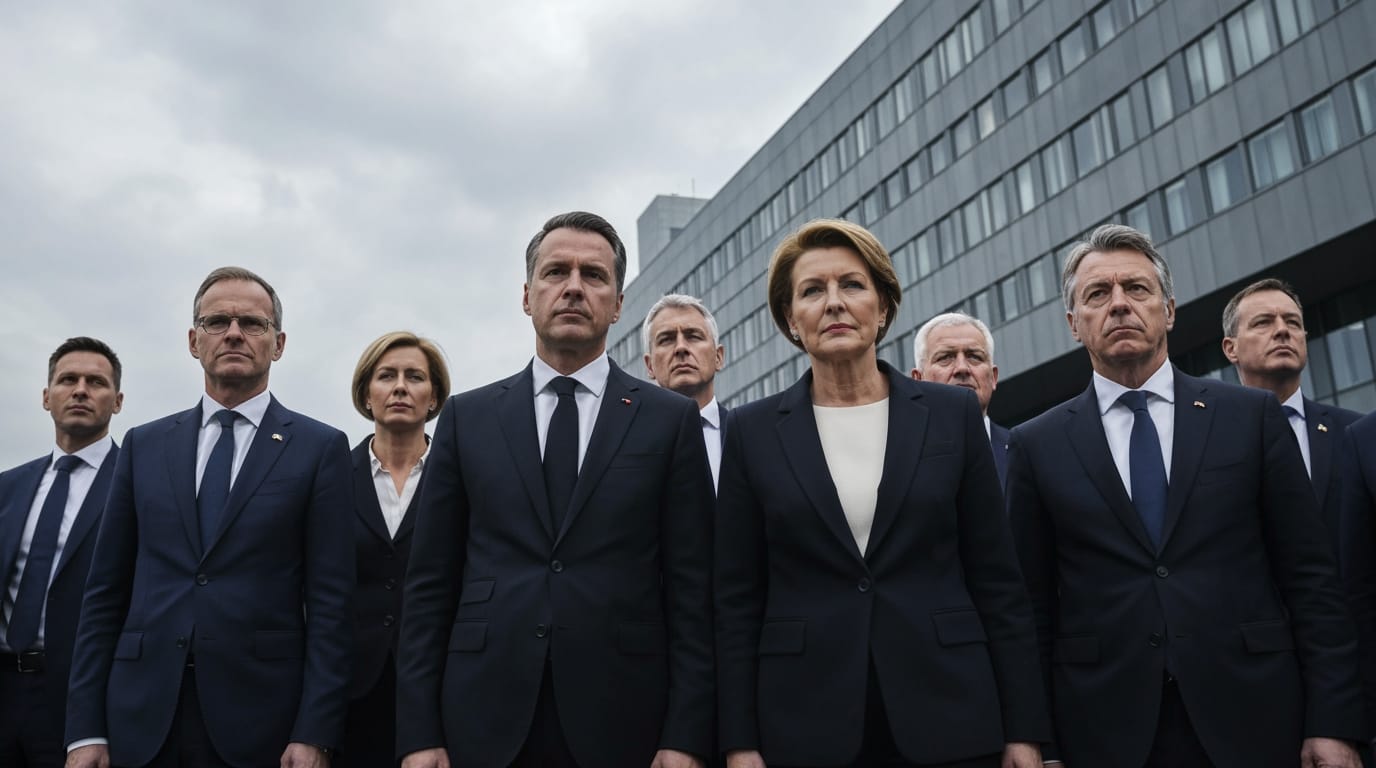
European leaders have swiftly condemned recent remarks by former U.S. President Donald Trump, who suggested that NATO allies had shirked their duties in Afghanistan and implied a conditional U.S. commitment to collective defense. The comments have sparked widespread outrage across the continent, prompting strong rebuttals from Germany, France, the United Kingdom, Italy, and Poland, who underscored the significant sacrifices their nations made in joint military operations and reaffirmed the bedrock principles of the transatlantic alliance. The controversy highlights persistent tensions within NATO regarding defense burdens and the future of European security.
Trump's Provocative Statements Ignite Transatlantic Row
The latest diplomatic friction began with Trump's assertions in a recent interview, where he claimed that the United States "never needed" the North Atlantic Treaty Organization and that allied forces in Afghanistan "stayed a little off the front lines". These statements were reportedly reiterated in Davos, Switzerland, and at a rally in South Carolina. More controversially, Trump suggested he would not defend NATO member states that fail to meet their defense spending commitments, going so far as to say he would "encourage" Russia to attack them. While Trump later offered praise for "brave" British soldiers, he did not retract his broader criticism aimed at other NATO allies, further exacerbating the discontent.
A United Front of Condemnation
The response from European capitals was immediate and unequivocal, demonstrating a unified rejection of Trump's characterizations.
In Germany, Defense Minister Boris Pistorius called for an apology from Trump, labeling his remarks as "disrespectful" and "simply not true." Pistorius highlighted Germany's substantial contribution to NATO missions in Afghanistan, noting that 59 German soldiers lost their lives in service alongside U.S. forces. German Chancellor Olaf Scholz also weighed in on the broader issue of defense spending, dismissing Trump's call for NATO allies to dedicate 5% of their GDP to defense as "unrealistic" due to its immense cost, despite Germany recently meeting the 2% target.
France also voiced strong disapproval, with Defense Minister Catherine Vautrin emphasizing that the sacrifices of French soldiers in Afghanistan "commands respect". The office of French President Emmanuel Macron characterized Trump's comments as "unacceptable" and "not worthy of response". Macron has consistently advocated for greater European "strategic autonomy" to reduce over-reliance on the United States within NATO, a sentiment reinforced by these recent tensions. He has also called for significant increases in France's defense budget, aiming to boost spending by billions in the coming years.
The United Kingdom was equally resolute in its condemnation. Prime Minister Keir Starmer described Trump's remarks as "insulting and frankly appalling," asserting that Trump was "wrong to diminish the role of NATO troops" in Afghanistan. Kemi Badenoch, a Conservative leader, further dismissed Trump's claims as "flat-out nonsense," underscoring that British, Canadian, and other NATO troops fought and died alongside the U.S. for two decades.
Italy's Prime Minister Giorgia Meloni expressed "astonishment" at Trump's statements, deeming them "unacceptable" for downplaying the contributions of NATO countries. Meloni pointed to the heavy price paid by Italy, with 53 soldiers killed and over 700 wounded in Afghanistan. Similarly, Poland's Prime Minister Donald Tusk issued a thinly veiled critique, invoking the spirit of "all for one, and one for all," a clear reference to NATO's foundational principle of collective defense. Polish Defense Minister Wladyslaw Kosiniak-Kamysz reinforced this, stating that undermining NATO's credibility amounts to "weakening the entire NATO". Other nations, including Denmark and Norway, also officially registered their disapproval, with Norwegian Prime Minister Jonas Gahr Store calling the comments "disrespectful".
NATO's Core and Europe's Evolving Defense Posture
These latest remarks from Trump strike at the heart of NATO's collective defense commitment, enshrined in Article 5 of its founding treaty, which stipulates that an attack on one member is considered an attack on all. The principle has been a cornerstone of transatlantic security for over 70 years.
Trump's long-standing criticism of European defense spending has been a recurring theme, with his administration consistently asserting that allies have relied too heavily on U.S. military support. While NATO has a long-established target for members to spend at least 2% of their GDP on defense, many European nations have been accelerating their efforts to meet and even exceed this threshold, particularly since the full-scale invasion of Ukraine by Russia in 2022. Germany, for instance, has committed a 100 billion euro defense fund and aims to surpass the 2% target. NATO leaders recently agreed to a new target of 5% of GDP on defense budgets by 2035, although some, like Germany's Scholz, find this aspirational figure challenging to achieve.
The current geopolitical climate, exacerbated by the war in Ukraine and the uncertainty surrounding U.S. commitment, has intensified discussions within Europe about developing greater strategic autonomy and enhancing its own defense capabilities. Leaders like Macron are advocating for a stronger, more self-reliant European defense architecture, complementing NATO while ensuring the continent's ability to act independently when necessary.
Implications for Transatlantic Unity
The latest exchange underscores the ongoing fragility of transatlantic relations, particularly concerning defense cooperation. While European leaders remain committed to the NATO alliance, Trump's comments have rekindled concerns about the reliability of the U.S. security guarantee, especially if he were to return to office.
The episode serves as a powerful reminder of the fundamental importance of mutual respect and shared sacrifice within military alliances. As European nations continue to bolster their defense spending and capabilities, the debate surrounding NATO's future, its burden-sharing mechanisms, and the enduring strength of transatlantic unity remains at the forefront of international security discussions. The coming months will likely see continued efforts by European leaders to navigate these challenges, seeking to reinforce their collective security while adapting to an evolving global landscape.


