European Astronaut Luca Parmitano Makes History with Artemis III Selection
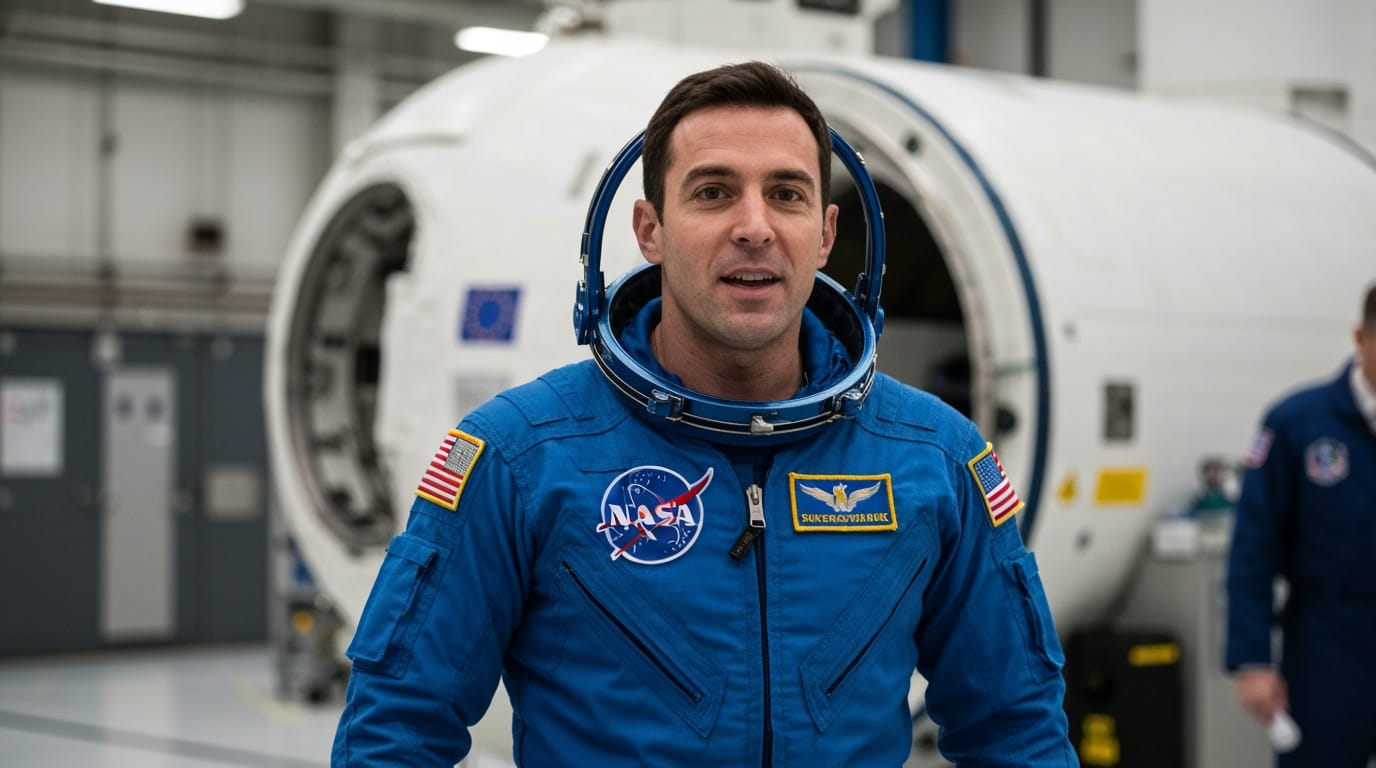
HOUSTON, TEXAS – June 9, 2026 – In a landmark announcement affirming the deepening international collaboration in humanity’s return to the Moon, NASA today named European Space Agency (ESA) astronaut Luca Parmitano as a pilot for the upcoming Artemis III mission. This selection marks a historic moment, as Parmitano becomes the first European to be assigned to an Artemis crew, underscoring Europe's pivotal role in NASA's ambitious lunar exploration program. The mission, slated for launch as early as late 2027, will not embark on a direct lunar landing but will instead conduct crucial in-Earth orbit tests of lunar lander systems, setting the stage for future Moon missions.
The decision, revealed at the Johnson Space Center in Houston, highlights the intricate dance of international partnership and technological development driving the Artemis program forward. Parmitano will join NASA astronauts Randy Bresnik, Frank Rubio, and Andre Douglas aboard the Orion spacecraft, launched by the powerful Space Launch System (SLS) rocket. Their primary objective will be to rendezvous and dock with pathfinder versions of commercial Human Landing Systems (HLS) in low Earth orbit, a vital step in validating the complex procedures required for eventually transporting astronauts to the lunar surface.
A New Chapter in Transatlantic Space Exploration
The inclusion of an ESA astronaut on an Artemis mission signifies a profound evolution in the collaborative framework between NASA and its international partners. While the Artemis program has always envisioned global participation, Parmitano’s assignment is a tangible representation of this commitment. Josef Aschbacher, ESA's Director General, emphasized that Parmitano's role as pilot reflects the "depth of European expertise in human spaceflight and draws on his extensive operational experience in high-pressure situations." This milestone not only recognizes Europe's ongoing contributions but also paves the way for further integration of international astronauts in future deep-space endeavors.
Europe's contribution to the Artemis program extends significantly beyond astronaut selection. The European Space Agency is a critical partner, notably through its provision of the European Service Module (ESM) for the Orion spacecraft. The ESM serves as the powerhouse for Orion, supplying essential elements such as electricity, propulsion, thermal control, water, and oxygen for the crew. For Artemis III, ESA is providing its third ESM, a testament to Europe's indispensable technical capabilities. This module, built by Airbus Defence and Space, is assembled in Bremen, Germany, with components sourced from across Europe and the United States, highlighting the global industrial effort behind the mission.
Artemis III: A Testbed for Future Lunar Landings
While early iterations of the Artemis III mission concept envisioned a direct landing on the Moon, the current plan focuses on a rigorous Earth-orbital test flight. This strategic adjustment aims to de-risk future lunar landing attempts by thoroughly validating critical technologies and procedures. The crew will undertake challenging rendezvous and docking exercises with test versions of lunar landers developed by commercial entities like SpaceX and Blue Origin. These tests are broadly comparable in their foundational importance to the Apollo 9 mission, which validated the Lunar Module in Earth orbit before later missions went to the Moon.
The targeted launch for Artemis III is late 2027, though previous estimates suggested mid-2027, indicating the dynamic nature of complex spaceflight schedules. This mission will launch from NASA's Kennedy Space Center in Florida, with the Orion spacecraft and its crew spending approximately two weeks in low Earth orbit. Successful completion of these orbital demonstrations is paramount for advancing to Artemis IV, which is tentatively scheduled as the first crewed lunar landing mission of the Artemis program in 2028.
A Veteran Astronaut at the Controls
Luca Parmitano brings a wealth of experience to this groundbreaking mission. A Colonel in the Italian Air Force and a seasoned test pilot, Parmitano became an ESA astronaut in 2009. He has already completed two long-duration missions to the International Space Station (ISS), spending approximately 367 days in space. During these missions, he supported numerous scientific experiments and conducted six spacewalks. Notably, he commanded Expedition 61 on the ISS, becoming the first Italian and third European to hold this prestigious role. His prior spaceflight experience includes a remarkable incident during a 2013 spacewalk where he remained composed despite his helmet unexpectedly filling with water, a testament to his calm under pressure. This extensive background in orbital operations and his technical acumen as a test pilot make him an ideal candidate for the demanding pilot role on Artemis III.
The Artemis program itself is a multi-faceted initiative led by NASA, aiming to return humans to the Moon for the first time since the Apollo era, establish a sustained lunar presence, and ultimately pave the way for human missions to Mars. This grand vision is underpinned by broad international cooperation, formalized through the Artemis Accords. These non-binding agreements, first signed in 2020, outline principles for peaceful and responsible space exploration, with 67 nations having joined by May 2026, including Italy.
The Road Ahead
With the crew now named, Parmitano and his fellow astronauts will embark on a rigorous training regimen. This will include extensive preparation on Orion spacecraft systems and the intricate operations of the human landing systems. The Artemis III mission represents a critical stepping stone, a complex, high-stakes orbital ballet designed to refine the technologies and operational protocols essential for humanity's continued push deeper into the solar system. The inclusion of Luca Parmitano ensures that Europe will be at the controls, literally, as this new chapter of lunar exploration unfolds.


