European NATO Allies Boost Defense Spending by 20% in 2025 Amid Evolving Global Threats
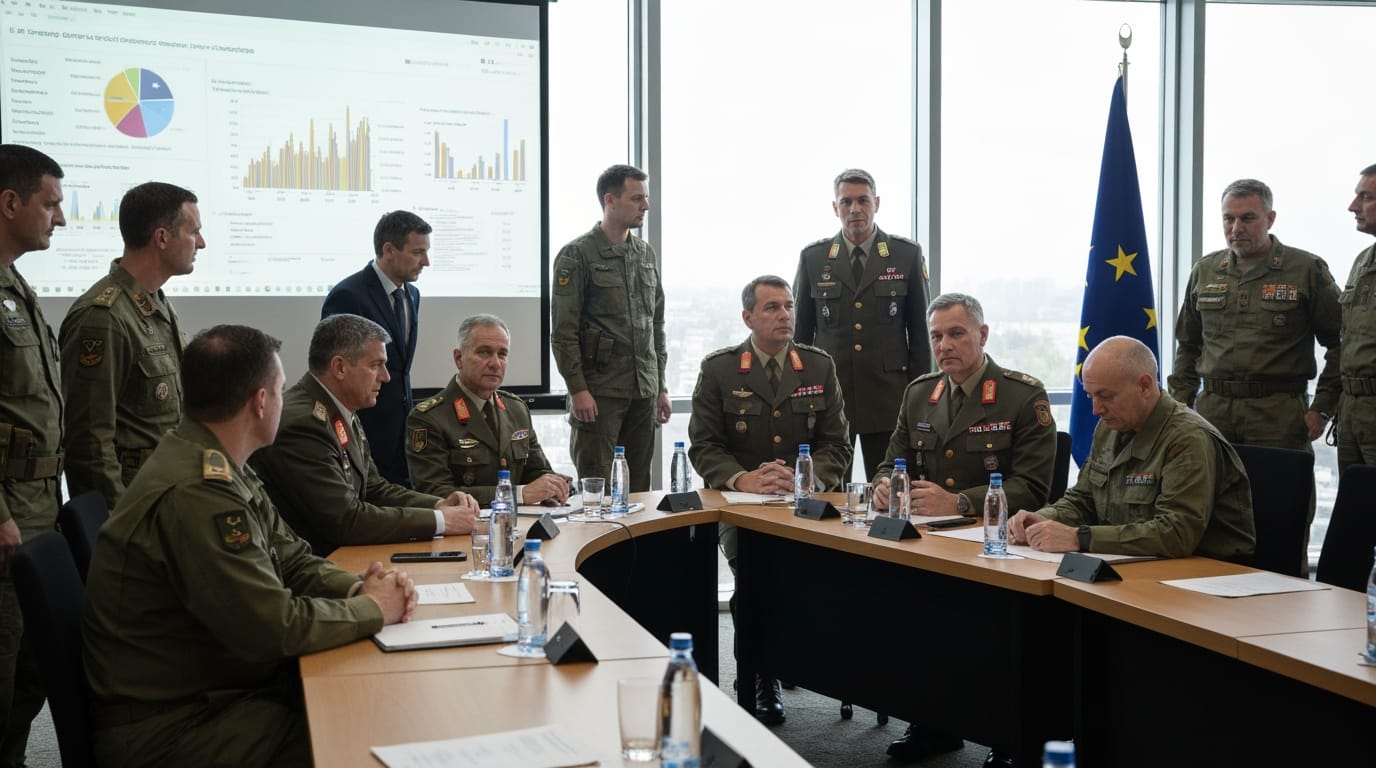
Brussels, Belgium – European NATO member states, alongside Canada, significantly increased their defense spending by nearly 20% in 2025 compared to the previous year, marking a dramatic shift in the continent's approach to security. This surge, totaling $574 billion in additional defense expenditure, reflects a concerted effort to bolster military capabilities in response to escalating geopolitical tensions, particularly Russia's ongoing aggression in Ukraine, and sustained pressure from the United States.
The substantial rise, confirmed by NATO Secretary General Mark Rutte in his annual report published on March 26, 2026, signals a pivotal moment for the Alliance. For the first time, all NATO allies reported meeting or exceeding the longstanding target of allocating at least 2% of their Gross Domestic Product (GDP) to defense, a goal initially set in 2014. This achievement comes as NATO leaders agreed to an even more ambitious target in 2025: dedicating 5% of GDP to defense and related investments by 2035.
A New Era of European Rearmament
The year 2025 stands out as a watershed moment for European defense. Following years of underinvestment by many member states, the landscape has been irrevocably altered by the full-scale invasion of Ukraine by Russia, which prompted a profound reassessment of national security priorities across Europe. The conflict underscored the urgent need for enhanced military readiness, robust defense industries, and greater strategic autonomy for the continent.
The almost 20% increase in spending represents a tangible commitment by European nations to assume greater responsibility for their collective defense. This momentum has been further amplified by persistent calls from the United States, notably from President Donald Trump, for allies to significantly boost their military budgets and contribute more equitably to the Alliance's burden-sharing. While Europe's combined GDP for NATO members was projected to reach 2.04% in 2025, the new targets aim for much higher contributions.
Ambitious New Targets and Growing Disparities
At the 2025 NATO Summit in The Hague, a landmark decision was reached to establish a new, more stringent defense spending target. By 2035, member states are now committed to investing 5% of their GDP annually in defense. This includes a 3.5% allocation for core defense requirements, such as troops and weaponry, and an additional 1.5% for broader defense-related measures, encompassing cybersecurity, critical infrastructure protection, and civil preparedness.
While all allies met the 2% threshold in 2025, some countries have dramatically outpaced others in their commitment. Poland, Lithuania, and Latvia have emerged as frontrunners, already exceeding the new 3.5% core defense target in 2025. Poland, for instance, aims to reach 4.7% of its GDP in defense spending for 2025, showcasing a rapid build-up of its military capabilities. Germany, historically a more conservative spender, also made significant commitments, pledging over €61 billion (equivalent to €72 billion) in 2025 for military upgrades and new technologies. These figures highlight a clear regional disparity, with nations closer to the perceived Russian threat making the most substantial and swift increases.
Revitalizing Europe's Defense Industrial Base
The surge in defense spending is having a transformative effect on Europe's defense industry. Analysts predict that European defense companies could see their revenue from European customers grow by an average of 10.5% to 11.5% annually for the next decade, potentially tripling by 2035. This boom is not merely about procurement but also about fostering innovation and creating jobs. The European defense sector currently supports over 600,000 jobs, a number that is expected to grow as companies expand production and hire more skilled personnel, including engineers and technicians.
A significant development in this regard was the EU's approval of the €1.5 billion European Defence Investment Programme (EDIP) in 2025. This program aims to subsidize the production of equipment with at least 65% of its components made within the EU, thereby strengthening the continent's industrial base and reducing reliance on external suppliers. The EDIP also includes direct support for Ukraine's burgeoning defense industry.
However, the rapid rearmament also presents challenges. The increased demand for military hardware is placing immense pressure on existing production capacities and supply chains. While there is a push to build European industrial autonomy, many immediate needs are still met through imports, particularly from the United States, which accounted for approximately 60% of alliance defense expenditure in 2025. The balance between urgent procurement and long-term strategic independence remains a critical consideration for European leaders.
Geopolitical Imperatives and Future Outlook
The increased defense spending is a direct consequence of a deteriorating security environment. Russia's actions have shattered longstanding assumptions about peace in Europe and forced a fundamental reconsideration of national defense strategies. Beyond the immediate conflict in Ukraine, the broader implications include heightened cyber threats, the need for enhanced critical infrastructure protection, and a renewed focus on collective deterrence.
The commitment to higher spending signifies a deep-seated recognition that European security cannot be taken for granted. While the immediate drivers are clear, the long-term sustainability of this rearmament drive may face future tests. Public support for increased military budgets, especially if the perception of imminent danger recedes, could become a factor in future electoral cycles across Europe.
Nevertheless, the trajectory is set. Europe and Canada are rapidly transforming their defense postures, moving towards a future where the continent is better equipped to defend itself and contribute robustly to global stability. The 2025 spending increase is more than just a statistic; it represents a profound strategic pivot, shaping the future of NATO, the European Union, and the global balance of power for decades to come.


