European Parliament Delays Controversial Mercosur Trade Deal, Sending it to EU's Top Court
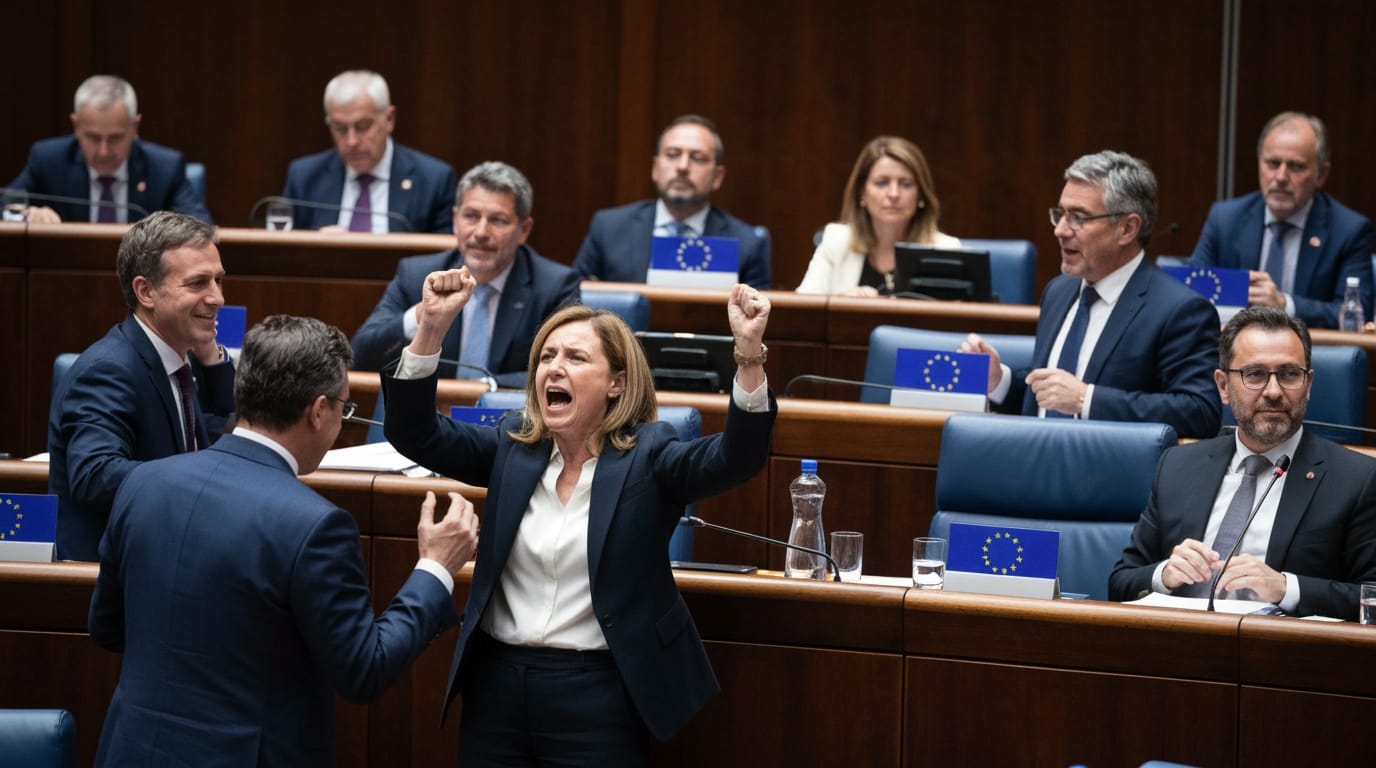
Strasbourg, France – In a significant move that casts a long shadow over the future of a landmark trade agreement, the European Parliament has voted to refer the contentious Mercosur trade deal to the European Court of Justice (ECJ) for a legality review. The decision, passed by a narrow margin of 334 votes to 324 with 11 abstentions, signals a substantial delay in the ratification process, potentially stalling the agreement for over a year or derailing it entirely. This unexpected referral delivers a major setback to the European Commission's ambition for swift approval, underscoring deep divisions within the European Union regarding the pact's environmental, social, and economic implications.
The vote, which took place on Wednesday, January 21, 2026, has been widely welcomed by European farm organizations and environmental groups, who have been vocal critics of the deal. Critics argue that the agreement, recently signed by the Commission in Asunción, Paraguay, fails to adequately address concerns ranging from deforestation in the Amazon to agricultural market disruptions and adherence to EU standards. While proponents within the EU Commission and some member states express regret, emphasizing the geopolitical and economic benefits of the pact, the ball is now in the court of the ECJ, initiating a legal scrutiny that could reshape the European Union's trade policy.
A Narrow Victory for Skeptics
The European Parliament's decision came after intense lobbying and protests from various groups across the continent. Farmers, particularly those from Ireland, France, and Poland, had staged demonstrations in Strasbourg and Brussels, fearing an influx of cheaper agricultural products from Mercosur countries would undercut their livelihoods and compromise high European production standards. Irish Farmers' Association (IFA) president Francie Gorman lauded the outcome, stating it "lays down an important marker for how trade issues are negotiated."
The resolution to refer the agreement to the ECJ was championed by a cross-party coalition, predominantly led by Greens and left-wing lawmakers, but also garnering support from liberals, socialists, and some centre-right politicians. Their primary argument centered on questions of the deal's compatibility with EU treaties and whether its provisions might restrict the EU's ability to enact future environmental and consumer health policies. The ECJ process typically takes around 18 months to two years to deliver an opinion, effectively suspending parliamentary consideration during this period. Although the European Commission retains the option of provisionally applying the trade section of the agreement, experts suggest such a move would be politically fraught given the significant backlash. German Chancellor Friedrich Merz notably called the Parliament's decision "regrettable," urging for the agreement to be provisionally applied without further delays, citing geopolitical considerations.
Decades in the Making: The Mercosur Agreement's Complex History
The EU-Mercosur Association Agreement is the culmination of nearly 25 years of intermittent negotiations, aiming to forge one of the world's largest free trade areas, encompassing over 700 million people. The agreement's three pillars—political dialogue, cooperation, and trade—seek to foster closer ties between the European Union and the Mercosur bloc, comprising Argentina, Brazil, Paraguay, and Uruguay (with Bolivia joining as a full member in 2024). A political agreement was initially reached in 2019, followed by a formal political agreement in December 2024.
Economically, the deal promises substantial tariff reductions, covering more than 90% of trade between the two blocs, with projected annual savings of over €4 billion in customs duties for EU exporters. The EU anticipates boosting exports of industrial goods such as automobiles, machinery, and chemicals to Mercosur markets. In return, the EU would open its markets to Mercosur's agricultural powerhouses, significantly increasing imports of products like beef, poultry, sugar, soybeans, and ethanol. This exchange of goods is central to the deal's economic rationale, yet it simultaneously forms the bedrock of much of the opposition.
Environmental and Social Standards Under Scrutiny
At the core of the controversy are profound concerns regarding environmental protection and social standards, particularly in Mercosur countries. Critics vehemently argue that the trade agreement, as it stands, prioritizes economic growth over ecological preservation. A major point of contention is the potential for increased deforestation in the Amazon rainforest, linked to expanded agricultural production, especially for beef and soybeans destined for European markets. Some assessments indicate that the deal could increase the risk of deforestation by 25%.
Environmental organizations and many MEPs highlight a perceived "commercially hard and environmentally soft bias" in the agreement. Despite a dedicated chapter on Trade and Sustainable Development, which includes commitments to the Paris Climate Agreement and International Labour Organization (ILO) standards, critics contend that these provisions lack the necessary binding enforceability and robust sanction mechanisms to ensure compliance. Concerns also extend to the use of pesticides banned in the EU but still prevalent in Mercosur countries, as well as discrepancies in labor rights and human rights protections. The prospect of Mercosur countries being able to challenge future EU sustainability regulations through a "rebalancing mechanism" further fueled these apprehensions among lawmakers.
Geopolitical Chessboard and Future Uncertainty
Beyond the immediate economic and environmental debates, the delay of the Mercosur deal carries significant geopolitical weight. Proponents, including Germany and Spain, view the agreement as a strategic necessity, crucial for the EU to diversify its trade partners, counter protectionist tendencies globally, and reduce economic reliance on major powers like China, especially in securing critical minerals. They argue that the prolonged negotiations and now the judicial review could erode the EU's credibility as a reliable and predictable trade partner on the global stage, potentially leading Mercosur nations to seek alternative alliances.
The European Commission's deputy head spokesperson expressed regret over Parliament's decision, emphasizing the importance of delivering on the EU's trade diversification agenda. Conversely, opponents see the vote as a crucial assertion of the European Parliament's role in scrutinizing major international agreements and upholding the Union's values and standards.
The referral to the European Court of Justice introduces a period of considerable uncertainty for the EU-Mercosur agreement. The ruling will undoubtedly shape not only the future of this particular trade pact but also the broader trajectory of the EU's trade policy, weighing economic opportunities against escalating demands for stringent environmental and social accountability. The global community will watch closely as the ECJ deliberates on an agreement that encapsulates many of the complex challenges facing international trade in the 21st century.


