Europe's Energy Reckoning: From Russian Gas Dependency to a New Reliance on U.S. LNG
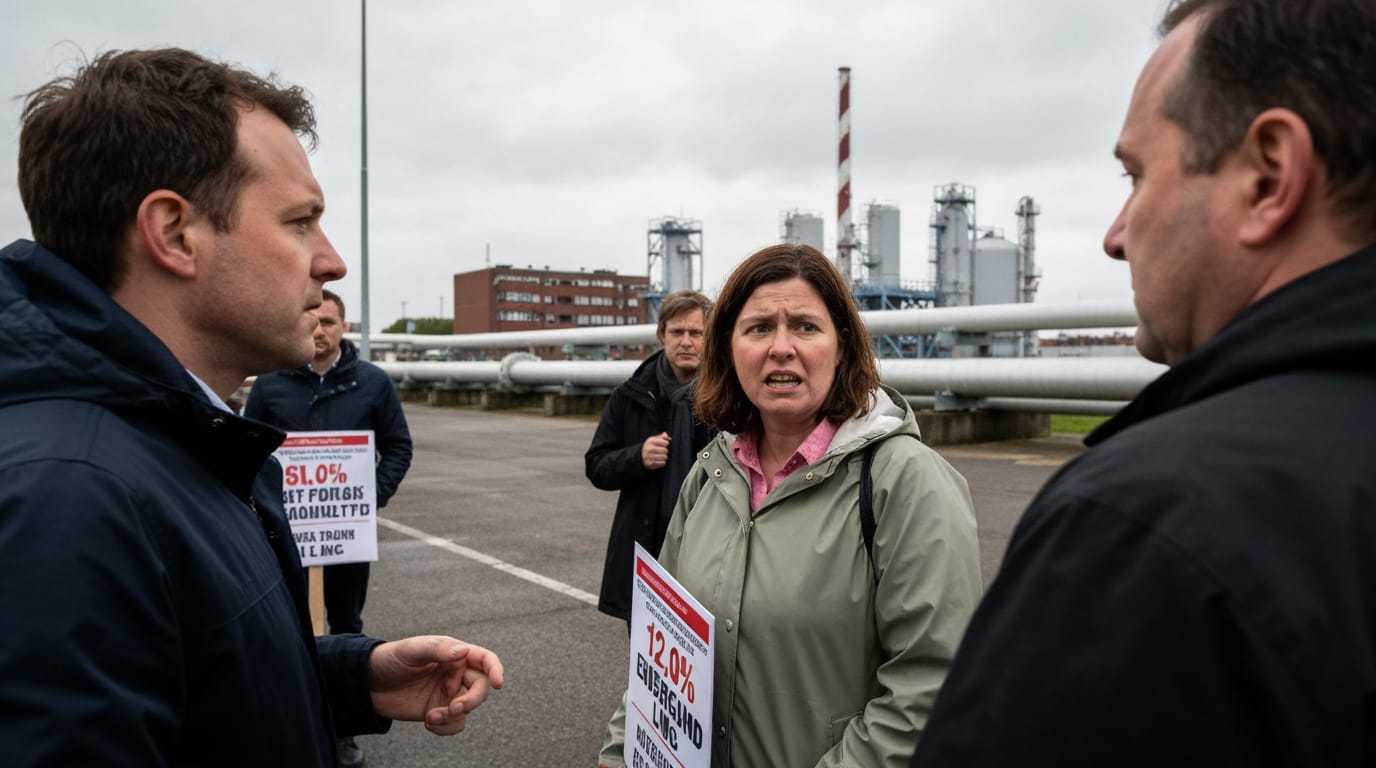
BRUSSELS — Europe has dramatically reshaped its energy landscape in a swift and decisive response to Russia's full-scale invasion of Ukraine, severing decades-long ties to Russian natural gas. However, the continent's rapid pivot has led to a burgeoning reliance on liquefied natural gas (LNG) from the United States, raising questions about whether one strategic dependency has merely been swapped for another. The urgent drive for energy security has successfully averted a catastrophic energy crisis, but it has simultaneously created new economic, environmental, and geopolitical considerations that will define Europe's energy future for years to come.
The Severing of a Strategic Lifeline
For decades, Europe’s industrial and residential sectors were powered significantly by natural gas flowing from Russia. Before the 2022 invasion of Ukraine, Russia supplied a substantial portion, often exceeding 40% to 45%, of the European Union's total gas imports, with some nations, notably Germany, even more heavily dependent. This deep integration of Russian gas into the European energy mix provided Moscow with considerable geopolitical leverage, a tool it began to weaponize as tensions escalated.
The invasion served as an immediate and stark wake-up call, forcing European policymakers to confront the inherent vulnerabilities of this reliance. The European Union responded with unprecedented speed, enacting measures to drastically reduce and eventually eliminate Russian fossil fuel imports. Imports of Russian pipeline gas witnessed a precipitous decline, falling by over 80% between early 2022 and mid-2023. By 2023, Europe’s overall dependence on Russian gas had shrunk to just 15%, a monumental shift in a remarkably short period. This rapid diversification was a core component of the EU's REPowerEU plan, launched in May 2022, which set an ambitious target to completely phase out Russian fossil fuels by 2027.
The American Lifeline Emerges
As Europe urgently sought alternative gas supplies, the United States swiftly emerged as the primary provider, significantly expanding its LNG exports across the Atlantic. Europe became the main destination for U.S. LNG exports in 2022, absorbing 64% of the total U.S. outbound shipments. This marked a dramatic 141% increase in U.S. LNG exports to Europe compared to 2021. The trend continued, with the United States solidifying its position as Europe's largest LNG supplier for the third consecutive year in 2023, accounting for 48% of Europe's total LNG imports. By January 2026, U.S. LNG constituted 60% of the European Union's imported liquefied natural gas.
To accommodate this surge in imports, European nations rapidly invested in and expanded their LNG import infrastructure. Countries like Germany, which previously relied heavily on Russian pipelines, built new terminals. Spain and the Netherlands also played crucial roles in facilitating the increased flow of LNG. This collective effort ensured that Europe had sufficient gas supplies to meet demand, particularly during the critical winter months, averting what could have been a severe energy crisis.
A New Dependency, New Concerns
While the shift to U.S. LNG has undeniably bolstered Europe's immediate energy security and reduced Russia's leverage, it has simultaneously introduced a new set of challenges and the specter of a different form of dependency. Projections suggest that by 2030, U.S. LNG could comprise a staggering 75% to 80% of Europe's total LNG imports, and up to 40% of the bloc's overall gas intake as Russian supplies fully exit the market. This concentration of supply raises concerns about potential geopolitical vulnerabilities.
Analysts point to the risk that the United States, under certain political leadership, could use its position as a dominant energy supplier to exert political or economic pressure on Europe, similar to past trade disputes. Furthermore, U.S. LNG has often been the most expensive option for European buyers, contributing to higher and more volatile energy prices than those experienced prior to 2022. The long-term nature of some U.S. LNG contracts also complicates Europe's ambitious climate goals, as it could lock in fossil fuel use for decades.
Environmental implications are also a significant part of the debate. While proponents argue that natural gas, including LNG, is a cleaner alternative to coal, critics highlight the environmental footprint of the entire LNG supply chain. Reports indicate that every fully operational LNG terminal in the U.S. has violated federal pollution limits in recent years, and the extraction and liquefaction processes are associated with significant methane emissions, a potent greenhouse gas.
Europe's Long-Term Energy Vision
Recognizing the complexities of its new energy landscape, Europe is pursuing a multifaceted long-term strategy aimed at achieving genuine energy independence and sustainability. The REPowerEU plan goes beyond simply replacing Russian gas with other fossil fuels; it emphasizes a profound transformation of the continent's energy system.
Key pillars of this strategy include:
- Accelerated Renewable Energy Development: The EU aims for renewables to constitute 45% of its total energy consumption by 2030, a significant increase from previous targets. This involves massive investments in solar, wind, and other green technologies.
- Energy Efficiency and Demand Reduction: Initiatives are underway to drastically cut gas demand, with targets to reduce consumption by 15% during peak seasons and broader efforts to improve energy efficiency across all sectors.
- Diversification of Supply Beyond the U.S.: While U.S. LNG has been critical in the short term, Europe is actively seeking to diversify its gas sources further, engaging with partners such as Norway, Qatar, Algeria, and Azerbaijan to avoid overreliance on any single supplier.
- Investment in Green Technologies: There is a strong focus on developing hydrogen, biomethane, and other alternative fuels, alongside modernizing existing electricity grids to support a more decentralized and renewable-heavy energy system.
Conclusion
Europe's journey to wean itself off Russian gas has been a testament to political will and rapid logistical adaptation, successfully navigating a potentially devastating energy crisis. The continent has transitioned from a heavy dependence on Russian pipelines to a significant reliance on U.S. LNG, a shift that has redefined global energy trade routes. However, this pivot, while necessary for immediate security, has introduced new vulnerabilities and amplified debates surrounding economic costs and environmental commitments. The ambition to achieve true energy independence and climate neutrality demands sustained political commitment, continuous investment in green technologies, and strategic diversification that extends beyond simply swapping one fossil fuel supplier for another. The coming years will reveal whether Europe can leverage its current position to build a truly resilient, affordable, and sustainable energy future.


