Europe's Grand Defense Ambitions Stumble Amid National Divides
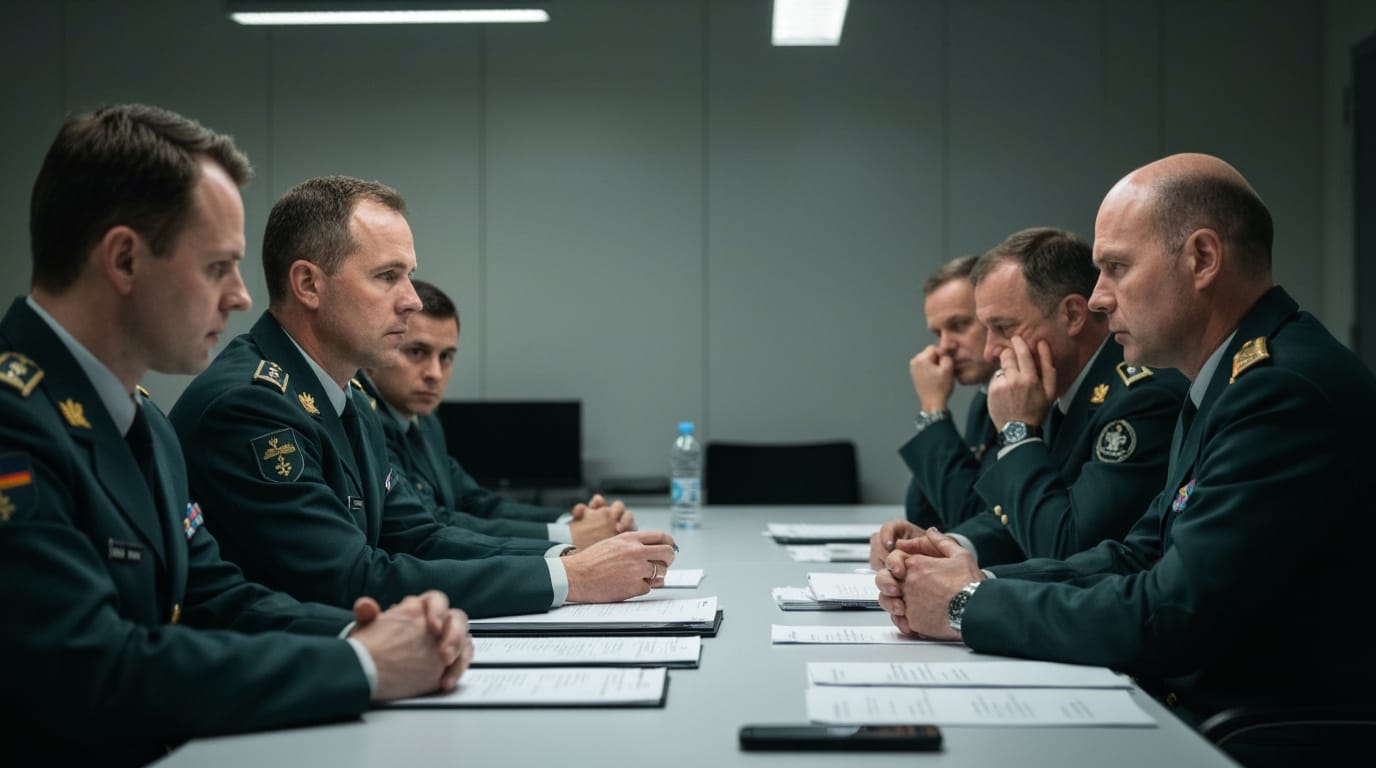
Europe's ambitious efforts to forge a unified and potent defense industrial base are encountering significant headwinds, with major collaborative projects facing delays, escalating costs, and the risk of outright fragmentation. Despite a heightened sense of urgency catalyzed by evolving geopolitical realities, the continent's largest defense initiatives are struggling to overcome deeply entrenched national interests, industrial rivalries, and differing strategic priorities, raising questions about Europe's ability to build cutting-edge military capabilities collaboratively.
The Future Combat Air System: A Fractured Vision
The Future Combat Air System (FCAS), envisioned as Europe's next-generation combat air power, stands as a prime example of the challenges inherent in multinational defense cooperation. Launched in 2017 by France and Germany, with Spain joining later, the FCAS project carries an estimated price tag of around 100 billion euros and aims to deliver a sixth-generation combat system by approximately 2040. This comprehensive program extends beyond a mere fighter jet, encompassing drones, remotely piloted vehicles, advanced engines, and a sophisticated "combat cloud" designed to connect aircraft, sensors, and battlefield data in real-time.
However, the fighter jet component, intended to be the centerpiece of this collaborative effort, has become a major source of contention. Disagreements over leadership, military priorities, and industrial control have plagued the project for years. French manufacturer Dassault Aviation has sought clear leadership over the new fighter jet's development, while Airbus Defence and Space, representing German and Spanish interests, has pushed for a more substantial role. This industrial conflict has led to protracted disputes over the division of labor and technology transfer, hindering progress.
Further complicating matters are divergent national strategic demands. France's requirement for the future aircraft to operate from aircraft carriers and carry nuclear weapons clashes with Germany's stance as a non-nuclear power. Germany has already committed to acquiring American F-35 aircraft for its NATO nuclear deterrence missions, underscoring this division. In a significant shift from the initial vision of Franco-German military unity, Airbus has now suggested a "dual fighter solution," which would permit France and Germany to develop separate fighter jets while continuing cooperation on elements like drones, sensors, and digital systems. This pragmatic approach highlights the deep-seated difficulties in reconciling diverse national objectives within a single, integrated platform. The Main Ground Combat System (MGCS), another critical Franco-German project, has also encountered delays and is not expected to enter service before 2040, despite an agreement between the two nations to continue its next phase in 2024.
Fragmented Markets and Industrial Bottlenecks
Beyond the complexities of specific projects, Europe faces systemic challenges rooted in its fragmented defense industrial landscape. Despite a surge in defense spending across European nations since 2022, production bottlenecks persist, and the continent struggles to translate financial commitments into deployable capabilities.
A primary obstacle is the lack of a cohesive European defense market. Fragmented procurement practices among individual EU states prevent economies of scale and impede modernization efforts. While European aerospace and defense companies invest comparable amounts in research and development to their U.S. counterparts, the disparity in market size is stark, with U.S. net sales at €260 billion compared to Europe's €140 billion. This fragmentation means that even with robust R&D, scaling production efficiently remains a significant hurdle.
The European defense industrial base is also structurally unprepared for mass production at a wartime scale. Decades of inconsistent and often small orders from governments led defense companies to prioritize margins over volume, resulting in lean supply chains and minimal inventory. This operational model is ill-suited to the sudden, prolonged surges in demand witnessed in recent years, particularly in the wake of conflicts such as the war in Ukraine. Critical supply chain constraints, notably in munitions and electronics, coupled with workforce shortages and regulatory delays, continue to hinder rapid industrial expansion. A stark illustration of this issue is the "ammunition gap": in February 2022, the EU could produce approximately 300,000 artillery shells annually, a quantity Ukraine consumed in weeks. While production capacity has since expanded, with a target of two million shells annually by the end of 2026, this figure still falls short of what prolonged high-intensity warfare would demand.
The Influence of National Sovereignty and External Reliance
The inherent tension between national sovereignty and the desire for greater European defense integration further complicates collaborative efforts. Each nation tends to prioritize its own industrial interests and specific military requirements, making consensus on joint projects difficult to achieve. This often leads to duplication of efforts and inefficiencies rather than streamlined, continent-wide solutions.
Moreover, Europe's historical dependence on U.S. defense systems continues to shape its strategic posture. While there are growing calls for a "Buy European" preference in defense procurement to bolster the continent's own industrial capabilities, such initiatives face strong lobbying from the United States, which fears being shut out of lucrative European contracts. This dynamic underscores the complex balance Europe must strike between strengthening transatlantic ties and achieving greater self-sufficiency in defense.
The absence of a structural, long-term relationship between European governments and their defense industries is another critical factor. Governments frequently treat defense companies as contractors, placing unpredictable orders that disincentivize proactive investment in production capacity. Without binding, multi-year commitments, manufacturers are reluctant to invest in new production lines or expand facilities, creating a mutual dependency where both industry and government await the other to act first. Finland's defense concept, which emphasizes self-sufficiency and informs its force structure and industrial policy, offers a contrasting model of strategic clarity that many other European nations have yet to fully embrace.
Charting a Path Forward
The troubles plaguing Europe's largest defense projects carry significant implications for the continent's security. The delays and potential fragmentation risk undermining Europe's ability to independently develop critical military capabilities at a time when increased defense spending is seen as paramount.
Recognizing these challenges, European leaders and industry representatives acknowledge the urgent need for a more integrated approach. The European Commission is currently reviewing its defense procurement rules with the aim of fostering faster, more coordinated, and cost-efficient processes. Some experts even propose a new intergovernmental treaty to establish a more robust European defense union. However, such ambitious steps require a collective political will to overcome ingrained national preferences and forge a truly common defense strategy. While the European Defence Fund aims to address market fragmentation and promote joint procurement, there is a risk that its focus on technologies close to commercial application might substitute rather than complement existing industrial R&D, potentially missing opportunities for bold, transformative projects.
Ultimately, the future of European security hinges on the continent's ability to transcend these deeply entrenched obstacles. The success or failure of projects like FCAS will not only determine Europe's technological sovereignty but also its capacity to act as a unified and credible security actor on the global stage. Overcoming these hurdles will require a sustained commitment to compromise, greater strategic alignment among member states, and a fundamental restructuring of the relationship between governments and the defense industry.


