Europe's LGBTQ+ Rights: A Continent Divided by Progress and Persistent Challenges
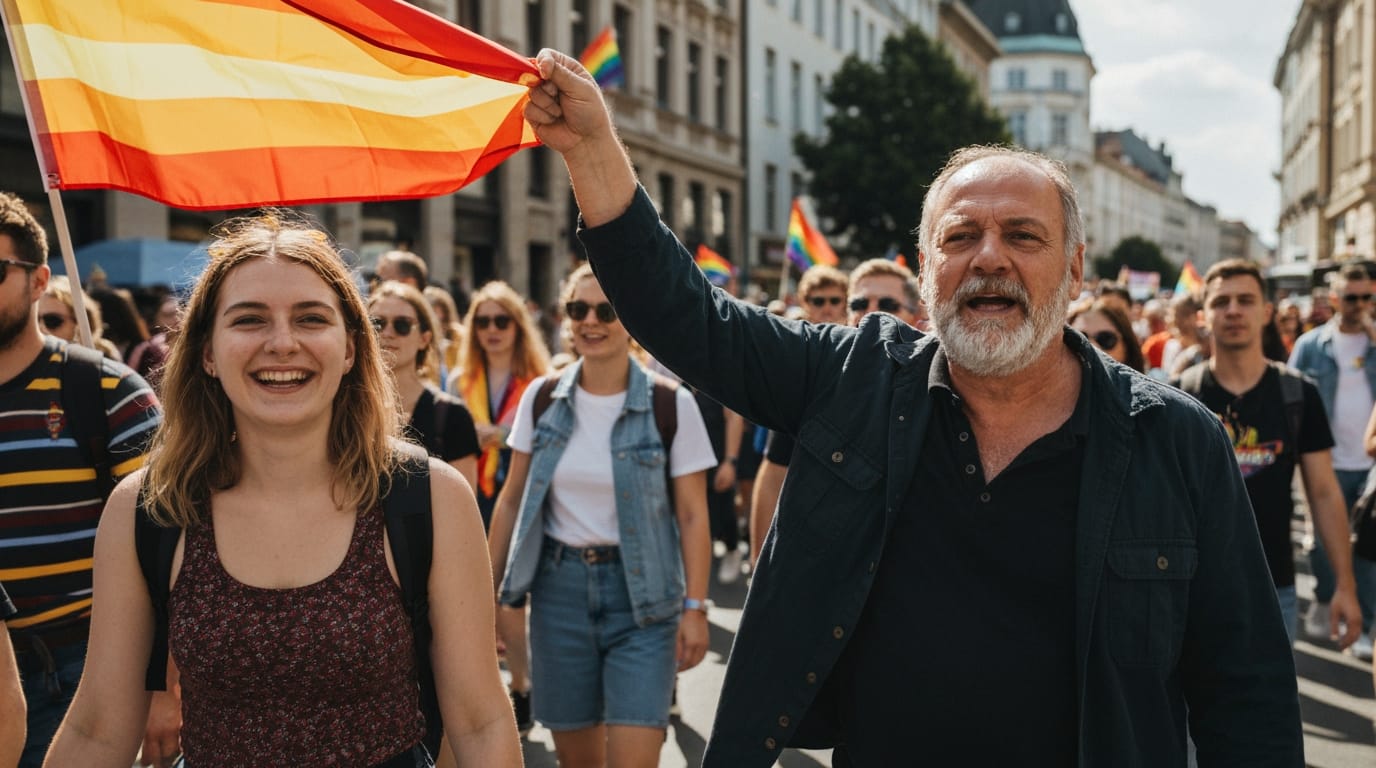
Europe presents a complex and often contradictory landscape for LGBTQ+ rights, marked by significant strides toward equality in some nations while others experience stagnation or even regression. From robust legal protections for same-sex couples and transgender individuals in Western and Nordic countries to deeply entrenched discrimination and legislative setbacks in parts of Central and Eastern Europe, the continent remains a patchwork of diverse legal and societal realities for its LGBTQ+ citizens. This variegated progress underscores a continuing struggle for universal human rights across the European Union and broader European region.
A Patchwork of Progress: Advancements and Disparities
Over the past two decades, the European Union has emerged as a significant force in advocating for LGBTQ+ equality. The EU's foundational treaties and laws protect LGBTQ+ individuals, with the Charter of Fundamental Rights explicitly prohibiting discrimination based on sexual orientation. Since 2000, discrimination in employment has been banned across all member states, a protection extended to those who have undergone gender reassignment. The European Commission actively supports LGBTQ+ organizations and in 2021, the European Parliament declared the EU an "LGBTIQ Freedom Zone," a direct response to regressive policies in certain member states. Similarly, the Council of Europe, an organization encompassing 46 member states, works to uphold human rights for all individuals, including LGBTQ+ persons, by setting standards and offering technical support for legal and institutional reforms.
Despite these overarching frameworks, the implementation and scope of protections vary dramatically. The annual Rainbow Map produced by ILGA-Europe, a key barometer of legal and policy practices for LGBTQ+ people across 49 European countries, consistently highlights these disparities. While some nations score near-perfect marks for their comprehensive protections, others lag significantly, indicating a fundamental divide in the lived experiences of LGBTQ+ individuals across the continent.
Leading the Way: Western and Nordic Europe at the Forefront
Western and Nordic European nations consistently lead the charge in establishing robust legal frameworks for LGBTQ+ rights. Countries like Spain (89%), Malta (88%), Iceland (86%), Belgium (85%), and Denmark (85%) consistently rank highest on ILGA-Europe's Rainbow Map, demonstrating extensive legal and policy practices.
Same-sex marriage is now legal in 22 European countries, with the majority located in this region. The Netherlands pioneered same-sex marriage in 2001, followed by Belgium in 2003, and Spain in 2005. More recently, countries like Germany, Malta (both 2017), Finland (2017), Greece, Estonia, and Slovenia have also legalized it. Beyond marriage, many of these leading countries offer broad anti-discrimination protections that extend beyond employment to areas such as housing, healthcare, goods, and services.
Significant progress has also been made in legal gender recognition. Several nations, including Belgium, Denmark, Finland, Germany, Iceland, Ireland, Luxembourg, Malta, Norway, Portugal, Spain, and Switzerland, allow trans people to legally change their gender based on self-determination, rather than requiring invasive medical or surgical procedures. Furthermore, in 36 countries, hate crime legislation explicitly includes sexual orientation as an aggravating factor, while 24 countries include gender identity, leading to potentially harsher sentences for such offenses. The United Kingdom, for instance, in April 2026, reclassified anti-LGBT+ hate crimes as aggravated offenses, ensuring equal access to justice for victims.
Persistent Challenges: Eastern Europe's Uphill Battle
In stark contrast, Central and Eastern European countries frequently occupy the lower echelons of LGBTQ+ rights rankings, where progress is often slow or, in some cases, actively reversed. Nations like Russia (2%), Azerbaijan (2%), Turkey (5%), Georgia (12%), Romania (19%), Bulgaria (20%), Poland (22%), Hungary (23%), Armenia (9%), and Belarus (7%) show minimal legal and policy protections according to ILGA-Europe.
Several of these countries, many of which are former Soviet Union states, only decriminalized homosexuality relatively recently, and protections remain minimal. Constitutional bans on same-sex marriage are entrenched in 15 countries across Europe, primarily in the East, including Armenia, Belarus, Bulgaria, Croatia, Georgia, Hungary, Latvia, Lithuania, Moldova, Montenegro, Poland, Russia, Serbia, Slovakia, and Ukraine. Even where civil partnerships are recognized, such as in Croatia, Hungary, Latvia, and Montenegro, the rights afforded often fall short of full marital equality.
Governments in countries like Poland and Hungary have openly pursued anti-LGBTQ+ agendas. Poland saw numerous municipalities declare themselves "LGBT-free zones" between 2019 and 2021, though some retracted these declarations when faced with the potential loss of EU funding. Hungary, under Prime Minister Viktor Orban, enacted legislation in 2020 that redefined families to exclude transgender individuals, restricted adoption to married heterosexual couples, and implemented a "protection of minors" law prohibiting information promoting homosexuality or gender changes to children. These actions prompted the EU to launch legal action against both Poland and Hungary.
Transgender rights face particular challenges in this region, with countries like Bulgaria, Georgia, Hungary, Russia, and Slovakia having explicit bans or severe limitations on legal gender recognition. Bulgaria's Supreme Court of Cassation, for example, ruled against legal gender recognition in 2023. This regression is often fueled by populist governments, nationalist movements, and the significant influence of conservative religious institutions, such as the Catholic Church in Poland and the Orthodox Church in Moldova, fostering widespread homophobic societal attitudes and institutional anti-gay rhetoric.
The Influence of Supranational Bodies
Both the European Union and the Council of Europe play crucial, albeit distinct, roles in shaping LGBTQ+ rights across the continent. The EU's commitment is enshrined in directives and the Charter of Fundamental Rights, prohibiting discrimination in employment and requiring member states to recognize same-sex marriages lawfully concluded in other EU countries. Recent rulings by the Court of Justice of the European Union (CJEU) have further reinforced these protections, stipulating that member states must update identity documents to reflect the gender identity of trans citizens who transitioned elsewhere and ruling against conditioning gender identity recognition on surgical procedures as an unjustifiable restriction on fundamental rights.
The Council of Europe, through the European Court of Human Rights (ECtHR), has also been instrumental. Its rulings, such as the 2015 decision requiring Greece to allow same-sex civil partnerships, have compelled member states to align their laws with broader human rights standards. A 2023 ECtHR ruling affirmed that member states are obliged to provide a legal framework for the recognition and protection of same-sex relationships.
However, the effectiveness of these supranational bodies is not without limits. Family law largely remains within the competence of individual member states, allowing for varied national laws on same-sex marriage and adoption. Furthermore, a proposed EU-wide directive to expand anti-discrimination protections beyond employment has been blocked since 2008, underscoring the political challenges in achieving comprehensive, harmonized rights across the entire bloc. Compliance with ECtHR rulings also varies; Romania, for instance, has refused to comply with a 2023 order to legalize same-sex civil partnerships.
Conclusion: An Unfinished Journey Toward Full Equality
The journey toward full LGBTQ+ equality in Europe remains far from over. While Western and Northern European countries continue to set global benchmarks for inclusive laws and policies, a significant portion of the continent, particularly in the East, grapples with deeply rooted discrimination, legislative backsliding, and a lack of fundamental protections. The proactive engagement of the European Union and the Council of Europe provides a crucial counterbalance to these regressive trends, pushing for greater recognition and safeguarding of human rights. Yet, the persistent disparities highlight that the battle for legal and societal acceptance of LGBTQ+ individuals across Europe is an ongoing process, requiring sustained advocacy, political will, and vigilance against forces that seek to erode established rights.


