Europe's Wildfire Crisis Deepens as New Heatwave Looms Over France and Spain
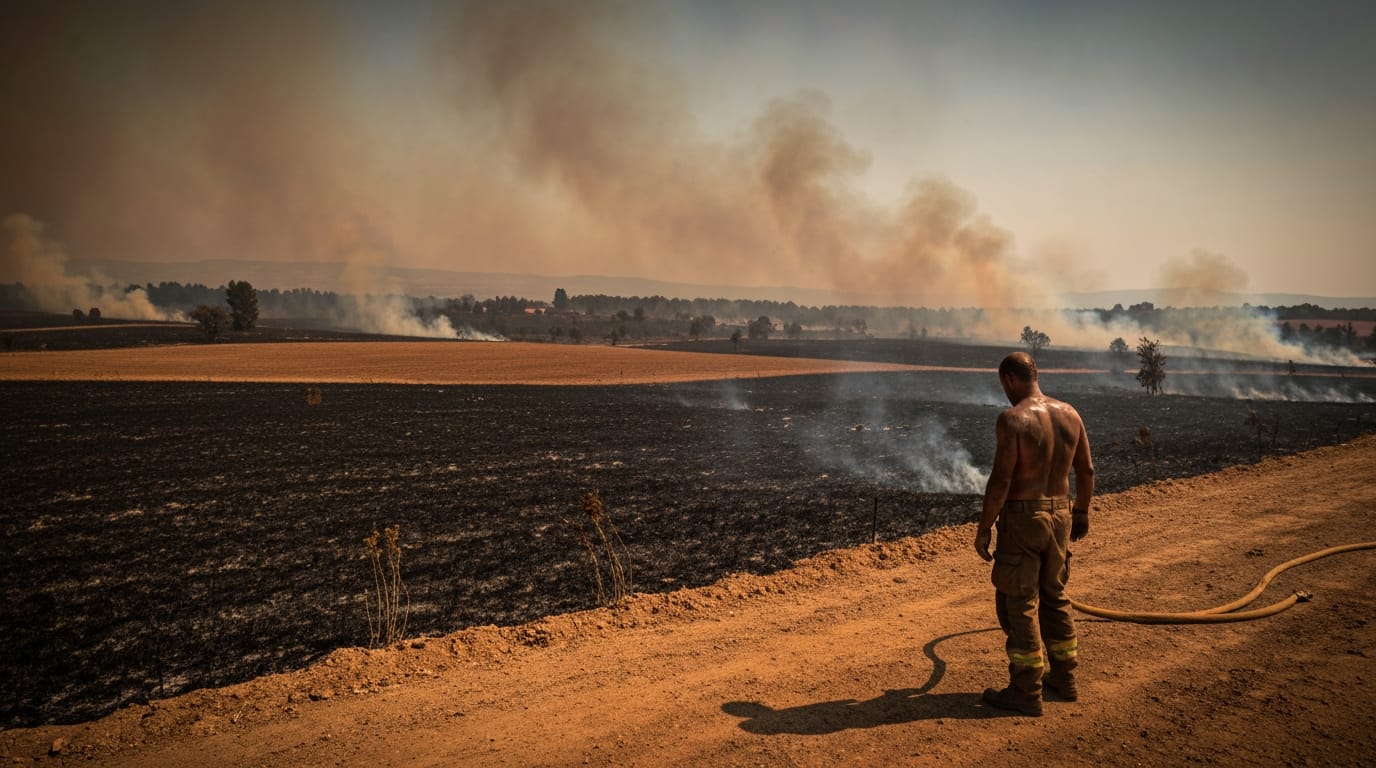
Southern Europe is grappling with an escalating wildfire crisis, with France and Spain bracing for another brutal heatwave that threatens to intensify already catastrophic blazes. The relentless heat and drought conditions have fueled fires that have displaced hundreds of thousands of people and scorched vast tracts of land, underscoring the severe and immediate impacts of climate change across the continent. Firefighters are locked in a desperate race against time to contain the infernos before temperatures soar further, making an already dire situation even more perilous.
Unprecedented Destruction and Mass Evacuations
The scale of the current wildfires in France and Spain is unprecedented in recent memory. Spain has witnessed a staggering 172,000 hectares of forested land burned this year alone, a figure six times greater than the total for 2025. One fire in the hilly terrain of Ávila, west of Madrid, has become Spain's largest on record, consuming 50,000 hectares. Overall, the scorched area near the Spanish capital now totals approximately 70,000 hectares. Similarly, France has seen more than 116,000 hectares of forest and vegetation incinerated since January, significantly surpassing the 70,000 hectares reported for the entirety of the previous year. The massive Gironde fire in southwestern France alone has ravaged 42,000 hectares.
The human toll of these blazes has been immense, leading to one of Europe's largest peacetime evacuation operations. Over 300,000 people have been forced from their homes across France and Spain. In France, more than 250,000 individuals have been evacuated, with 220,000 of those in the hard-hit Gironde region. Spanish authorities have reported 79,000 evacuations, alongside orders for 30,000 people to shelter in place. The human cost includes at least one fatality in Manises, a suburb of Valencia, Spain. Evacuees have described a profound sense of loss, with some expressing anger and resignation over the destruction.
The Relentless Grip of Heat and Drought
The current wildfire epidemic is intrinsically linked to a series of intense heatwaves that have gripped Europe since May. Record-breaking temperatures in June, which scientists state would have been impossible without climate change, have contributed to severe drought conditions across the region. Europe is experiencing warming at a faster rate than any other continent, exacerbating these extreme weather events. The sustained heat has dried out vegetation, creating abundant and highly flammable fuel that allows fires to spread with terrifying speed and intensity.
Weather forecasts indicate that the crisis is far from over. Spain's state meteorological agency, Aemet, predicts the current heatwave will persist until at least Sunday, with high temperatures and gusty southerly winds further complicating firefighting efforts. In France, forecasters expect temperatures to reach 40 degrees Celsius (104 degrees Fahrenheit) in some areas from Tuesday, significantly increasing the fire risk. Fire service spokespersons in France have emphasized the "race against time" to control the blazes before this new surge of heat.
Coordinated Response and Lingering Challenges
Emergency services and international aid organizations are stretched thin in their efforts to combat the fires. The European Union has activated its emergency assistance mechanism, coordinating the dispatch of seven planes and four helicopters to France, along with six planes and three forest firefighting teams to Spain. Numerous other European nations, including Italy, have also sent firefighting equipment and personnel to assist France and Spain, even as some battle their own blazes. Firefighters on the ground are working tirelessly, often for consecutive nights, risking heatstroke and exhaustion.
Despite these concerted efforts, the challenges are immense. The fires are frequently described as "extremely intense and unpredictable," capable of generating their own winds and advancing erratically. The smoke plumes from these massive fires have led to a "marked deterioration" in air quality across affected regions, particularly in Nouvelle-Aquitaine, prompting health authorities to issue warnings for vulnerable populations, including the elderly, pregnant women, and individuals with respiratory conditions. The fires have also dealt a significant blow to regional economies, impacting vital sectors such as wine production and tourism in areas like Bordeaux.
The Climate Emergency: A Recurring Nightmare
Spanish Prime Minister Pedro Sánchez has unequivocally stated that these wildfires are not isolated incidents but rather "the most painful manifestation of a climate emergency" that is making heatwaves more frequent and wildfires more voracious. French President Emmanuel Macron has echoed these sentiments, describing the situation as France's worst fire-related crisis since World War II. The European Commission's lead official on green transition, Teresa Ribera, has acknowledged that Europe is unprepared for the full consequences of the climate crisis and plans to propose a more comprehensive adaptation strategy in October.
Experts warn that the wildfire season, which began as early as April, could extend until early November, signaling a potentially record-breaking year for land burned across the continent. The increasing proximity of these fires to urban and commercial centers also poses a growing concern, with potential for significant insured losses if blazes encroach upon densely populated areas.
Conclusion
The current wildfire crisis gripping France and Spain serves as a stark reminder of Europe's vulnerability to the escalating impacts of climate change. With another heatwave on the horizon, firefighters and emergency services face critical days ahead in their battle to control the blazes and protect communities. The widespread destruction, mass evacuations, and health concerns highlight the urgent need for robust climate adaptation strategies and continued international cooperation to mitigate the increasing frequency and intensity of such catastrophic events. The coming days will be crucial in determining the full extent of this summer's devastating toll.


