EU's Standing Rises Among Southeast Asian Opinion Leaders
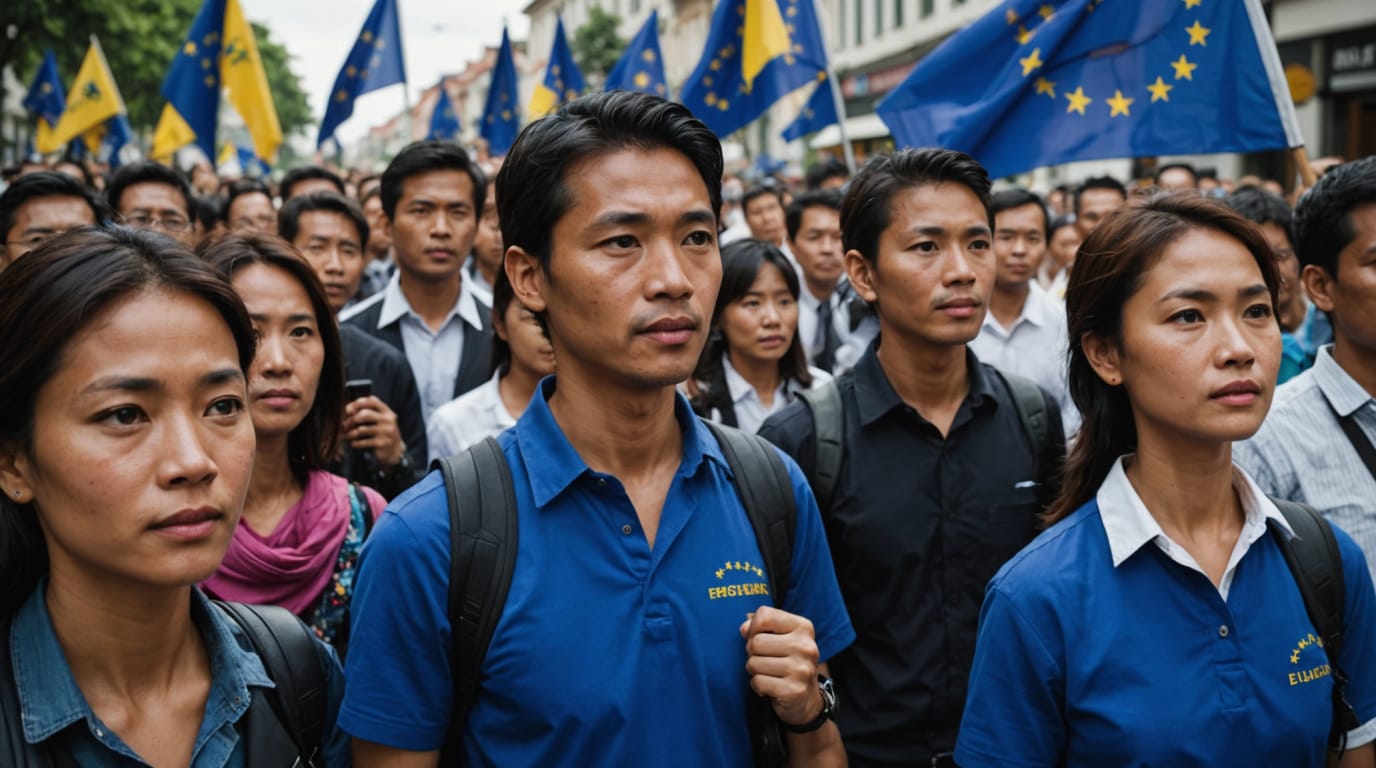
The European Union's reputation is experiencing a resurgence among Southeast Asian elites, according to recent research. A survey conducted by the Singapore-based ISEAS-Yusof Ishak Institute indicates a significant increase in trust and confidence in the EU's ability to contribute positively to global affairs. This rebound comes after a dip in trust last year, attributed by some to the EU's stance on the Israel-Gaza conflict. The findings suggest a strengthening of ties between the EU and Southeast Asia, a region of growing geopolitical importance.
Recovering Trust and Confidence
The ISEAS-Yusof Ishak Institute's annual survey, which polls over 2,000 individuals in Southeast Asia who are considered to be in positions to influence policy, revealed a notable improvement in the perception of the EU. The survey includes participants from the ASEAN-10 nations – Singapore, Indonesia, Malaysia, Vietnam, Cambodia, Thailand, the Philippines, Myanmar, Laos, and Brunei – and, for the first time, Timor-Leste.
In the 2025 survey, 51.9% of respondents from the ASEAN-10 expressed trust in the EU to "do the right thing" to improve the world. This marks a substantial increase from 41.5% in 2024. The survey also gauged opinions on the EU's role in maintaining a rules-based international order. In 2025, 19.3% of respondents selected the EU as a leader in this area, up from 16% the previous year. While the EU still trails behind the United States (26.5%) and ASEAN itself (23.1%) in this category, it significantly surpasses China (11.2%).
Factors Influencing the Shift
Several factors may be contributing to the EU's improved standing in Southeast Asia. One potential reason is the increased uncertainty surrounding U.S. politics. As the U.S. grapples with internal divisions and shifts in foreign policy, some Southeast Asian elites may view the EU as a more stable and reliable partner.
The EU's commitment to multilateralism and a rules-based international order also resonates with many in Southeast Asia, a region that values cooperation and peaceful resolution of disputes. The EU's economic influence in the region, as a major trading partner and investor, further solidifies its position as a key player.
Economic and Strategic Partnership
The EU and ASEAN have a longstanding relationship, dating back to 1972. In December 2020, the EU and ASEAN became strategic partners, marking a new chapter in their cooperation. The EU is ASEAN's third-largest trading partner, with trade reaching $295.2 billion in 2022, a 9.6% year-on-year increase. The EU is also a major source of foreign direct investment (FDI) in ASEAN, with inflows of $24 billion in 2022.
The EU has committed significant resources to support regional cooperation with ASEAN. For the period 2021-2027, the EU has earmarked €180 million for regional cooperation, and pledged to mobilize €10 billion for connectivity projects in ASEAN under the Global Gateway initiative. These investments aim to promote sustainable development, economic integration, and regional stability.
Challenges and Opportunities
Despite the positive trends, challenges remain in the EU-Southeast Asia relationship. One challenge is the differing views on certain geopolitical issues, such as the conflicts in Myanmar and the Middle East. These differences can create tensions and complicate engagement.
Another challenge is the EU's focus on human rights and environmental standards. While many in Southeast Asia share these values, some countries are concerned about the potential impact of EU regulations on their economic competitiveness and national sovereignty. For example, the EU's European Green Deal, including measures like the European Union Deforestation Regulation (EUDR) and the Carbon Border Adjustment Mechanism (CBAM), has faced criticism from some ASEAN members.
Despite these challenges, there are also significant opportunities for closer cooperation. The EU's Global Gateway initiative, with its focus on sustainable infrastructure and digital connectivity, aligns with ASEAN's development priorities. The EU's expertise in areas such as green technology, renewable energy, and sustainable agriculture can also contribute to Southeast Asia's economic transformation.
Soft Power and Regional Influence
The EU's approach to Southeast Asia is characterized by its emphasis on soft power, promoting its values and norms through diplomacy, economic cooperation, and cultural exchange. The EU's Global Gateway initiative is seen as a projection of soft power, offering an alternative development partnership to China's Belt and Road Initiative and the U.S.'s Indo-Pacific Economic Framework.
While the EU's soft power approach has been generally well-received in Southeast Asia, some observers note that the EU needs to be more pragmatic and flexible in its engagement. Recognizing the practical limitations that Southeast Asian countries face in complying with EU regulations, and providing capacity-building support, can help to strengthen the relationship.
Conclusion
The resurgence of the EU's reputation among Southeast Asian elites signals a positive trend in EU-ASEAN relations. The EU's commitment to multilateralism, its economic influence, and its focus on sustainable development resonate with many in the region. While challenges remain, the opportunities for closer cooperation are significant. By prioritizing pragmatism, addressing regional concerns, and focusing on areas of strength, the EU can solidify its position as a reliable and influential partner in Southeast Asia. As Southeast Asia navigates the complexities of a changing geopolitical landscape, the EU's role as a trusted "third party" and a champion of a rules-based international order is likely to become even more important.


