Ex-Philippines President Duterte Faces International Criminal Court on Charges of Crimes Against Humanity
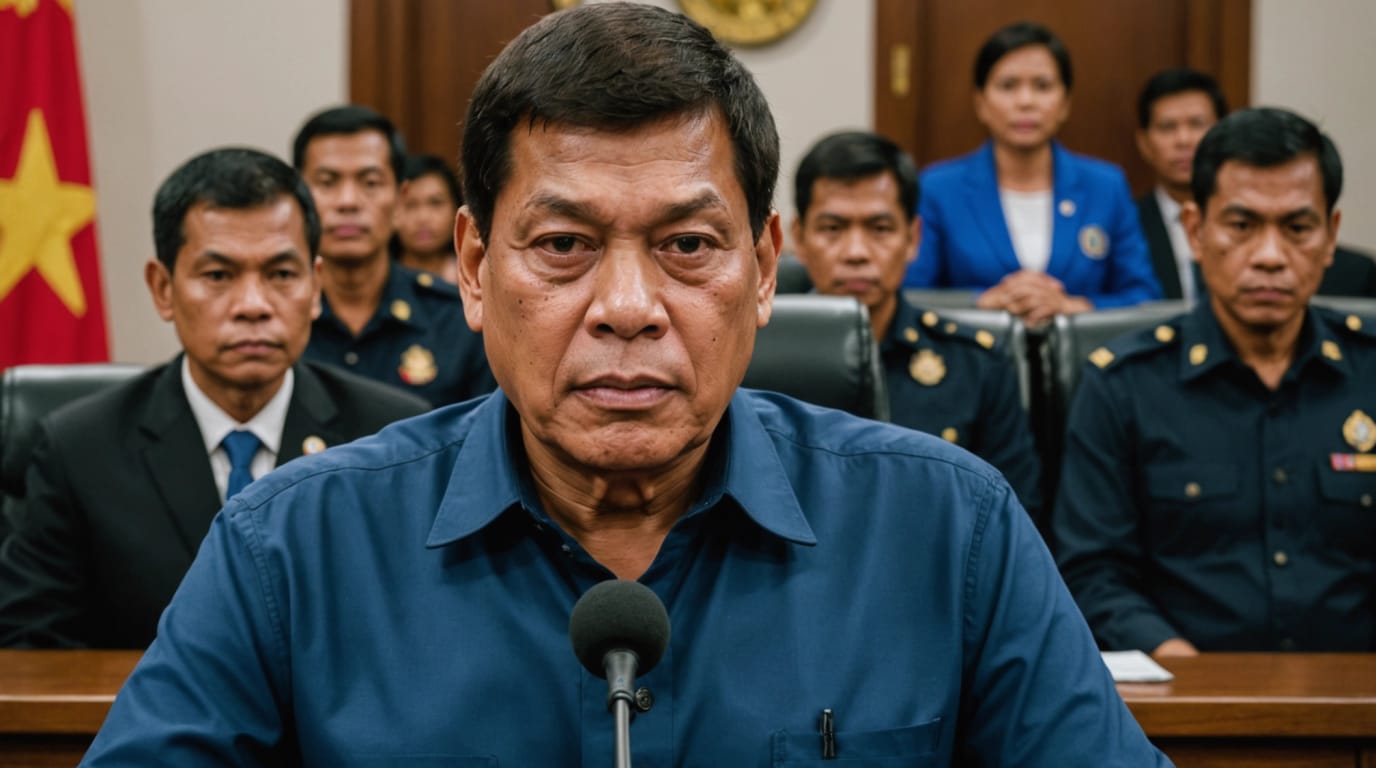
Rodrigo Duterte, the former president of the Philippines, has been arrested and is facing trial at the International Criminal Court (ICC) in The Hague for alleged crimes against humanity. The charges stem from his administration's controversial "war on drugs," which resulted in the deaths of thousands of Filipinos between 2011 and 2019. This landmark case marks a significant moment for international justice and accountability, potentially setting a precedent for holding leaders accountable for human rights violations committed under their rule.
Arrest and Transfer to The Hague
On March 11, 2025, Duterte was arrested by Philippine authorities in Manila on the basis of an arrest warrant issued by the ICC. The warrant cites murder as a crime against humanity, related to killings that occurred during his "war on drugs" both as President and during his time as Mayor of Davao City. The ICC alleges that Duterte is criminally responsible for these crimes as part of a widespread and systematic attack directed against the civilian population. Following his arrest, Duterte was transferred to The Hague, Netherlands, on March 12, 2025, to face trial. He appeared before the Court on March 14, where he was informed of the charges against him and his rights under the Rome Statute, the ICC's founding treaty.
The "War on Drugs" and Allegations of Extrajudicial Killings
Duterte's "war on drugs," launched after he took office in June 2016, became the defining feature of his presidency. The campaign aimed to eliminate illegal drugs in the Philippines through aggressive law enforcement measures. Police were given broad authority to target suspected drug users and dealers, and Duterte himself openly encouraged the use of deadly force.
The campaign quickly drew widespread condemnation from human rights organizations and international bodies due to the high number of deaths and allegations of extrajudicial killings. While the Philippine government reported around 6,252 deaths during police operations, human rights groups estimate the actual number of fatalities to be between 12,000 and 30,000. Many of those killed were urban poor, and reports emerged of police falsifying evidence to justify the killings.
ICC Investigation and Jurisdiction
The ICC has been investigating the situation in the Philippines since 2018. The investigation focuses on alleged crimes against humanity, including murder, committed in the context of the "war on drugs" during Duterte's presidency and also those in Davao City by the alleged Davao Death Squad while he was Mayor of Davao from 2011 to 2016.
The Philippines became a state party to the Rome Statute on November 1, 2011. However, Duterte withdrew the Philippines from the ICC in March 2018, with the withdrawal taking effect in March 2019. Despite the withdrawal, the ICC retains jurisdiction over crimes allegedly committed in the Philippines while it was a state party, from November 1, 2011, to March 16, 2019. The Philippine Supreme Court has affirmed that the Philippines still has an obligation to cooperate with the ICC's investigation, even after its withdrawal.
Reactions and Implications
Duterte's arrest and transfer to the ICC have been met with mixed reactions. Human rights organizations have hailed it as a monumental step toward justice for the victims of the "war on drugs" and their families. Amnesty International's Secretary General, Agnes Callamard, stated that the Philippine authorities must now surrender Duterte to the ICC in The Hague to face trial for the alleged crimes against humanity. The UN Human Rights Chief, Volker Türk, also welcomed Duterte's arrest as an important step toward accountability.
Conversely, Duterte's supporters have condemned the ICC investigation as an infringement on Philippine sovereignty. Some Filipinos view the "war on drugs" as a necessary measure to combat crime and maintain peace and order. The Philippine government initially challenged the ICC's jurisdiction over the alleged offenses, but later toned down its rhetoric and stated it would work with Interpol if an arrest warrant were issued.
The Philippine Criminal Justice System
The Philippine criminal justice system comprises law enforcement, prosecution, courts, corrections, and the community. Law enforcement agencies, such as the Philippine National Police (PNP) and the National Bureau of Investigation (NBI), are responsible for preventing crime, enforcing laws, and apprehending offenders. The National Prosecution Service (NPS) determines whether to prosecute individuals arrested for violating the law. The courts, including the Supreme Court, Court of Appeals, Regional Trial Courts, and Municipal Trial Courts, adjudicate cases and render judgments. The Bureau of Corrections (BuCor) administers the probation and correction system.
The Philippine legal system is a mixed one, incorporating elements of civil, common, customary, and Islamic law. The main sources of law are statutes, jurisprudence, and international treaties.
Future of the Case and Pursuit of Justice
Duterte's trial at the ICC is expected to be a lengthy and complex process. The prosecution will need to present compelling evidence to prove his guilt beyond a reasonable doubt. The defense is likely to argue that the ICC lacks jurisdiction, that the "war on drugs" was a legitimate law enforcement operation, and that Duterte is not responsible for the alleged crimes.
Regardless of the outcome, the case has already had a significant impact on the Philippines and the international community. It has brought renewed attention to the human rights situation in the Philippines and has highlighted the importance of accountability for human rights violations. The case also serves as a warning to other leaders who may consider committing similar abuses.
The pursuit of justice for the victims of the "war on drugs" is far from over. Even if Duterte is convicted, there are likely to be other individuals who were involved in the alleged crimes who should also be held accountable. The Philippine government has a responsibility to investigate and prosecute these individuals, and the international community should continue to support these efforts.


