Exiled Crown Prince Amplifies Calls for Change Amid Escalating Iran Protests
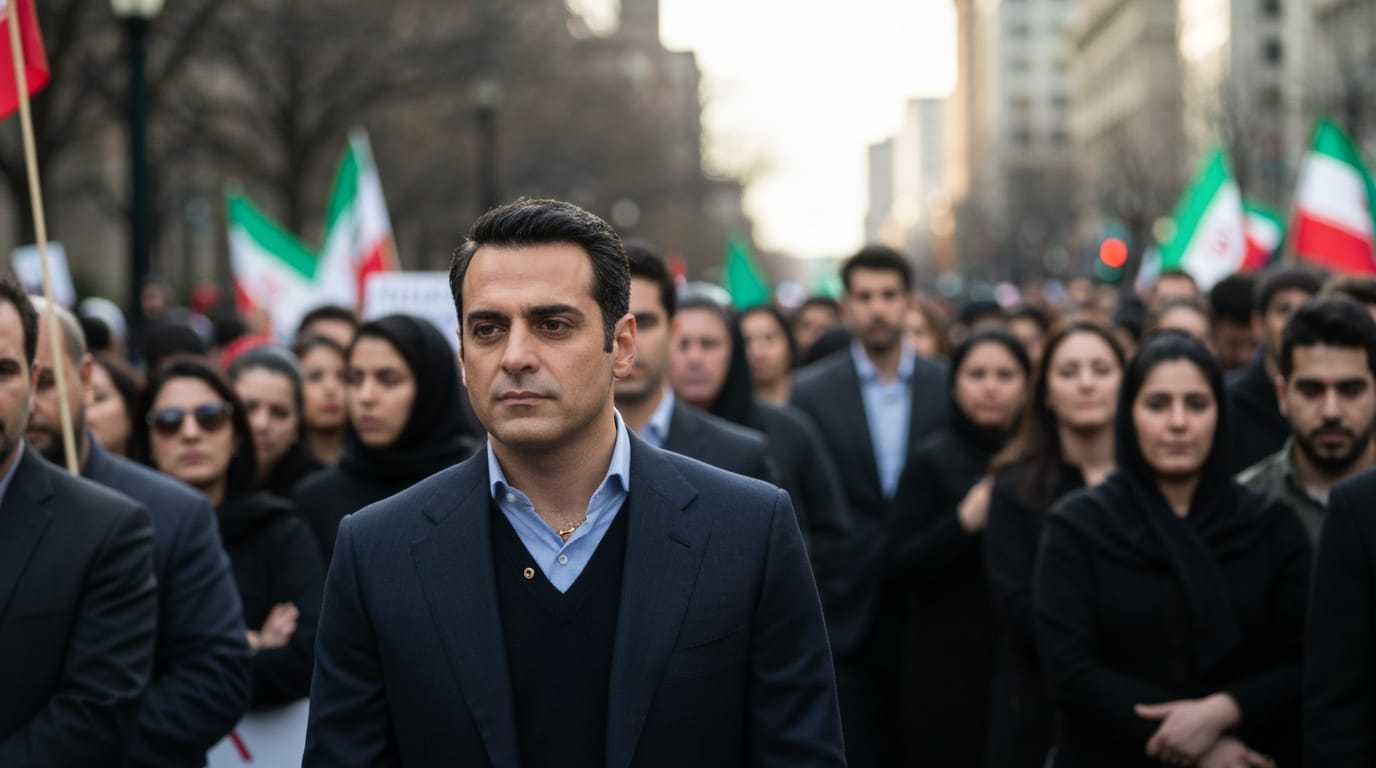
Reza Pahlavi, the exiled Crown Prince of Iran, is actively galvanizing a growing protest movement from his residence in the United States, lending a symbolic voice to nationwide demonstrations demanding an end to the Islamic Republic's four-decade rule. Pahlavi, the 65-year-old son of the last Shah of Iran, Mohammad Reza Pahlavi, has utilized social media and Farsi-language news outlets to urge Iranians to persist in their defiance, calling for sustained street action and broader strikes as the country grapples with profound economic distress and political discontent. His appeals come as protests, initially fueled by escalating inflation and a collapsing currency, have broadened into urgent demands for fundamental governmental change across Iran.
A Voice from Abroad: Pahlavi's Digital Front
From his long-term exile in the United States, Reza Pahlavi has emerged as a prominent figure advocating for the Iranian opposition. He frequently communicates through social media platforms and Farsi-language news channels, providing directives and encouragement to protesters on the ground. In recent messages, Pahlavi has called on demonstrators to maintain their presence in city centers, suggesting they carry the historic lion-and-sun flag, a symbol of the pre-revolutionary era. Beyond street protests, he has urged workers in the energy and transport sectors to initiate nationwide strikes, aiming to amplify the pressure on the current regime.
Pahlavi has also actively appealed to the international community, particularly the United States, for intervention and support. In communications, he stressed that "The Iranian people are demanding their basic rights and freedoms," and called for international actors to pressure the Iranian government to respect human rights and allow freedom of expression. He positions himself not as a monarch-in-waiting, but as a "steward of a national transition to democracy," advocating for a secular democratic system achieved through non-violent civil disobedience and a national referendum to determine Iran's future governance. Pahlavi has also reportedly given "unusually practical guidance" to protesters, signifying a shift from a moral supporter to a more active, guiding presence. He has explicitly urged members of the military, police, and other state institutions to defect, asserting the regime's downfall is "inevitable."
Echoes of a Revolution: The Pahlavi Legacy
Born in Tehran on October 31, 1960, Reza Pahlavi was formally named Crown Prince in 1967. His departure from Iran in 1978, at the age of 17, for pilot training in the United States, preceded the tumultuous events of the 1979 Islamic Revolution. This seismic shift led to the overthrow of his father, Mohammad Reza Pahlavi, and the abolition of the monarchy, ushering in the current theocratic government led by Ayatollah Ruhollah Khomeini. Following his father's death in 1980, Pahlavi declared himself Shah on his 20th birthday, embracing the title "Reza Shah II," and has since remained in exile, primarily residing in the Washington D.C. area.
Throughout his decades in exile, Pahlavi has maintained a political profile, sustained in part by his family's wealth and support from other affluent Iranian exiles. While his father's rule faced significant unpopularity due to economic disparities and repression by the Savak intelligence agency, the current disillusionment with the Islamic Republic has seen Pahlavi's profile rise, particularly among younger Iranians. Chants of "Pahlavi will return" and "The shah will return to the homeland" have been heard in recent protests, indicating a renewed, albeit contested, interest in the pre-revolutionary monarchy. However, the extent to which this reflects support for Pahlavi himself versus a general yearning for a different past remains a subject of debate. Pahlavi's past public support for Israel, especially following a recent conflict in June 2025, has also drawn criticism from some within the Iranian opposition and general populace.
Iran on the Brink: The Nature of the Current Unrest
The latest wave of protests gripping Iran is characterized by its widespread nature and deep-seated grievances. While initial triggers included a soaring cost of living, rampant inflation, and a depreciating national currency, the demonstrations have quickly evolved into broader calls for systemic change and an end to the theocratic regime. These protests have spread across numerous cities and towns, reaching even areas previously considered strongholds of the regime.
The government's response has been marked by significant crackdowns, including deploying security forces, imposing internet blackouts, conducting mass arrests, and, tragically, resulting in fatalities. Reports indicate varying numbers of casualties and detentions, with one estimate citing 116 deaths and over 2,600 detentions as of an early Sunday in one protest wave, and another citing at least 62 deaths. Human rights organizations have condemned the government's use of excessive force against civilians. These current protests are part of a discernible shift in Iranian unrest since 2017, moving away from calls for reform within the existing system towards explicit demands for regime change. Similar to the 2022 protests, which were sparked by the death of Mahsa Amini and centered on dignity and freedom, these recent demonstrations also leverage social media to disseminate information and mobilize support.
The Diaspora's Impact and International Engagement
Reza Pahlavi is a key figure in the broader Iranian diaspora's efforts to influence political change in their homeland. He actively travels globally, engaging with heads of state, legislators, policymakers, and various interest groups to highlight the abuses and oppression faced by the Iranian people. This international advocacy is complemented by other Iranian opposition figures and organizations, such as United Against Nuclear Iran, who actively voice their support for the protesters.
The international response to the protests has included expressions of concern and support from various governments. US Senator Mitch McConnell and former President Donald Trump have publicly backed the Iranian people in their struggle against government repression. Trump's message of American support for those seeking freedom reportedly resonated significantly within Iran. Concurrently, European powers, including France, Germany, and Britain, have condemned the violence against protesters and urged Iranian authorities to exercise restraint. The international community's role is increasingly viewed as crucial in supporting a potential responsible transition for Iran.
The confluence of internal dissent and external advocacy creates a complex dynamic for Iran's future. Reza Pahlavi, from his vantage point in the United States, continues to leverage his historical lineage and platform to champion a vision of a secular and democratic Iran. His persistent calls for unity, continued protest, and international support reflect an enduring commitment to altering the political landscape of his homeland. As demonstrations persist and grievances deepen, Pahlavi's role remains that of a prominent, if geographically distant, leader in the ongoing struggle for Iran's future, symbolizing a potential alternative path for a nation in flux.


