Exiled Crown Prince Urges Europe to Act as Iran Faces Escalating Crisis
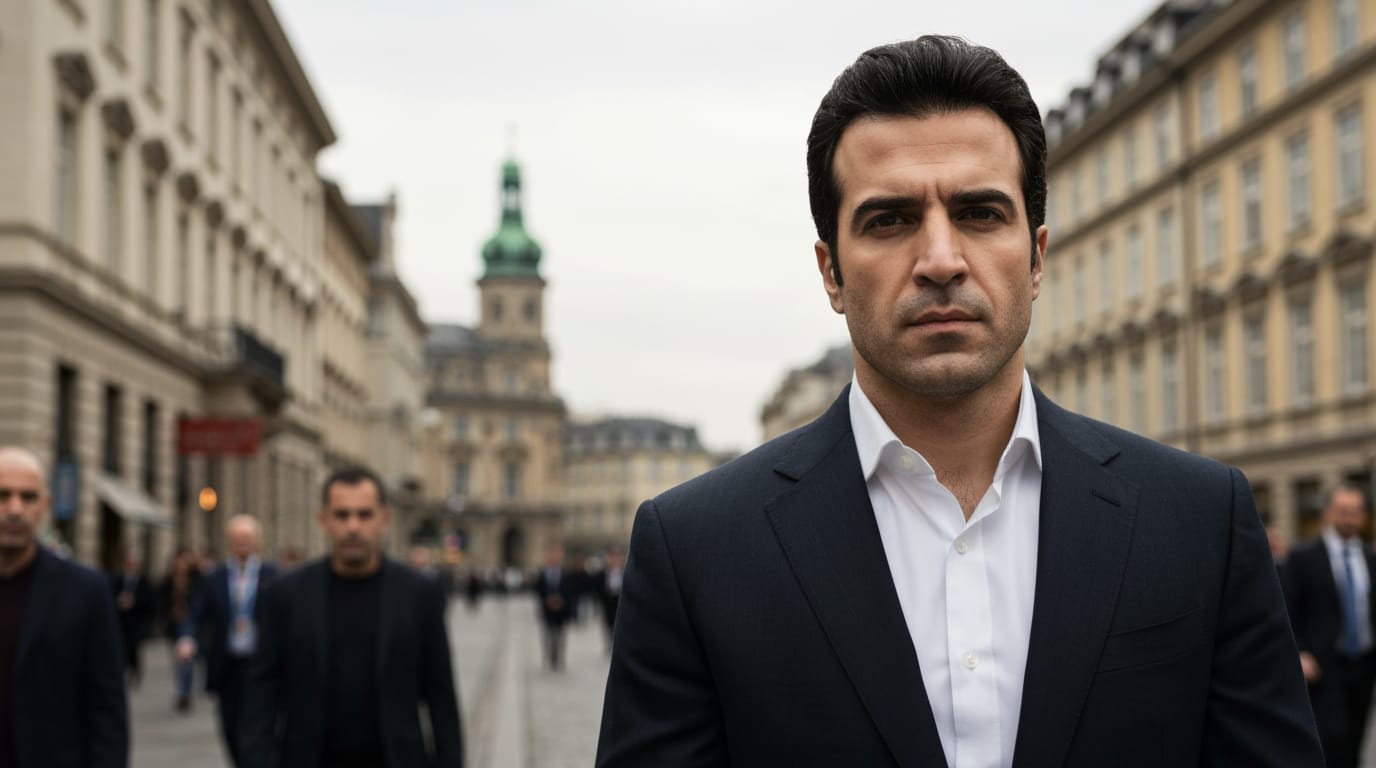
Exiled Iranian Crown Prince Reza Pahlavi has issued an urgent appeal to European nations, calling for robust intervention to dismantle the current Iranian regime amidst a severe crackdown on nationwide protests. Speaking from Washington D.C., Pahlavi outlined a six-point plan, emphasizing the critical need for international action to prevent further loss of life and facilitate a democratic transition in Iran. His plea comes as human rights organizations report mass killings and widespread abuses by Iranian security forces against a populace demanding fundamental change.
The exiled prince's latest appeal underscores the intensifying crisis within Iran, where protests, initially sparked by deteriorating economic conditions in late December 2025, have rapidly escalated into direct calls for the overthrow of the Islamic Republic. Reports indicate that thousands of protesters and bystanders have been killed, with many more arbitrarily detained, tortured, or subjected to enforced disappearance. The Iranian government has responded with brutal force, including the use of live ammunition against unarmed civilians, and has imposed severe communication restrictions, including widespread internet blackouts, to conceal the true scale of the atrocities. This dire situation has prompted the UN human rights chief, Volker Türk, to express horror at the mounting violence, while over 30 non-governmental organizations have urgently appealed for an emergency session of the UN Human Rights Council.
A Call for Decisive International Engagement
At the core of Reza Pahlavi's recent calls is a comprehensive strategy for international pressure designed to weaken the current regime and bolster the aspirations of the Iranian people. He has urged the global community to degrade the Islamic Republic's repressive capacities, implement and sustain maximum economic pressure, and actively work to bypass the regime's information blockade. Further demands include the expulsion of Iranian diplomats, the immediate release of all political prisoners, and a commitment to recognize a legitimate transitional government when the moment arises for a democratic shift. Pahlavi articulated a poignant message, stating that while the regime's collapse is inevitable, international support could significantly reduce the human cost. He emphasized that intervention does not require military boots on the ground, but rather a transformation of "words into action" to save lives. This proactive stance contrasts with previous appeals primarily directed at the United States, indicating a broader push for a united front from Western democracies.
The Pahlavi Legacy in a Fractured Opposition
Reza Pahlavi, born in Tehran in 1960, is the eldest son of Mohammad Reza Pahlavi, the last Shah of Iran, who was overthrown in the 1979 Islamic Revolution. Having lived in exile since 1978, primarily in the United States, he has dedicated decades to advocating for human rights, democracy, and a secular government in Iran. His long-standing position as a prominent figure in the Iranian opposition, particularly visible through social media and Farsi-language news channels, has seen him become a "unifying reference point" for many seeking change.
The Pahlavi dynasty, which began with his grandfather Reza Shah in 1925, oversaw significant modernization efforts in Iran, including advancements in literacy, healthcare, and women's rights under his father's reign. However, the Shah's increasingly repressive rule and Western backing ultimately fueled the 1979 revolution. Today, Reza Pahlavi promotes a vision of a democratic and secular republic, asserting that the Iranian people should decide the future form of their government through a referendum. Despite his consistent messaging, questions persist regarding the depth and breadth of his popular support within Iran, given his decades in exile. Some analysts view him as a "blank canvas" onto which desperate Iranians project their hopes for change, while others note the fragmented nature of the opposition and the complexity of coalescing around any single leader. His proposals often include a transitional government to stabilize the country and pave the way for democratic processes.
Europe's Diplomatic Tightrope Walk
The European Union has responded to the escalating violence in Iran with strong condemnations of the brutal crackdown on protesters, acknowledging the "legitimate aspiration" of the Iranian people for a better life. High Representative Kaja Kallas and European Commission President Ursula von der Leyen have vocally denounced the "terrifying" figures of casualties and announced forthcoming additional sanctions against those responsible for the repression. The EU has already imposed several rounds of restrictive measures, targeting individuals and entities involved in serious human rights violations, including the Islamic Revolutionary Guard Corps (IRGC). The European Parliament, often taking a harder line than other EU institutions, has repeatedly called for the designation of the IRGC as a terrorist organization.
However, Europe's relationship with Iran is multifaceted, balancing human rights concerns with broader geopolitical interests, including the desire to restore the Joint Comprehensive Plan of Action (JCPOA) nuclear deal. While some European leaders initially maintained a more discreet stance, the widespread human rights abuses have compelled more overt condemnation. The EU supports a balanced, comprehensive approach that includes dialogue while addressing all areas of concern. Despite the consensus on condemning the violence, the extent and nature of direct support for opposition figures like Pahlavi remain a point of deliberation. Some European voices, such as Finnish MEP Mika Aaltola, have urged inviting Pahlavi to Brussels for direct engagement and taking tougher actions against Tehran. This reflects an ongoing internal debate within Europe on how best to influence change in Iran without undermining complex diplomatic efforts or risking further destabilization.
The Fragmented Path to a New Dawn
The Iranian opposition landscape is diverse and ideologically varied, comprising monarchists, secular democrats, and various ethnic and religious minority groups, all united by their desire for an end to the current theocratic rule. However, this fragmentation, coupled with the regime's effective suppression tactics, has historically posed a significant challenge to forming a unified front. The regime's control over military and security forces allows it to maintain a firm grip on power, often by monitoring, infiltrating, and violently suppressing opposition movements.
Reza Pahlavi has actively worked to foster unity among these disparate groups, promoting a "New Pact" that emphasizes the rejection of a power monopoly and advocates for collaboration towards a democratic and secular future. He envisions a post-regime transition period managed by a temporary government that would stabilize the country, restore communications, and prepare for a national referendum to determine the future political system. While US President Donald Trump has acknowledged Pahlavi and the protests, he has also expressed caution regarding endorsing any specific exiled leader, questioning their popular support within Iran. This highlights the complex interplay between international support and the imperative for the Iranian people to ultimately shape their own destiny. The coming months are expected to test the resilience of the protest movement and the resolve of international actors as Iran stands at a critical juncture.
The stakes are profoundly high, not only for the millions of Iranians risking their lives for fundamental freedoms but also for regional stability and the international community's commitment to human rights. The calls from the exiled Crown Prince and the grim reports from inside Iran present Europe with a significant moral and political challenge, urging a re-evaluation of its strategies toward a nation on the brink.


