Extremist Group Claims Responsibility for Bombing of Greek Railway Offices
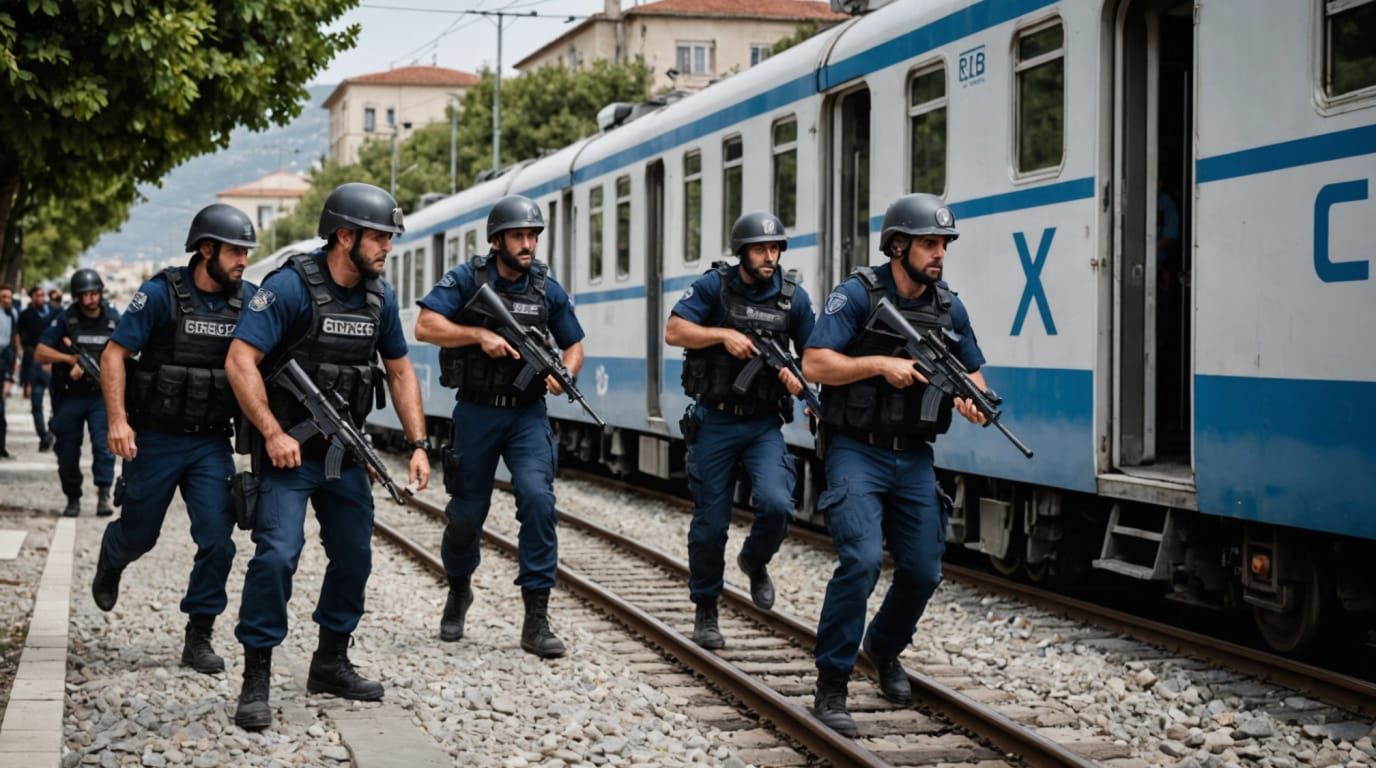
A previously unknown extremist group has claimed responsibility for a bomb attack targeting the offices of Hellenic Train, Greece's national railway operator, in central Athens. The attack, which occurred Friday evening, caused damage to the building's facade but resulted in no injuries due to a warning call made prior to the detonation.
Attack Claims and Motives
The group, calling itself "Revolutionary Class Self-Defence," claimed responsibility for the bombing in a lengthy post on an anarchist-affiliated website, Athens Indymedia, on Sunday. The group stated the attack was part of an armed struggle against the state and dedicated it to "the Palestinian people and their heroic resistance." However, the core of their manifesto focused on what they described as a class war and the "cover-up of the crime in Tempi," referencing the deadly 2023 train crash.
The group accused the government of political responsibility in covering up the Tempi train collision and called the owner of Hellenic Train, the Italian Ferrovie Dello State, "fascist at its core." They also linked the accident to the "murders" of the proletariat in the form of workplace accidents, blaming capitalist interests.
The Tempi Train Disaster
The bombing occurred amidst widespread public anger and scrutiny following the Tempi train disaster on February 28, 2023, in which 57 people were killed when a passenger train collided head-on with a freight train near Larissa. The incident, Greece's worst train accident in recent history, sparked outrage over safety failures, outdated infrastructure, and the privatization of Hellenic Train.
Investigations into the crash are ongoing, but the disaster has led to sustained criticism of Hellenic Train and Greece's conservative government. Relatives of the victims and opposition parties have accused authorities and the company of chronic neglect of the rail network. The extremist group's statement echoed these criticisms, further fueling the controversy surrounding the tragedy.
History of Similar Attacks
This is not the first time the group has claimed responsibility for such an attack. In February 2024, Revolutionary Class Self-Defence also claimed responsibility for a bomb attack on the Greek Labour Ministry, which, like the railway office bombing, caused only property damage.
Left-wing groups have a history of carrying out sporadic attacks in Greece for decades, often identifying as urban guerrilla fighters. These groups typically aim to topple the state and retaliate against what they perceive as systemic social injustice.
Government Response and Investigation
The anti-terrorism unit of the Greek police has taken over the investigation into the bombing. The government has yet to issue a formal statement regarding the specific claims made by the Revolutionary Class Self-Defence group. However, officials have consistently denied any attempts to cover up the circumstances surrounding the Tempi train disaster.
The bombing has further intensified the pressure on Prime Minister Kyriakos Mitsotakis's New Democracy government, which has struggled to regain public trust in the wake of the train crash. A recent survey indicated that a significant majority of Greeks distrust the government's handling of the disaster and its aftermath.
Implications and Future Concerns
The attack raises concerns about the potential for further acts of violence by extremist groups in Greece, particularly those motivated by the Tempi train disaster and related grievances. The emergence of a new group claiming responsibility for multiple attacks suggests a possible escalation of such activities.
The incident also highlights the ongoing challenges facing the Greek government in addressing public anger and concerns regarding the safety and reliability of the country's railway system. Resolving these issues and ensuring accountability for the Tempi train disaster will be crucial in preventing further unrest and maintaining social stability.
The bombing of the Hellenic Train offices serves as a stark reminder of the deep-seated anger and frustration that persist in Greek society, fueled by economic hardship, perceived government failures, and tragic events like the Tempi train disaster. As investigations continue and the government grapples with the fallout from the attack, the focus remains on addressing the underlying issues that have contributed to the rise of extremist groups and the potential for further violence.


