Families of Bangladesh's Disappeared Clamor for Answers Amidst Political Shift
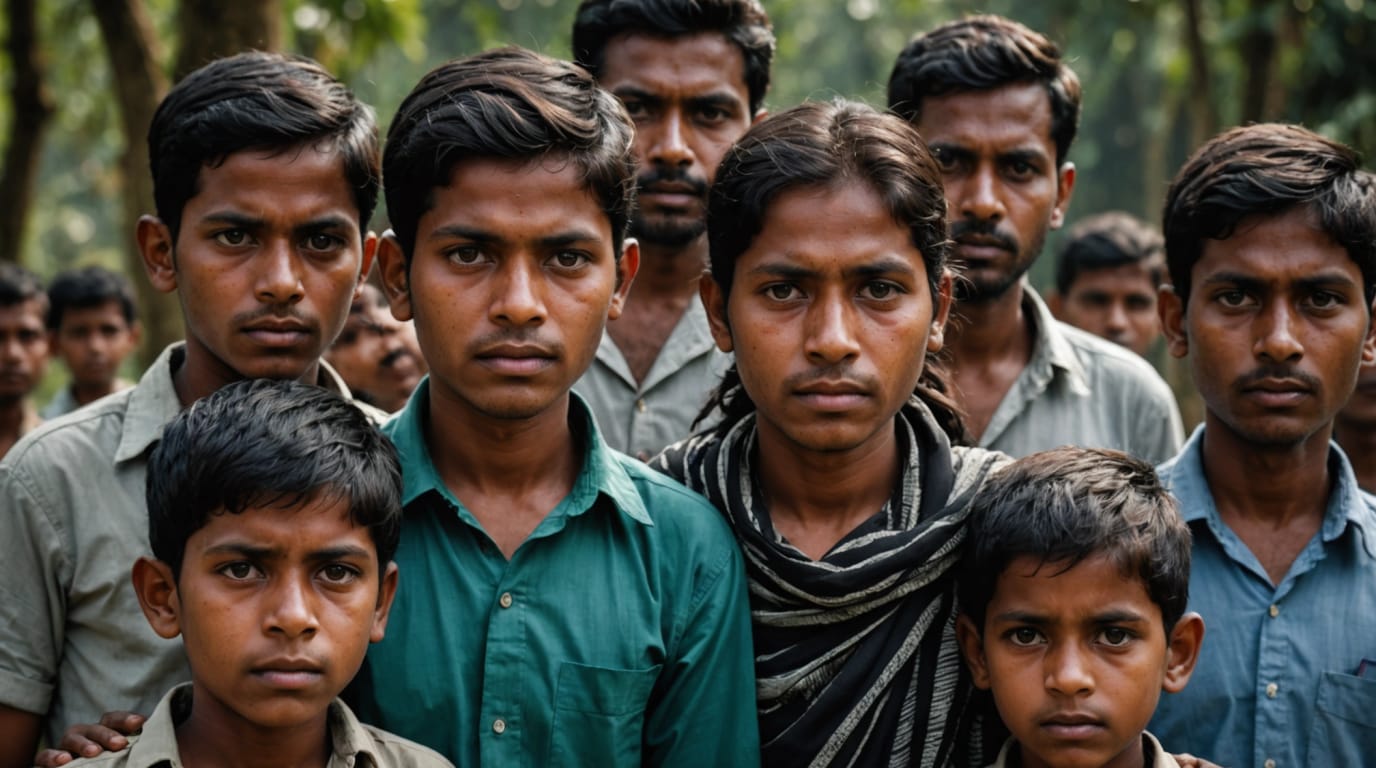
DHAKA, Bangladesh – For years, families in Bangladesh have lived in anguish, desperately seeking answers about the fate of their loved ones who have vanished, allegedly at the hands of state security forces. With a recent shift in the political landscape, these families are renewing their calls for justice and demanding accountability for the widespread phenomenon of enforced disappearances.
A History of Disappearances
Enforced disappearances, defined as the abduction or detention of a person by state agents, followed by a refusal to acknowledge the person's fate or whereabouts, have plagued Bangladesh for decades. Rights groups estimate that hundreds of individuals have been forcibly disappeared, particularly during the tenure of former Prime Minister Sheikh Hasina, who was accused of authoritarianism. These disappearances have targeted political opponents, activists, and critics of the government, creating a climate of fear and stifling dissent.
According to Bangladeshi human rights organization Odhikar, at least 708 cases of enforced disappearances were reported between 2009 and June 2024. While some victims have resurfaced, often after prolonged periods of secret detention, many remain missing, leaving their families in a state of perpetual uncertainty.
Hope Rekindled
The recent resignation and subsequent departure of Sheikh Hasina has sparked renewed hope among the families of the disappeared. Following Hasina's exit, several individuals who had been missing for years were released from captivity, including Abdullahil Amaan Azmi, Ahmad Bin Kashem, and Michael Chakma. These releases have fueled speculation that other victims of enforced disappearance may still be alive and held in secret detention facilities.
Mayer Daak, a platform supporting the families of the victims, has been at the forefront of the renewed efforts to locate the missing. Sanjida Islam Tulee, co-founder of Mayer Daak, expressed optimism that the change in government would lead to a breakthrough in these cases. "The protesting students who threw the [Hasina] government out of power are standing with us now," Tulee told VOA. "They have threatened to launch a new round of protests if the security authorities do not make any effort to release the enforced disappearance victims. We are highly hopeful that we will find out our brothers now."
Calls for Investigation and Accountability
Human rights organizations are urging the interim government to prioritize investigations into enforced disappearances and to hold perpetrators accountable. Human Rights Watch has called for a robust process with international expertise to investigate these abuses and identify avenues for reparations for victims and their families.
The interim government has established a five-member commission of inquiry to investigate reports of enforced disappearances between January 2010 and August 2024. Amnesty International welcomed this move as a "first step in the long road to truth, justice, and reparations" and urged the commission to conduct thorough, transparent, and effective investigations.
However, concerns remain about the commission's mandate and its ability to operate independently and impartially. Critics argue that the commission's scope should be expanded to include cases prior to 2010 and that it should be given the necessary resources and authority to compel testimony and access relevant information.
The Role of Security Forces
A key focus of the investigations will likely be the role of Bangladesh's security forces, particularly the Rapid Action Battalion (RAB), in carrying out enforced disappearances. The RAB, a paramilitary unit, has been implicated in numerous cases of extrajudicial killings and enforced disappearances, leading to sanctions by the United States government in 2021.
While the number of reported disappearances has decreased since the imposition of sanctions, rights groups say that the RAB and other security agencies continue to operate with impunity. They are calling for reforms to ensure civilian oversight over security forces and to disband the RAB altogether.
International Pressure
The issue of enforced disappearances in Bangladesh has drawn international condemnation, with the United Nations, the European Union, and various human rights organizations calling for investigations and accountability. In a significant step, the interim government recently signed the International Convention for the Protection of All Persons from Enforced Disappearance, signaling a commitment to address this issue.
However, critics argue that signing the convention is not enough and that the government must take concrete steps to implement its provisions, including enacting legislation to criminalize enforced disappearance, establishing a national registry of disappeared persons, and providing reparations to victims and their families.
Lingering Trauma
For the families of the disappeared, the pain and uncertainty are ever-present. Adiba Islam Hridi, a 12-year-old girl whose father was abducted in 2013, poignantly expressed the anguish of those left behind. "For the last 10 years, I have been told that my father will come back, but this wait never ends," she said. "I want to be hugged by my father."
The psychological and emotional toll on these families is immense, and many struggle to cope with the loss of their loved ones and the lack of information about their fate. They face social stigma, economic hardship, and constant fear of reprisal from the authorities.
A Path Forward
As Bangladesh navigates its political transition, the issue of enforced disappearances remains a critical test of its commitment to human rights and the rule of law. The interim government has an opportunity to break with the past and to ensure that those responsible for these heinous crimes are brought to justice.
This requires a comprehensive approach that includes:
- Independent and impartial investigations into all cases of enforced disappearance
- Accountability for perpetrators, regardless of their rank or position
- Reforms to ensure civilian oversight over security forces
- Reparations and support for victims and their families
- Ratification and implementation of the International Convention for the Protection of All Persons from Enforced Disappearance
By taking these steps, Bangladesh can begin to heal the wounds of the past and build a future where enforced disappearances are no longer a tool of political repression. The families of the disappeared deserve nothing less than truth, justice, and the chance to finally find closure.


