Famine Threatens Occupied Oleshky as Humanitarian Evacuation Remains Stalled
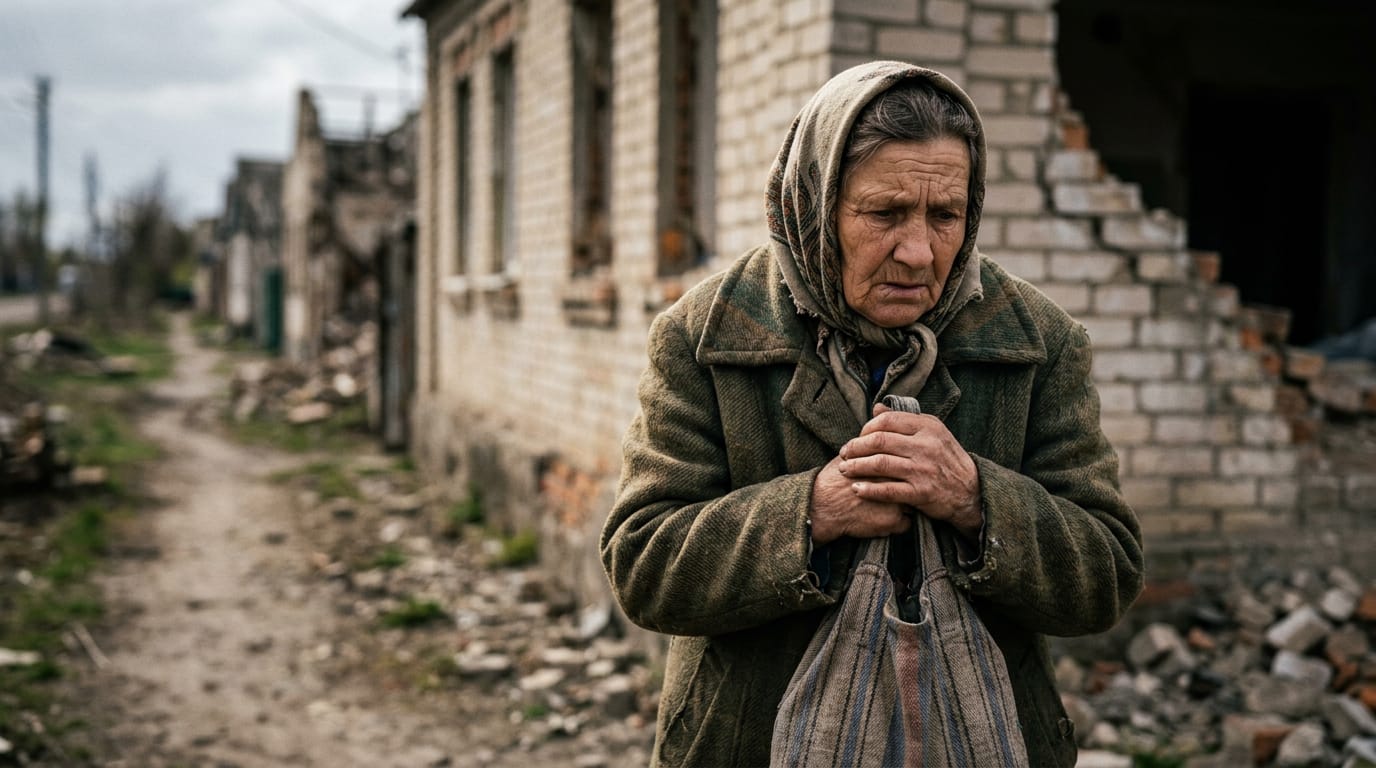
Thousands of civilians trapped in the Russian-occupied town of Oleshky in southern Ukraine face critical food shortages and mounting threats of starvation, as negotiations for a safe evacuation corridor remain stalled.
The riverside town in the Kherson region has been cut off from regular humanitarian deliveries since late May, leaving an estimated 2,000 residents within the town limits and up to 6,000 across the broader territorial community without steady access to sustenance, clean water, or essential medicines. Despite urgent appeals from international bodies and humanitarian organizations, diplomatic efforts to establish a verified exit passage have produced no operational pathway, leaving trapped residents to navigate mine-strewn roads and active frontline combat zones.
A Frontline Enclave Pushed to the Brink
Oleshky, situated on the east bank of the Dnipro River directly across from government-held Kherson, has been under Russian military control since the opening days of the full-scale invasion. Prior to 2022, the town was home to approximately 24,000 people. When Ukrainian forces liberated Kherson on the west bank in late 2022, the Dnipro River transformed into a heavily contested frontline, placing Oleshky directly in the operational crosshairs.
The community suffered severe physical disruption in June 2023 following the catastrophic destruction of the Nova Kakhovka dam. Rushing floodwaters submerged broad swathes of the town, washing away critical civil records and severely crippling local utility networks. The aftermath left municipal electricity, gas, and running water networks virtually inoperable.
By mid-2026, the humanitarian situation turned catastrophic. Commercial stores had completely closed, and the final organized aid shipments reached the area in late May. With the summer harvest depleted, remaining households have exhausted personal reserves. Local reports confirm that residents have resorted to extreme measures, including gathering edible wild plants, salvaging spoiled grains, and burning fallen branches for fuel.
Demographic Vulnerabilities and Movement Hurdles
The vast majority of the population remaining in the town consists of the elderly, individuals with severe physical disabilities, and caretakers who could not abandon immobilized relatives. Official Ukrainian monitoring records indicate that roughly 50 children remain within Oleshky itself, with around 200 children across the surrounding rural district.
Physical escape has become nearly impossible through routine means. The primary roadways connecting Oleshky to deeper occupied territories are densely sown with anti-vehicle mines and continuously monitored by aerial surveillance. Several private efforts to transport goods into the town have ended in fatal strikes on civilian vehicles.
Administrative hurdles also prevent departure. Because many residents lost birth certificates and national identification during the 2023 flood, they cannot navigate Russian security checkpoints without newly issued documentation. In addition, many families resist moving deeper into occupied zones or the Russian Federation due to fears of forced military conscription for working-age men and potential family separation.
Desperation has driven some individuals to attempt unauthorized journeys on foot through dangerous paths. In recent weeks, small groups have undertaken perilous 20-kilometer treks across unpaved paths, pushing frail elderly relatives in garden wheelbarrows to reach neighboring settlements where minimal food could be found.
Stalled Diplomacy and Aid Obstacles
Efforts to broker a formal cease-fire corridor have repeatedly encountered logistical and political deadlocks. Ukrainian human rights monitors reported that initial operational parameters for an evacuation were submitted through diplomatic intermediaries, and neutral relief agencies stood ready to deploy.
The International Committee of the Red Cross reaffirmed that it remains prepared to facilitate the voluntary and dignified transfer of civilians, provided that both belligerents grant binding security guarantees and establish verifiable operational pauses. However, those necessary security assurances have not materialized from Russian military authorities in the region.
Ukrainian officials maintain that Russian command structures are deliberately withholding evacuation approvals and blocking relief deliveries to maintain a civilian presence in the immediate rear areas of the frontline. Russian authorities, conversely, have publicly cited operational security and continuing artillery exchanges across the Dnipro as major barriers to facilitating traffic across regional chokepoints.
The resulting stalemate has prompted Ukrainian diplomats to elevate the plight of Oleshky at international forums, including the United Nations General Assembly, where representatives characterized the denial of essential goods as a violation of international humanitarian law. Religious leaders and interfaith coalitions have likewise directed appeals to major world figures, urging direct mediation to avert an impending mass casualty event linked to starvation.
Winter Approaches an Unresolved Emergency
With seasonal temperatures expected to plunge rapidly, the lack of central heating, functional power, and medical facilities significantly compounds the risk of widespread mortality. The town’s healthcare infrastructure has dwindled to emergency field treatments, with no stable supply chain for insulin, cardiovascular medicines, or routine antibiotics.
International humanitarian law, enshrined in the Geneva Conventions, obligates occupying powers to ensure adequate food, medical supplies, and relief operations for civilian populations under their control. Until verifiable security guarantees are established to allow neutral convoys through the perimeter, the remaining residents of Oleshky face an intensifying survival crisis along one of the war's most isolated frontlines.


