Federal Government Escalates Legal Battle, Sues Harvard Over Alleged Antisemitism
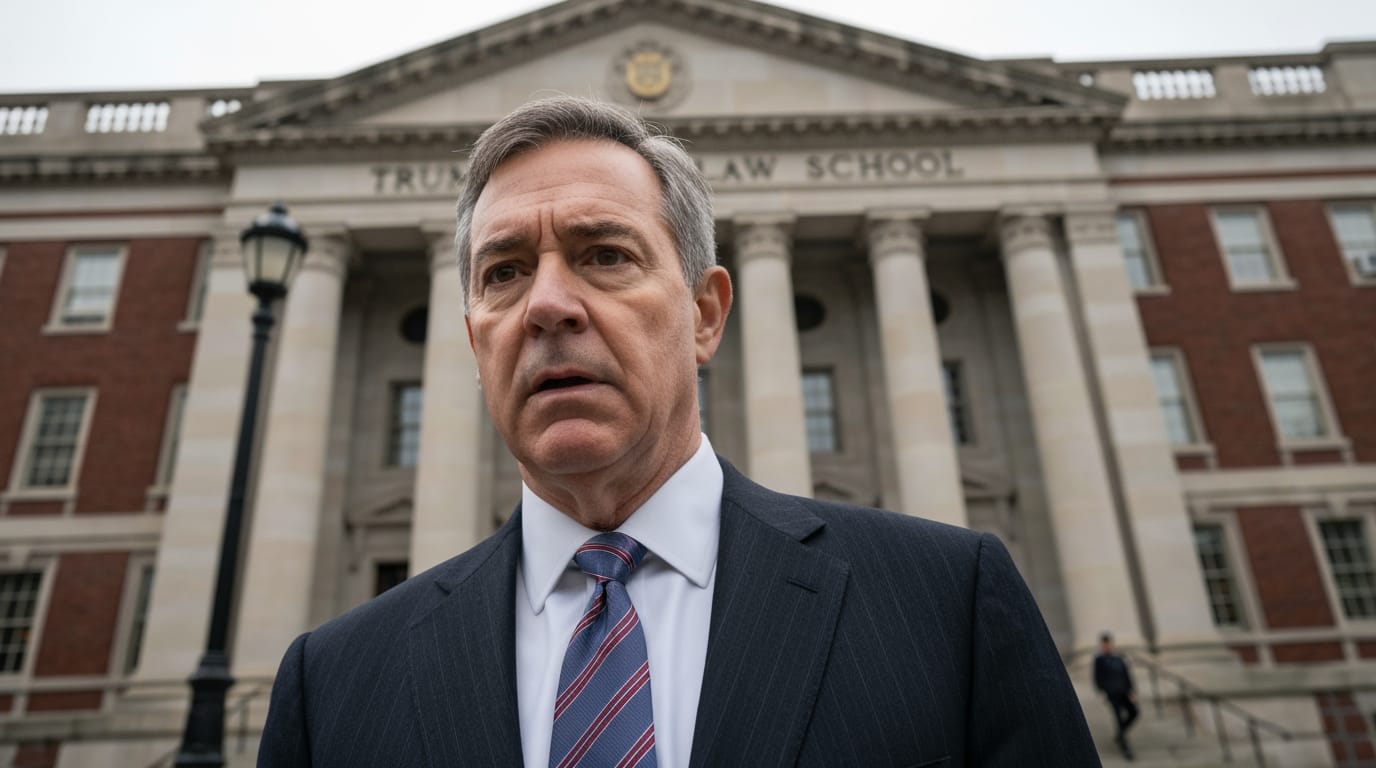
Cambridge, MA – The U.S. Department of Justice has filed a fresh lawsuit against Harvard University, accusing the prestigious institution of violating federal civil rights law by failing to protect its Jewish and Israeli students from antisemitic harassment. This latest legal action, initiated on Friday, March 20, 2026, marks a significant escalation in the ongoing and contentious dispute between the Trump administration and one of the nation's most prominent universities, spotlighting the intense debate over antisemitism and free speech on college campuses.
The suit alleges that Harvard has fostered a campus environment where hostile antisemitism thrives, particularly in the wake of the October 7, 2023, Hamas attacks and the subsequent conflict in Gaza. This legal challenge seeks not only to compel Harvard's compliance with Title VI of the Civil Rights Act of 1964 but also to recover billions of dollars in federal research grants and potentially impose an independent monitor to oversee the university's anti-discrimination policies.
New Lawsuit Intensifies Federal Scrutiny
The lawsuit filed in Massachusetts federal district court represents the Trump administration's renewed effort to hold Harvard accountable for what it describes as a pervasive failure to address discrimination. According to court documents, Jewish and Israeli students have faced severe, pervasive, and objectively offensive harassment on campus. Specific allegations include instances where students were reportedly blocked from school buildings by protesters and felt compelled to conceal their religious attire, such as yarmulkes, a traditional head covering worn by many observant Jewish men. The complaint asserts that Harvard's leadership and faculty "turned a blind eye to antisemitism and discrimination against Jews and Israelis," allowing these hostilities to fester.
The Justice Department's filing underscores the administration's commitment to demanding better from educational institutions and ending discriminatory behavior. This legal offensive follows an April 2025 investigation by the Trump administration into Harvard's compliance with Title VI, which concluded in June 2025 that the university had indeed violated the law through its treatment of Jewish and Israeli students. The administration warned then that a failure to enact changes could lead to a loss of federal financial resources, which include over $2.6 billion in federal grants from the Department of Health and Human Services.
A Protracted Battle Over Funding and Autonomy
The current lawsuit is not an isolated incident but rather the latest development in a protracted and multifaceted battle between the Trump administration and Harvard. Since President Trump's return to office, his administration has repeatedly targeted the university, primarily over accusations of inadequate responses to antisemitism.
Last year, the administration froze more than $2.2 billion in federal research grants to Harvard, citing concerns about antisemitism. In response, Harvard initiated its own legal action, challenging the funding cuts. A federal judge in Boston subsequently ruled in September 2025 that the administration had unlawfully withheld these funds, characterizing the antisemitism allegations as a "pretext" or "smokescreen" to punish the university for protected speech. The government has since appealed that ruling, signaling its determination to continue its legal challenges.
Beyond the antisemitism claims, the administration has also launched other investigations into Harvard, including inquiries into the university's admissions practices following the Supreme Court's 2023 ruling against affirmative action. These actions highlight a broader federal push to exert greater oversight over university policies, which Harvard and other institutions view as an infringement on their autonomy.
Harvard's Defense and the Campus Climate
Harvard University has consistently and vehemently denied the allegations, characterizing the government's actions as "pretextual and retaliatory" for its refusal to "turn over control of Harvard to the federal government." In official statements, the university has affirmed its deep commitment to its Jewish and Israeli community, vowing to ensure that all members feel embraced, respected, and able to thrive on campus.
University spokespersons have emphasized that Harvard has undertaken "substantive, proactive steps to address the root causes of antisemitism" and actively enforces its anti-harassment and anti-discrimination rules and policies. These efforts reportedly include enhanced training and education on antisemitism for students, faculty, and staff, as well as new programs designed to promote civil dialogue and respectful disagreement. Harvard maintains it will rigorously defend itself against the lawsuit.
The current climate on many college campuses, including Harvard's, has been profoundly affected by global events, particularly the Israel-Hamas conflict. This has led to intense debates surrounding the line between protected political speech and harassment, particularly for Jewish and Israeli students who report increased feelings of vulnerability. The lawsuit from the Justice Department draws heavily on reports from Harvard's Presidential Task Force on Combating Antisemitism and Anti-Israeli Bias (April 2025) and a May 2024 report from the Harvard Jewish Alumni Alliance, providing specific examples of alleged antisemitism on campus.
Broader Implications for Higher Education
This ongoing legal confrontation between the Trump administration and Harvard carries significant implications for higher education nationwide. The administration's aggressive stance signals a broader intent to use federal funding as leverage to influence university policies, not just concerning antisemitism but also in areas such as admissions and governance.
While Harvard has notably resisted settling with the administration, unlike some other prominent universities such as Columbia, Brown, Cornell, and Northwestern—which reportedly reached agreements to restore federal research funding—its decision to fight these legal battles could set important precedents. The outcome of this and related lawsuits will undoubtedly shape the future relationship between the federal government and private universities, potentially redefining the scope of federal oversight and the boundaries of academic independence. The case continues to unfold, ensuring that the critical issues of campus safety, free speech, and civil rights remain at the forefront of national discourse.


