FIFA Lashes Out Amidst Leadership Crisis, Citing 'Concerted Effort' to Undermine Infantino
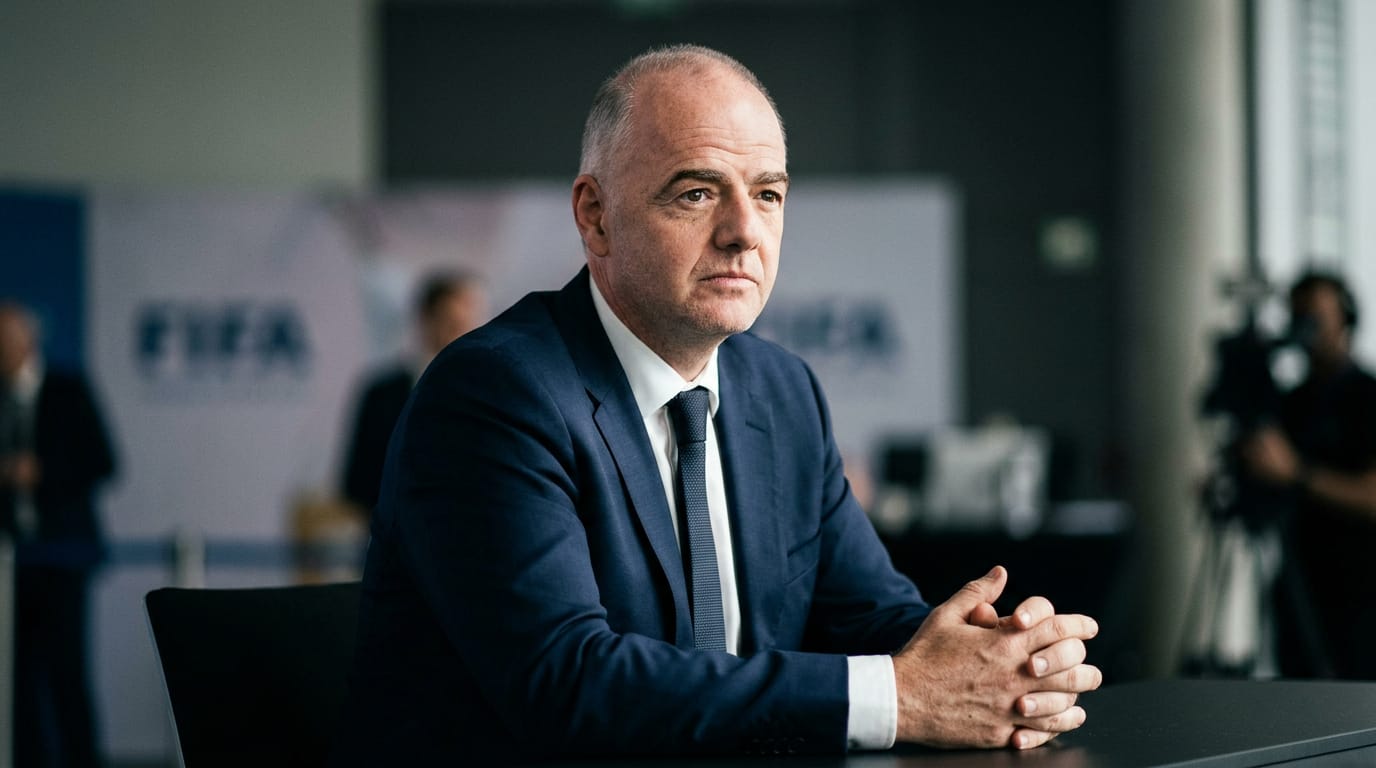
The world's foremost football governing body, FIFA, has issued a stern warning against what it describes as a "concerted and ongoing effort" to undermine its President, Gianni Infantino, amidst a deepening leadership crisis within the organization. The emphatic statement, released Saturday, underscores escalating tensions and divisions at the highest echelons of global football, demanding that challenges to leadership adhere to established democratic procedures and statutes.
FIFA Lashes Out Amidst Leadership Crisis, Citing 'Concerted Effort' to Undermine Infantino
Zurich, Switzerland – The usually guarded corridors of international football governance have been rattled by an unprecedented declaration from FIFA, which on Saturday explicitly cautioned against attempts to destabilize the organization and its president, Gianni Infantino. The powerful statement, arriving amid a confluence of controversies and mounting pressure on Infantino, signals a significant escalation in the internal power struggles shaping the sport's future. FIFA asserted that any efforts to challenge its leadership must strictly follow the established statutes and democratic processes governing the institution.
The Alarming Warning from Zurich
In a strongly worded communication from its headquarters in Zurich, FIFA described a discernible and persistent campaign aimed at weakening its authority and the leadership of President Infantino. While refraining from naming specific entities or individuals, the global governing body castigated those who, lacking the support of member associations, seek to achieve their objectives through "allegation, insinuation, or misinformation" rather than through FIFA's established democratic mechanisms. This unequivocal warning follows a period of intense scrutiny and opposition directed at Infantino, culminating in what FIFA perceives as an orchestrated effort to destabilize his presidency. The organization made it clear it would not tolerate or facilitate any process concerning the election of its president that deviates from its statutes, democratic procedures, and established governance framework.
Infantino's Tumultuous Tenure and Failed Reforms
The current crisis traces its roots to several contentious issues that have marked Gianni Infantino's tenure since his election in 2016. A significant flashpoint emerged from Infantino's ambitious, albeit ultimately failed, proposal to raise approximately $4.2 billion by selling a substantial stake in the commercial rights of FIFA's flagship tournaments, including the lucrative World Cup. This plan ignited a firestorm of criticism from various quarters, most notably from the Union of European Football Associations (UEFA), a powerful confederation that expressed deep reservations about the commercialization strategy. The collapse of this venture left a lingering sense of mistrust and significantly deepened the divide between FIFA and some of its most influential members, contributing to the "increasingly bitter standoff over Infantino's leadership." Calls for Infantino to resign gained traction, with the Norwegian Football Federation President, Lise Klaveness, publicly articulating her lack of institutional trust in his ability to govern FIFA.
Allegations and Denials: The UEFA Payment Controversy
Adding another layer of complexity to the unfolding drama are recent allegations concerning Infantino's past. Reports published by The Daily Telegraph suggested that UEFA had made a "departure payment" to a former female employee, allegedly involved in a relationship with Infantino during his time as UEFA's General Secretary. The reports indicated a six-figure sum, along with the covering of fees for an MBA course, was involved. While UEFA confirmed a payment was made and stated it was "in line with regulations" at the time, FIFA and Infantino have vehemently denied any impropriety. FIFA dismissed these claims as "categorically untrue" and "unfounded," labelling any insinuation of inappropriate conduct or statutory violation as "defamatory." The timing of these allegations, coupled with FIFA's strong counter-response, suggests a strategic battle being waged through media and internal channels.
A Divided Landscape: Critics and Confederational Support
The current landscape within global football governance appears increasingly polarized. On one side are prominent critics, including UEFA, which has publicly stated its lack of confidence in Infantino and even threatened a boycott of FIFA competitions. The Confederation of North, Central America and Caribbean Association Football (CONCACAF) also called for a "comprehensive reckoning" of Infantino's presidency following his controversial commercial proposals. These voices highlight concerns over transparency, governance, and the direction of the sport under current leadership.
Conversely, Infantino retains significant backing from other confederations and numerous member associations. A recent crisis meeting in Morocco saw FIFA's leadership reaffirm its support for the president. Furthermore, the South American Football Confederation (CONMEBOL) and the Confederation of African Football (CAF) have publicly echoed FIFA's stance against undermining efforts. Notably, the Mexican Football Federation publicly declared its support for Infantino, diverging from CONCACAF's more critical position. This bifurcated support base underscores the complex political dynamics at play, with FIFA emphasizing that Infantino was democratically elected and continues to serve with the mandate of its member associations.
Implications for Governance and Future Stability
This escalating conflict carries significant implications for the future of football governance and FIFA's stability. The explicit warning from FIFA points to a deep-seated struggle for power and influence, potentially hindering the organization's stated goals of reform and global development. The accusations of "allegation, insinuation or misinformation" suggest a battle being fought not just on policy, but also on public perception and trust. For an organization still striving to shed the legacy of past scandals, such internal strife risks eroding confidence among stakeholders, sponsors, and the wider football community. FIFA has stated it will not be "distracted or diverted from strengthening the organisation, delivering for our member associations and continuing the work of making football truly global." However, the sustained pressure and the strong defensive posture taken by the governing body indicate that the path forward is likely to remain turbulent, with the integrity and unity of the sport hanging in the balance.
The coming months will undoubtedly test the resilience of FIFA's leadership and its ability to navigate these turbulent waters. With the next presidential election scheduled for March, the current climate suggests that the "concerted effort" to influence the organization's trajectory will only intensify, marking a critical period for the future direction of global football.


