Fire Engulfs COP30 Pavilion, Halts Crucial Climate Talks in Brazil
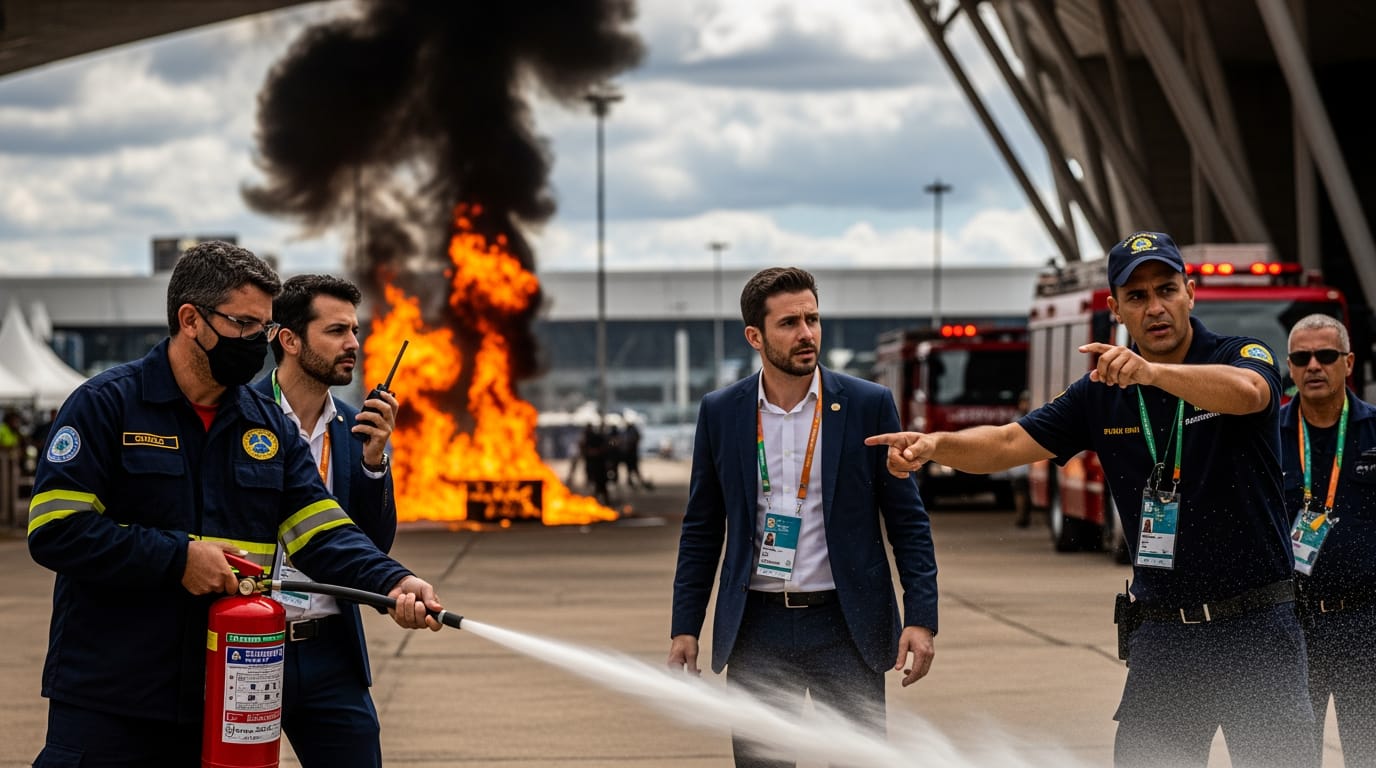
Belém, Brazil – A fire erupted within the United Nations Climate Change Conference (COP30) venue in Belém, Brazil, on Thursday, November 20, 2025, forcing the evacuation of thousands of delegates and temporarily halting critical negotiations aimed at addressing the global climate crisis. The blaze, which tore through a pavilion in the heavily restricted "Blue Zone," caused significant disruption on the second-to-last day of the summit, as world leaders and negotiators grappled with contentious issues surrounding fossil fuel phase-out and climate finance. Despite the rapid response of emergency services, which contained the fire within minutes, the incident underscored pre-existing concerns about the venue's readiness and cast a pall over the already fraught proceedings.
The Blaze and Rapid Response
The incident unfolded shortly after 2:00 PM local time (5:00 PM UK time) in the pavilion area of the conference center. Witnesses reported seeing flames and thick smoke billowing from a structure, prompting shouts of "fire!" and a swift, albeit chaotic, evacuation of the thousands of diplomats, journalists, and activists present. The fire reportedly began near the China Pavilion and quickly spread to adjacent structures, burning a hole through the fabric ceiling of the affected area.
Emergency teams, including the local fire department and UN security officers, responded promptly, bringing the fire under control in approximately six minutes. While no severe injuries were reported, at least 13 people were treated on-site for smoke inhalation, with some reports indicating as many as 21 individuals sought medical attention, and two for anxiety. Brazilian Tourism Minister Celso Sabino later confirmed that no one was seriously injured, crediting the swift action of security teams and the fire department. The entire venue was cleared, and the critical Blue Zone remained closed for several hours, with plenary sessions initially not expected to resume until the following day.
Disruption at a Crucial Juncture
The timing of the fire proved particularly impactful, occurring during a pivotal phase of the COP30 summit. Delegates were deep in negotiations, striving to finalize agreements on a range of complex and often divisive topics, including a potential roadmap for transitioning away from fossil fuels, mechanisms for climate finance, and international trade measures. Many saw the final days of the summit as the make-or-break period for securing meaningful global commitments. The interruption effectively halted these high-stakes discussions, forcing delegates to abandon scheduled meetings and casting uncertainty over the conclusion of the two-week conference.
The COP30 presidency had been working towards a draft text of the "mutirão" decision, a central element of the summit's hoped-for outcome, which, prior to the fire, contained language about phasing out fossil fuels. The sudden disruption delayed this delicate process, potentially impacting the final wording and ambition of the summit's declarations.
Pre-existing Concerns and Official Reactions
While the immediate cause of the fire remains under investigation, initial speculation points to an electrical device, possibly a microwave, a generator failure, or a short circuit. The incident brought to light prior concerns regarding the structural integrity and safety of the temporary venue. Just a week before the fire, Simon Stiell, the executive secretary of the UNFCCC, had reportedly sent a letter to Brazilian President Luiz Inácio Lula da Silva, raising issues such as faulty doors, exposed wires, and water leaks near light fixtures within the partially constructed summit site. Some sources close to the event organization suggested these "operational difficulties" might have foreshadowed such an incident.
Despite these concerns, Brazilian officials sought to downplay the severity of the fire. Tourism Minister Celso Sabino stated, "There was a small fire here, which is possible at any large event," adding, "This small fire could happen anywhere on planet Earth." He dismissed any possibility of canceling the summit, asserting its continued success. However, for many delegates, the fire served as a stark, symbolic reminder of the fragile state of both the physical infrastructure hosting the talks and the climate negotiations themselves, already marked by deep disagreements and slow progress. This incident also marked the third major disruption for COP30, following earlier peaceful demonstrations by Indigenous protesters at the venue.
Aftermath and the Road Ahead
Following fire department inspections, the COP30 site was declared reopened by 8:40 PM local time, though the affected area remained sealed off. Delegates were eventually allowed to retrieve belongings, and while some negotiations continued virtually, the full resumption of plenary sessions was pushed to the final day.
The interruption, however, appeared to leave an indelible mark on the negotiations. Reports emerged that new draft documents released the morning after the fire had removed explicit mentions of a fossil fuel phase-out, a development that drew strong criticism from environmental non-profits. Greenpeace Brazil's executive director, Carolina Pasquali, deemed the revised texts "practically useless" and insufficient to close the 1.5°C ambition gap. The incident underscored the immense pressure on negotiators as they worked against the clock, with the world watching for concrete actions to combat climate change.
The fire at COP30, though swiftly contained, was more than just a logistical setback. It highlighted the complex challenges inherent in hosting a global summit of this scale, particularly in a developing region, and the delicate balance between logistical readiness and the monumental task of securing a viable future for the planet. The incident's impact on the final outcomes of COP30, particularly on the ambitious targets for decarbonization, remains a subject of intense scrutiny as the summit concludes its final hours.


