Firefighters Gain Ground on Deadly Spanish Wildfire, But Scars Remain
BEDAR, Spain – Emergency crews in southern Spain are making significant headway in containing a devastating wildfire that has claimed at least 12 lives, injured eight, and left 23 people missing in the province of Almería. As of Saturday, improved weather conditions, including calmer winds and higher humidity, allowed firefighters to intensify their efforts and halt the blaze's rapid expansion. The inferno, which ignited late Thursday near the Sierra de Los Filabres mountains, has scorched approximately 6,600 hectares (16,000 acres) of forest and farmland, leaving a trail of destruction across a semi-arid landscape.
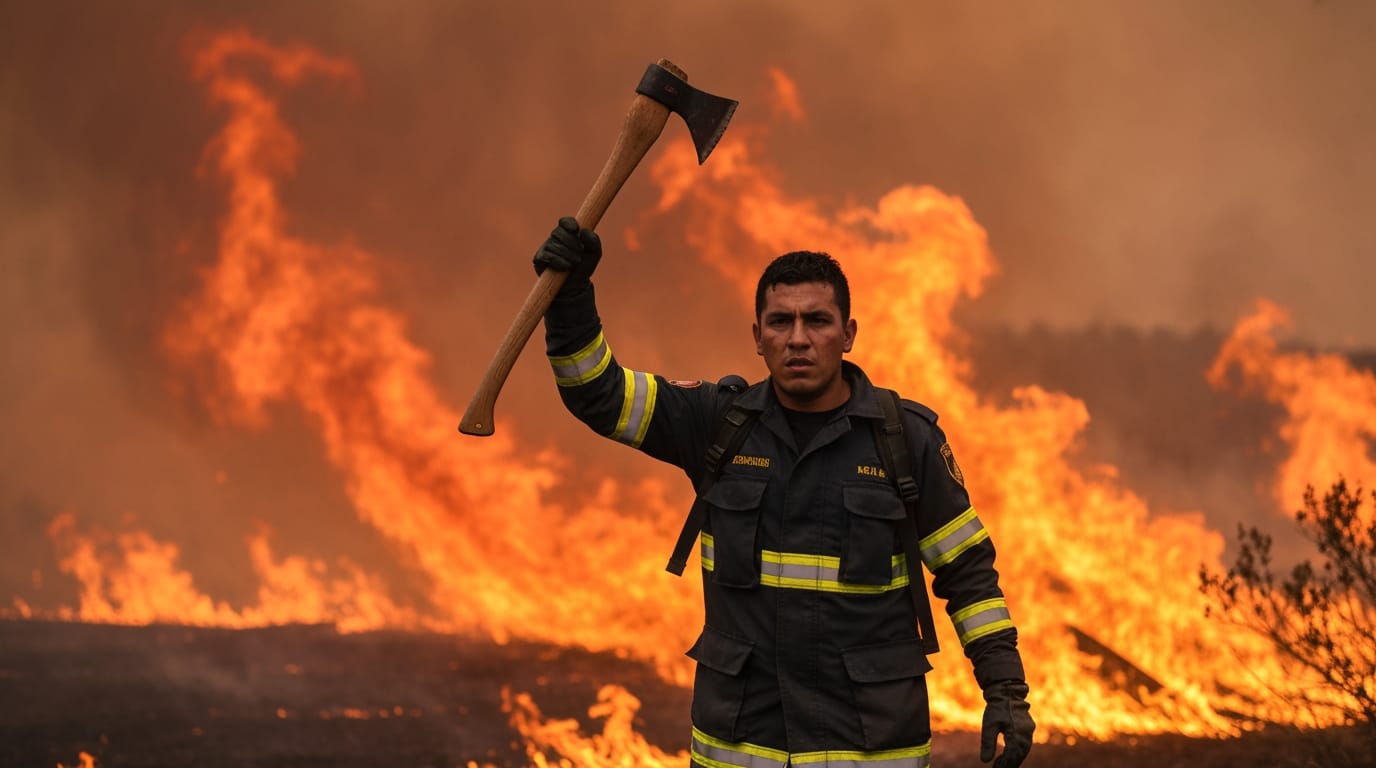
The battle against the flames saw hundreds of firefighters, backed by military personnel and an aerial fleet, transitioning from defensive tactics to a direct assault on the fire's perimeter. While the immediate threat appears to be diminishing, the scale of human loss and environmental damage underscores the increasing vulnerability of the region to climate-fueled disasters.
The Battle Turns: Containment Efforts Intensify
The relentless, multi-day battle against the Almería wildfire saw a crucial turning point on Saturday as a shift in meteorological conditions offered a much-needed reprieve for weary crews. Calmer winds and an increase in air humidity provided a critical "window of opportunity," enabling firefighters to directly engage the blaze for the first time since its eruption. Justice Minister Felix Bolaños, who visited the affected area, confirmed that the fire's spread had been contained for the day, with the burned area holding steady at 6,600 hectares (25 square miles).
Approximately 500 firefighters, supported by over 20 water-dropping aircraft, worked tirelessly to establish control lines, utilizing controlled burns overnight to manage the fire's perimeter. This massive deployment included 150 firefighters and 220 soldiers from Spain's military emergency unit, who had been struggling against the inferno since Friday. The challenging terrain, characterized by steep, dry scrubland and esparto grass, had previously hampered efforts, with the blaze advancing at speeds up to 100 meters (328 feet) per minute at its most intense. Officials expressed cautious optimism that these intensified efforts, coupled with continued favorable weather, could bring the fire under control in the coming hours.
A Trail of Devastation and Tragic Loss
The human toll of the Almería wildfire stands as one of Spain's deadliest in recent memory, claiming at least 12 lives, injuring eight people, and leaving 23 unaccounted for. Authorities reported that many of the victims were foreign nationals, some believed to be British citizens, who perished while attempting to flee the rapidly advancing flames in cars or on foot. A harrowing detail emerged that some individuals died after ignoring shelter-in-place instructions, with one group tragically trapped in a dry riverbed that became a "death trap." Several victims were found inside burnt-out vehicles, underscoring the ferocity and speed of the fire.
The fire, which ignited in a remote expat community, led to the proactive evacuation of 1,448 people from 11 areas. The village of Bedar, where many victims were found, has been described as a "ghost town," with nearly all its residents evacuated and police maintaining roadblocks into the area. The charred vegetation and blackened homes serve as a stark reminder of the inferno that forced terrified residents to flee. Autopsies have been completed, and DNA samples collected to assist in identifying the deceased, as Spain's Foreign Minister José Manuel Albares engaged with counterparts from the U.K., Belgium, Canada, and the Netherlands regarding the international impact of the tragedy.
A Tinderbox Landscape: The Role of Climate and Terrain
The devastating Almería wildfire is not an isolated incident but rather a stark illustration of the escalating wildfire crisis facing Spain and much of Southern Europe. The blaze occurred amidst a severe heatwave gripping the country, with temperatures often exceeding 40 degrees Celsius (104 degrees Fahrenheit) in recent weeks. This prolonged period of extreme heat, combined with arid conditions and strong winds, transformed the semi-arid landscape of scrubland and esparto grass into a highly flammable tinderbox. As Dr. Guillermo Rein, a fire scientist at Imperial College London, noted, the fire encountered a "worst possible combination" of ignition, dry vegetation, strong winds, and an unprepared community.
Scientists consistently link the increasing frequency and intensity of such extreme weather events to human-driven climate change. Europe is identified as the fastest-warming continent, with temperatures rising twice as fast as the global average since the 1980s. Spain, in particular, has experienced multiple heatwaves this summer and saw over 1,000 excess deaths attributed to heat in June alone. This ongoing "climate emergency," as Justice Minister Bolaños described it, creates conditions where even small ignitions can rapidly escalate into uncontrollable infernos. The exact cause of the Almería fire remains under investigation, though initial witness reports suggested a fallen power line, a claim denied by the electricity provider.
The Path Forward: Recovery and Resilience
As firefighters secure the perimeter and investigators delve into the origins of the Almería wildfire, the focus begins to shift towards the long-term recovery of the affected communities. The Andalusian regional government has decreed three days of official mourning for the victims, a poignant reflection of the profound sorrow felt across the region. Spanish Prime Minister Pedro Sánchez expressed his condolences, acknowledging the immense sadness and desolation caused by the tragedy.
The sheer scale of the devastation, coupled with the tragic loss of life, underscores the urgent need for enhanced prevention and response strategies in a climate increasingly prone to extreme wildfires. While the immediate crisis begins to subside, the emotional and ecological scars left by the Almería wildfire will undoubtedly take considerable time to heal. The ongoing efforts to identify all victims and support the displaced populations will remain paramount in the weeks and months ahead. The incident serves as a grim reminder of the vulnerability of communities to the intensifying impacts of a warming planet, urging continued vigilance and adaptation.