First German Evacuation Flight Arrives in Frankfurt Amidst Escalating Middle East Conflict
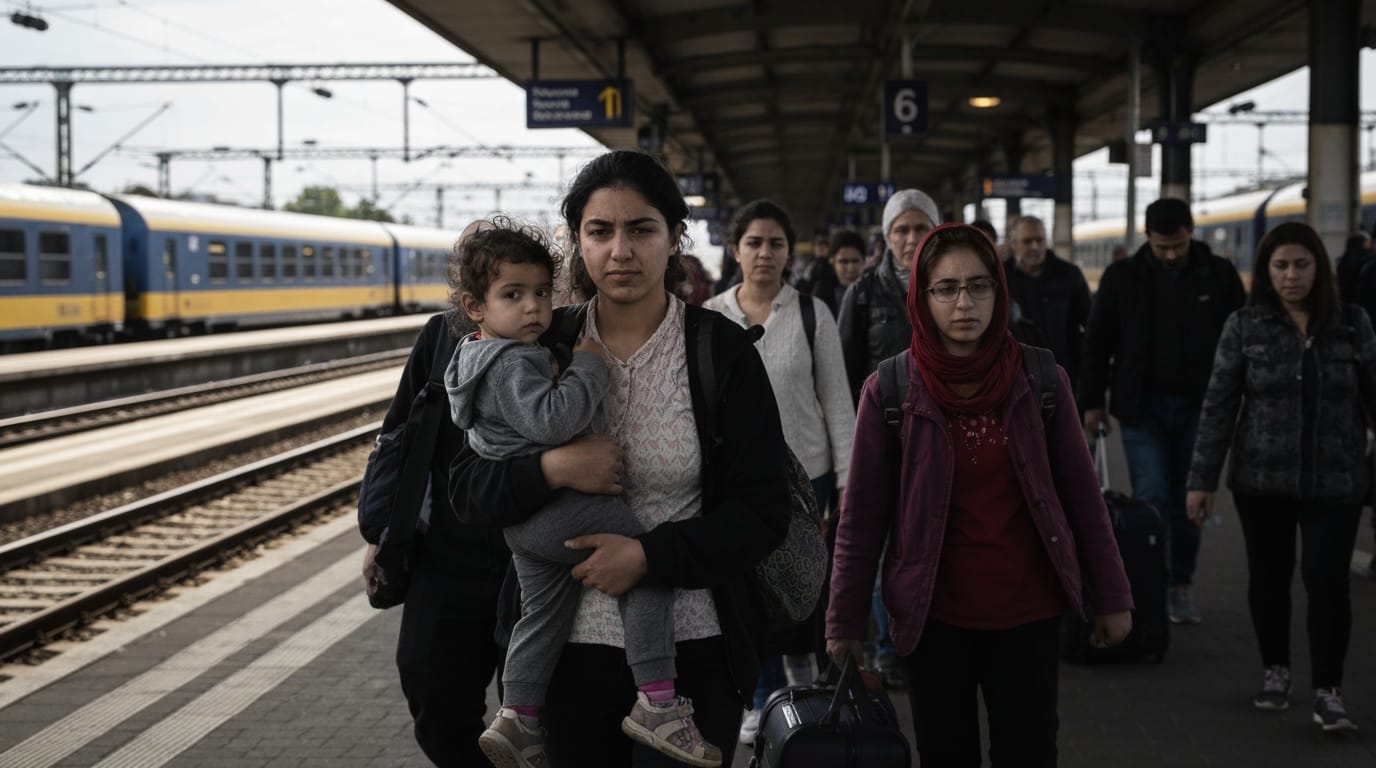
Frankfurt, Germany – The first German government-organized evacuation flight carrying citizens stranded by the rapidly escalating conflict in the Middle East landed safely at Frankfurt Airport early Thursday morning, marking a critical step in Berlin’s urgent efforts to repatriate thousands of its nationals. The Lufthansa Airbus A340-300, flight LH345, touched down at approximately 05:45 a.m. CET, completing a journey that began in Muscat, Oman, shortly after midnight local time. This initial flight carried 279 passengers, prioritizing vulnerable individuals such as pregnant women, the sick, and children, underscoring the severity of the crisis unfolding in the region.
The arrival of the evacuation flight culminates several days of intense diplomatic and logistical coordination by the German government, as regional tensions, exacerbated by recent military actions, have severely disrupted air travel and left an estimated 30,000 German tourists and residents unable to return home. Foreign Minister Johann Wadephul had previously announced the government's commitment to orchestrating these flights, emphasizing the safety of German citizens as a top priority.
A Region on Edge: The Catalyst for Evacuation
The immediate catalyst for this mass evacuation is the abrupt and severe escalation of hostilities in the Middle East. The crisis was ignited by a U.S.-Israeli attack on Iran last Saturday, which subsequently led to retaliatory strikes by Tehran against several Gulf states. These actions have plunged the region into profound instability, triggering widespread airspace closures and effectively stranding tens of thousands of international travelers, including a significant number of German nationals. The sudden eruption of violence caught many tourists and residents off guard, transforming planned vacations and business trips into precarious waits for safe passage home.
The closures of vast swathes of airspace across the Middle East have crippled commercial flight operations, leaving airlines and tour operators scrambling to adjust schedules and find alternative routes. While some limited flight operations have tentatively resumed from the United Arab Emirates, with Emirates flights landing in Frankfurt and Munich earlier this week, the overall situation remains highly volatile. The German government's decision to organize direct evacuation flights highlights the extraordinary nature of the circumstances and the limitations of commercial options in such an environment.
Germany's Swift and Coordinated Response
In response to the rapidly deteriorating situation, the German government moved swiftly to establish a comprehensive evacuation plan. Foreign Minister Johann Wadephul announced earlier in the week that chartered planes would be dispatched to the region, specifically targeting vulnerable groups for immediate repatriation. Crisis teams were deployed to key locations including Muscat, Doha, and Dubai to assess the situation on the ground and facilitate the evacuation process. These teams worked to explore various evacuation possibilities, including overland travel for citizens from areas like the UAE to designated departure points such as Muscat, Oman.
The logistical undertaking has been considerable. Many stranded Germans, particularly those outside the most vulnerable categories, faced the challenge of enduring prolonged stays or navigating complex travel arrangements to reach safe departure points. The decision to prioritize specific groups for the initial flights reflects a humanitarian imperative, ensuring that those most susceptible to the adverse effects of prolonged displacement and uncertainty are brought to safety first. The Foreign Office in Berlin corroborated figures from the German Travel Association, which estimated that around 30,000 customers of German tour operators were unable to fly home, a testament to the broad impact of the crisis on German citizens abroad.
The Human Toll and Ongoing Efforts
The stories emerging from the region underscore the human toll of the conflict. Reports from German media cited instances of crying children and a pervasive mood of fear among stranded tourists, with some even stuck on cruise ships unable to disembark. The psychological impact of being caught in a conflict zone, far from home, has been profound for many. The arrival of the first flight, therefore, offers not just a logistical solution but also a significant morale boost for those still awaiting repatriation and their anxious families in Germany.
This first flight is just the beginning of what is expected to be a multi-day operation. Foreign Minister Wadephul has confirmed that additional flights are planned in the coming days to continue the repatriation efforts. The government remains in close consultation with national carrier Lufthansa to arrange these further flights, aiming to bring home as many citizens as possible from various locations affected by the travel disruptions. The German embassy in Cairo has also been actively assisting with border crossings from Israel, highlighting the multi-faceted nature of the crisis and the broad geographical scope of Germany's humanitarian response.
Conclusion: A Test of Resolve
The safe arrival of the first evacuation flight in Frankfurt marks a critical milestone in Germany’s efforts to safeguard its citizens amidst the turbulent geopolitical landscape of the Middle East. It represents not only a logistical triumph but also a powerful symbol of national resolve and humanitarian commitment. While the immediate crisis of repatriation for thousands of stranded Germans is far from over, the successful completion of this initial operation provides a glimmer of hope for those still awaiting their return. The ongoing conflict continues to pose significant challenges, both in terms of regional stability and the broader implications for international travel and security. Germany's coordinated response sets a precedent for how nations must adapt and react to safeguard their citizens in an increasingly unpredictable world, demonstrating a dedication to supporting its people when they are most vulnerable.


