Former German Transport Minister Andreas Scheuer Goes on Trial Over Highway Toll Debacle
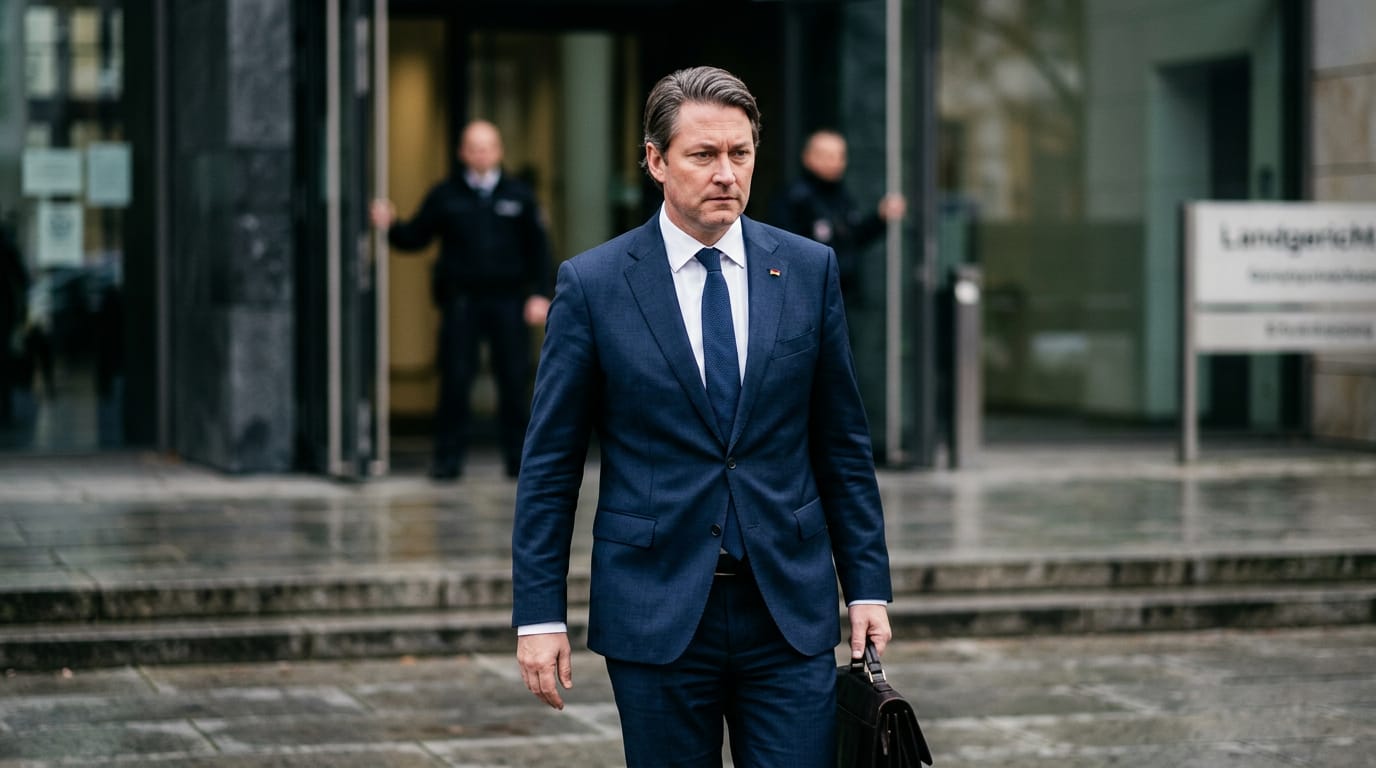
BERLIN — Former German Transport Minister Andreas Scheuer went on trial at the Berlin Regional Court on charges of giving false testimony to a parliamentary committee investigating a costly and abortive highway toll initiative. The proceeding marks an unprecedented criminal reckoning for a senior official involved in one of Germany's most expensive modern policy failures, a flagship project that cost public coffers hundreds of millions of euros without ever taking effect.
Scheuer, a prominent conservative from the Bavarian Christian Social Union who directed the transport portfolio from 2018 until 2021 in the cabinet of former Chancellor Angela Merkel, stands accused alongside his former state secretary, Gerhard Schulz. Prosecutors allege that both men gave untruthful testimony under oath when questioned by federal lawmakers examining why lucrative commercial contracts were finalized before European courts had verified the legality of the system. Both defendants firmly deny any wrongdoing, maintaining that their answers reflected their honest recollections at the time.
The Core Allegation
The criminal prosecution focuses on a pivotal meeting held on November 29, 2018, between government leadership and prospective commercial operators chosen to operate the national passenger car toll network. According to the indictment from the Berlin public prosecutor's office, representatives from the consortium offered to delay finalizing binding agreements until after the European Court of Justice issued a binding ruling on the validity of the measure under regional law.
When later called to account before a specialized investigative committee in the Bundestag, Scheuer repeatedly testified that no such proposal had been presented to him. State prosecutors contend this claim was deliberately inaccurate, asserting that commercial executives had indeed proposed a pause that could have saved the German treasury vast sums.
Scheuer, who left the national parliament earlier in 2024 to work as a private consultant, rejected the accusation directly in open court. The defense maintains that any discrepancies in his statements stemmed from genuine memory limitations during high-pressure inquiries rather than intentional deceit.
Origins of the Infrastructure Collapse
The controversy traces its roots to a decades-long political push by the Christian Social Union to impose road usage charges on foreign drivers using the German Autobahn network while offsetting the cost for domestic drivers through motor vehicle tax reductions. The plan was signed into law under heavy debate and received immediate legal challenges from neighboring nations, most notably Austria and the Netherlands, who argued the structure amounted to unlawful national discrimination.
Ignoring mounting warnings from legal specialists and parliamentary opposition figures, the Transport Ministry moved forward and signed long-term service agreements with the corporate consortium in late 2018. The entire framework suffered an immediate collapse in June 2019 when the European Court of Justice handed down a decisive verdict declaring the toll scheme discriminatory and illegal under European Union treaties.
Because the ministry had already entered into binding commercial agreements prior to the ruling, the cancellation triggered automatic contractual compensation clauses. Following prolonged arbitration between the government and the contracted private partners, the federal administration paid 243 million euros in state compensation to settle the breach of contract, money borne entirely by taxpayers.
Institutional Fallout and Political Repercussions
The fallout from the costly administrative settlement fueled public outrage and prompted the Bundestag to establish an inquiry committee to uncover whether ministry officials had acted negligently or concealed warnings from lawmakers. The subsequent criminal investigations, initiated in May 2022 following several complaints from citizens and watchdog organizations, culminated in the formal indictment.
The trial has reignited debates regarding ministerial accountability, the oversight powers of parliament, and the protection of state finances. Fiscal watchdog groups and taxpayer advocacy federations have used the case to urge lawmakers to introduce stronger criminal statutes against fiscal infidelity, arguing that existing legislation leaves high-ranking decision-makers largely immune from the financial consequences of administrative negligence.
Conversely, allies of the former minister have argued that the timing of the indictment and court hearings carries distinct political overtones, questioning why formal charges emerged long after the close of the parliamentary investigation. During initial appearances, defense attorneys argued that government officials should not face criminal perjury convictions for imperfect recall of complex multi-party commercial meetings that took place years earlier.
A Precedent-Setting Judicial Process
The trial before the Berlin Regional Court is scheduled across multiple hearing days into late autumn, during which judges are expected to review contemporaneous notes, executive correspondence, and minutes from the disputed 2018 discussions. Crucial testimony will come from corporate leaders who attended the sessions, alongside ministry civil servants present during the talks.
Legal scholars note that securing a conviction for false statements in committee environments requires prosecutors to demonstrate beyond a reasonable doubt that a witness deliberately intended to mislead, an evidentiary bar that presents significant hurdles when memory lapses are cited. Nevertheless, the spectacle of a former federal cabinet minister facing criminal judges over sworn statements to parliament underscores a rare judicial examination of political governance.
The proceedings continue to test the boundary between political miscalculation and criminal dishonesty, serving as a decisive final chapter in a multimillion-euro infrastructure dispute that has shadowed German transport policy for more than a decade.


