Former President Clinton Denies Knowledge of Epstein's Sex Crimes in Historic Congressional Testimony
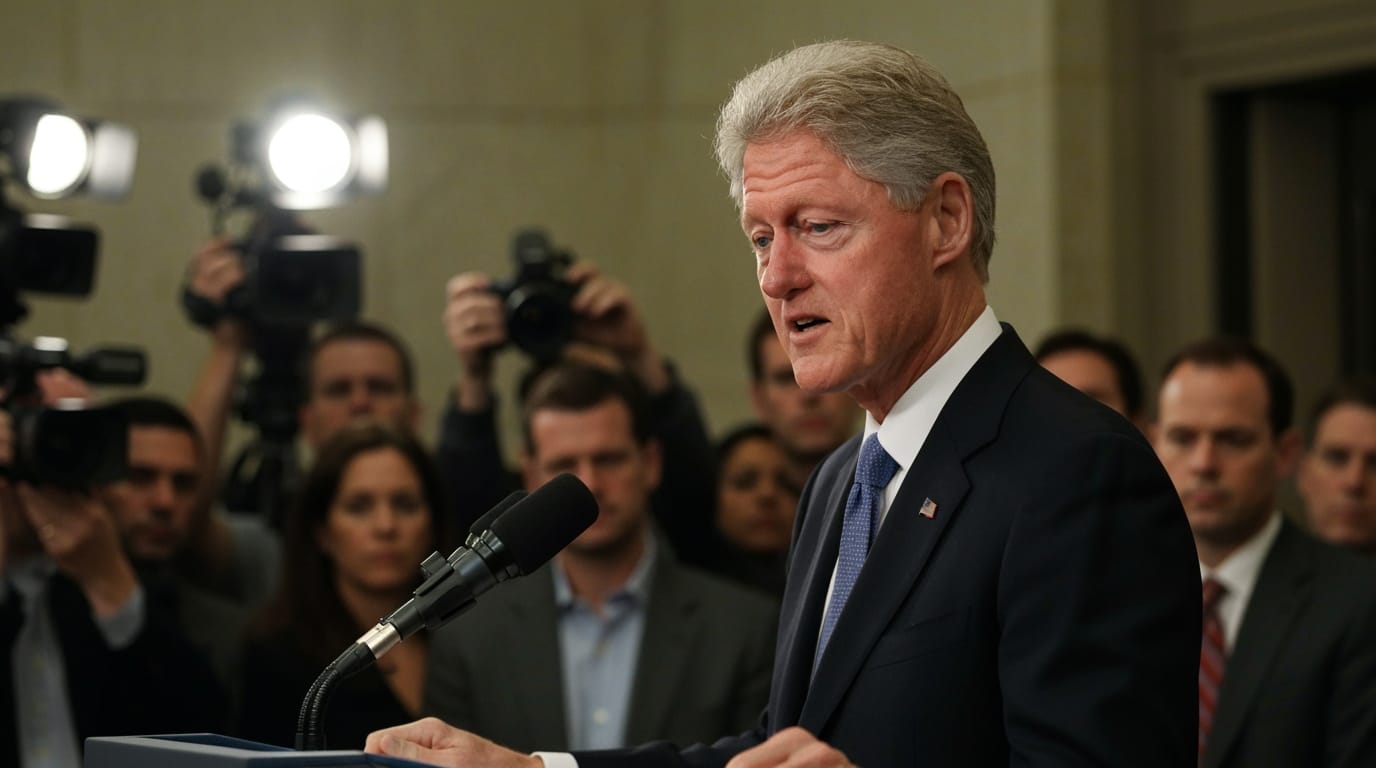
Washington, D.C. — Former President Bill Clinton recently asserted he possessed no knowledge of Jeffrey Epstein's extensive sex crimes, delivering an emphatic denial during a six-hour closed-door deposition before the House Oversight Committee. This unprecedented testimony marked the first instance a former U.S. president has been compelled to appear before Congress under subpoena, shining a renewed spotlight on the long-scrutinized association between Clinton and the disgraced financier. Clinton firmly stated that he "saw nothing, and did nothing wrong" concerning Epstein's illicit activities, a declaration central to his defense against lingering public questions.
Clinton's appearance before the Republican-led committee on February 27, 2026, followed months of efforts by lawmakers to secure his testimony, ultimately culminating in a subpoena after initial resistance. The former president's sworn statements, later made public in part through videos released by the committee, sought to distance him from the horrific details of Epstein's criminal enterprise. He maintained that had he been aware of the crimes, he would have reported them himself, drawing a parallel to his own experiences growing up in a home with domestic abuse. Clinton's testimony was presented as an effort to offer what little he knew to prevent future tragedies and to contribute to justice for Epstein's victims.
The Nature of a Contested Acquaintance
The relationship between Bill Clinton and Jeffrey Epstein spanned from the early 1990s into the early 2000s, initiating during Clinton's presidency when Epstein made at least four documented visits to the White House. Their association intensified in Clinton's post-presidency, primarily between 2001 and 2003, characterized by Epstein's financial support for the Clinton Foundation and Clinton's use of Epstein's private jet, notoriously dubbed the "Lolita Express".
Flight logs and statements from Clinton's office indicate that he traveled on Epstein's aircraft for at least 17 to 26 flight legs over four to six distinct trips during this period, primarily for philanthropic endeavors related to the Clinton Foundation. These journeys, which included destinations in Europe, Asia, and Africa, were undertaken with staff and Secret Service agents accompanying Clinton. The former president also acknowledged visiting Epstein's New York apartment in 2002, always with his aide and security detail present. Clinton emphasized that his contact with Epstein diminished significantly after 2003, with no public evidence of interaction beyond 2005 or 2006, well over a decade before Epstein's 2019 arrest. In his recent testimony, Clinton recounted being introduced to Epstein by former Treasury Secretary Larry Summers, who suggested Epstein as a potential supporter for Clinton's charitable foundation. Clinton suggested the relationship ended because he perceived Epstein was not genuinely interested in the humanitarian work.
Unresolved Questions and Scrutiny
Despite Clinton's consistent denials, his past association with Epstein continues to draw intense scrutiny, particularly in light of recently unsealed court documents and photographic evidence. Lawmakers during the deposition presented Clinton with various photos of himself with individuals from Epstein's circle, including one depicting him in a hot tub with an unidentified woman. Clinton denied knowing the woman and unequivocally stated he had not engaged in sexual activity with anyone introduced to him by Epstein or his associate, Ghislaine Maxwell.
A significant point of contention has been whether Clinton ever visited Epstein's private island in the U.S. Virgin Islands, a location central to many of Epstein's crimes. Clinton has consistently denied ever setting foot on the island, or Epstein's New Mexico ranch or Palm Beach residence. Ghislaine Maxwell, Epstein's former girlfriend and convicted accomplice, has also offered her perspective, claiming Clinton was more her friend than Epstein's, and describing Epstein simply as "a rich guy with a plane". Clinton, while acknowledging a closer acquaintance with Maxwell, denied any improper conduct and stated that she "has to be punished" for her crimes.
Broader Implications and Call for Accountability
The congressional inquiry into Epstein's network has brought renewed focus on the accountability of powerful individuals who associated with the convicted sex offender. The House Oversight Committee's decision to subpoena both Bill and Hillary Clinton underscores a bipartisan commitment to uncovering the full extent of Epstein's connections. Hillary Clinton also testified, stating she had no recollection of ever meeting Epstein, though she later learned he had attended a White House event. She maintained she knew nothing about Epstein or Maxwell's crimes.
The depositions are part of a broader effort to ensure justice for Epstein's victims and to understand how his extensive criminal activities remained concealed for so long. While Bill Clinton has not been accused of wrongdoing by law enforcement related to Epstein's crimes, the intense public and congressional questioning reflects a demand for transparency from all figures connected to the late financier. The revelations continue to impact perceptions of powerful figures, with lawmakers suggesting that the precedent set by Clinton's testimony could pave the way for other prominent individuals, including former President Donald Trump, to be called to account for their own past associations with Epstein.
In his testimony, Bill Clinton reiterated his belief that "no person is above the law, even presidents," emphasizing his cooperation was for the country and the victims. However, the detailed accounts of his past interactions with Epstein, juxtaposed with his staunch denials of criminal knowledge, ensure that the shadow of the Epstein scandal will continue to prompt difficult questions and public discourse regarding the networks of power and privilege that enabled a convicted sex offender. The ongoing pursuit of justice for Epstein's victims remains a central imperative, driving these investigations and the demand for full transparency from all who once moved within his orbit.