US Imposes Sanctions on Rwandan Military Amid Escalating East Congo Conflict
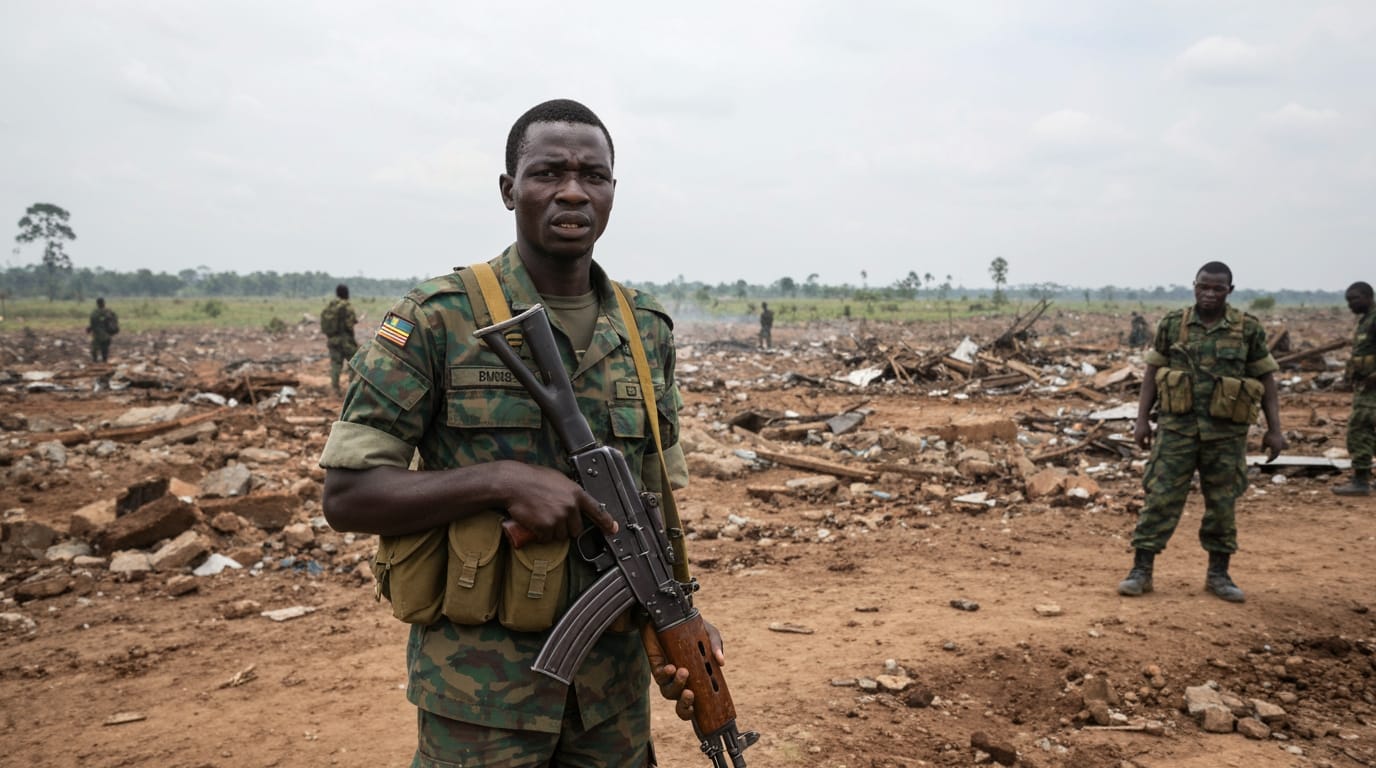
WASHINGTON, D.C. – The United States has enacted sanctions against Rwanda's military and several top officials, citing their alleged extensive support for the M23 rebel group, which continues to fuel a devastating conflict in the eastern Democratic Republic of Congo (DRC). This decisive action, announced by the U.S. Treasury Department on Monday, March 2, 2026, marks a significant diplomatic escalation aimed at halting the protracted violence and profound humanitarian crisis gripping the region.
The sanctions target the Rwanda Defence Force (RDF) and four of its senior officers, including Army Chief of Staff Vincent Nyakarundi, Major General Ruki Karusisi, Chief of Defense Staff General Mubarakh Muganga, and Special Operations Force Commander Brigadier General Stanislas Gashugi. U.S. officials assert that the RDF has been actively supporting, training, and fighting alongside the M23, a group already sanctioned by both the U.S. and the United Nations for widespread human rights abuses. This alleged backing has reportedly enabled the M23 to seize significant territory, including strategic cities like Goma, Bukavu, and Uvira, as well as crucial mining sites in the mineral-rich eastern DRC.
Sanctions Underscore Violation of Peace Accords
The U.S. Treasury Department's Office of Foreign Assets Control (OFAC) explicitly stated that the M23's territorial gains and continued offensives would not have been possible without the active support and complicity of the RDF and its senior leadership. This move comes just months after a U.S.-brokered peace agreement, known as the Washington Accords for Peace and Prosperity, was signed in December 2025 by DRC President Felix Tshisekedi and Rwandan President Paul Kagame, under the auspices of U.S. President Donald Trump.
However, days following the signing, M23 rebels, allegedly backed by Rwanda, captured the strategic Congolese city of Uvira, a move the U.S. State Department called a "clear violation" of the accords. U.S. Treasury Secretary Scott Bessent emphasized that the department would utilize "all tools at its disposal to ensure that the parties to the Washington Accords uphold their obligations," and demanded the "immediate withdrawal of Rwanda Defence Force troops, weapons, and equipment." Senator Jim Risch (R-Idaho), Chairman of the Senate Foreign Relations Committee, echoed this sentiment, stating that the sanctions send a "blunt message" to those who violate terms brokered by the United States.
The Deep-Rooted Conflict in Eastern DRC
The conflict in eastern DRC is a complex and long-standing humanitarian crisis, exacerbated by the involvement of numerous armed groups vying for control over the region's vast mineral resources. More than 100 armed groups operate in the area, but the M23, a primarily Tutsi-led rebel group, has emerged as one of the most prominent and powerful. The current phase of the conflict escalated significantly in 2022, following the M23's resurgence.
The M23, which takes its name from a March 23, 2009 peace agreement, alleges that the Congolese government failed to uphold the terms of that deal. However, the group's operations have been controversial, with the United Nations and other international observers repeatedly documenting its ties to Rwanda. UN experts estimate that thousands of Rwandan troops have been deployed in the DRC, actively supporting M23 operations. The conflict's origins are deeply intertwined with the aftermath of the 1994 Rwandan genocide, which led to an influx of Hutu ex-combatants into eastern DRC, creating enduring security concerns for Rwanda and contributing to a cycle of instability.
Humanitarian Catastrophe and Regional Instability
The ongoing hostilities have exacted a catastrophic toll on the civilian population, creating one of the world's most severe humanitarian crises. Over 7 million people have been displaced within the DRC, according to the U.N. agency for refugees. Reports indicate widespread human rights abuses perpetrated by the M23 and its allies, including extrajudicial killings, arbitrary arrests, torture, and rampant sexual violence against women and children. Displacement camps have been targeted, and vital aid supply chains have been severely disrupted, leading to shortages of food, clean water, and medical supplies. The UN has warned of a looming health crisis, with risks of widespread mpox, cholera, and measles outbreaks.
The conflict also carries significant risks of escalating into a broader regional war, with neighboring countries like Burundi and Uganda also involved. Despite ongoing diplomatic efforts and a signed peace agreement, fighting continues on multiple fronts, resulting in numerous civilian and military casualties.
Rwanda's Stance and Future Outlook
In response to the sanctions, Rwandan government spokesperson Yolande Makolo issued a statement rejecting the U.S. measures, asserting they "unjustly target only one party to the peace process" and "misrepresent the reality and distort the facts of the conflict" in eastern Congo. Rwanda maintains its commitment to the disengagement of its forces in tandem with the DRC fulfilling its obligations under U.S.-led mediation, while accusing Congo of violating the peace agreement through "indiscriminate" drone attacks and ground offensives.
The U.S. sanctions underscore a shift towards more direct and forceful intervention in a conflict that has defied previous diplomatic solutions. The international community, including the UN, has repeatedly called for an end to the violence and the withdrawal of all foreign forces. The effectiveness of these sanctions in compelling Rwanda to cease its alleged support for the M23 and de-escalate tensions remains to be seen. However, they signal a firm resolve from the United States to uphold the Washington Accords and address the profound instability and suffering in eastern DRC, urging both sides to return to the negotiating table for a lasting resolution.


