Four Astronauts Return to Earth in Historic ISS Medical Evacuation
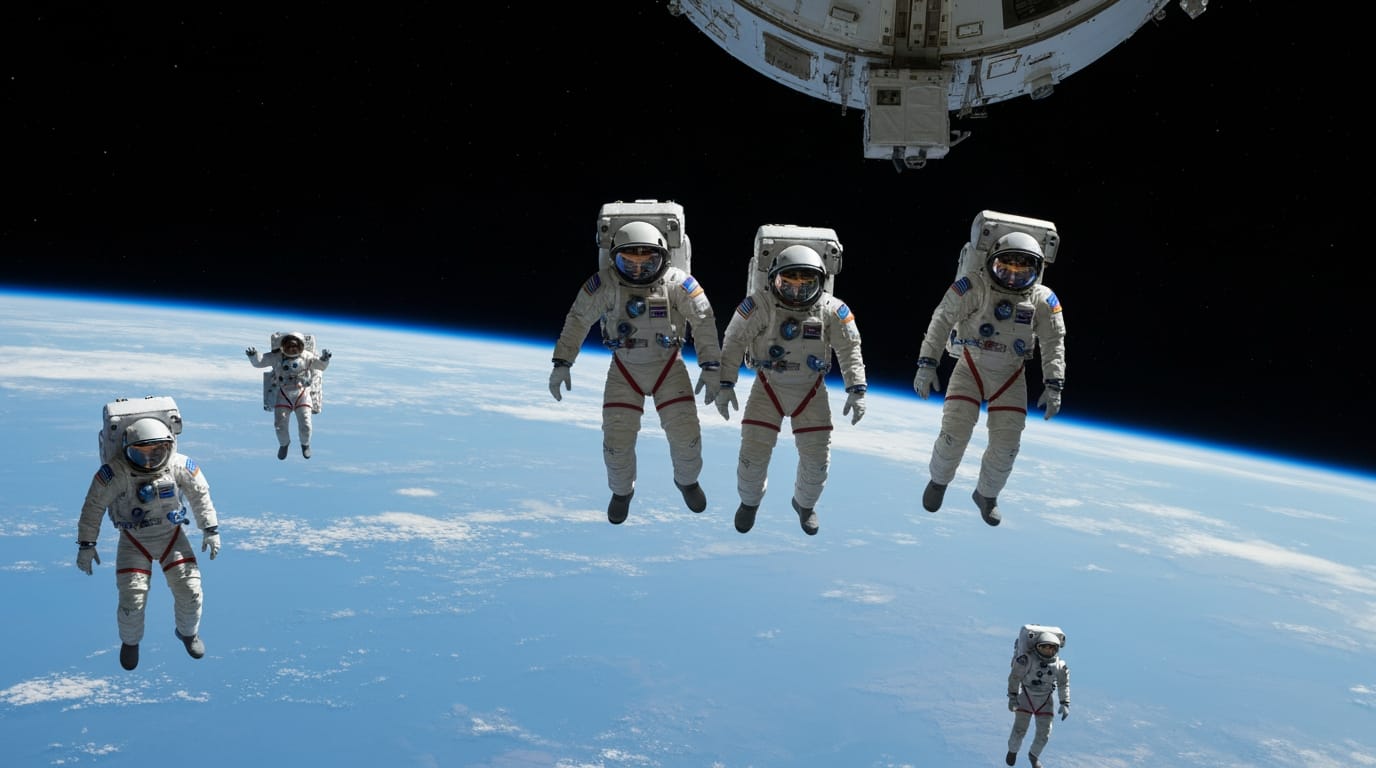
CAPE CANAVERAL, Fla. – In an unprecedented event for the International Space Station (ISS), four astronauts from the SpaceX Crew-11 mission have departed the orbiting laboratory and are en route back to Earth, marking the first medical evacuation in the station's nearly 26-year history. The controlled return, initiated due to a health concern with one of the crewmembers, underscores the complex challenges of long-duration spaceflight and the critical need for advanced medical capabilities that remain Earth-bound. While officials stress the situation is not an emergency, the early departure of the international crew signals a significant moment for space medicine and operational planning.
The Crew-11 quartet, comprising NASA astronauts Zena Cardman and Michael Fincke, Japan's Kimiya Yui, and Oleg Platonov of the Russian space agency Roscosmos, undocked their SpaceX Crew Dragon capsule, Endeavour, from the ISS on Wednesday, January 14, 2026, at 22:20 GMT. They are scheduled for a splashdown off the California coast early Thursday morning. Their mission, which began on August 1, 2025, was cut short by over a month, as they were originally slated to return in mid-February. NASA has declined to disclose the identity of the affected astronaut or the specific nature of the medical issue, citing privacy concerns, but confirmed the crewmember remains in stable condition.
An Unprecedented Return from Orbit
The decision to bring the four astronauts home earlier than planned was announced on January 8 by NASA Administrator Jared Isaacman. He emphasized that while the situation was serious enough to warrant an early return, it was not an "emergency de-orbit." Astronaut Mike Fincke, the pilot for Crew-11, reassured the public via social media, stating, "First and foremost, we are all OK. Everyone on board is stable, safe, and well cared for." This measured approach highlights the meticulous planning and extensive training that precedes and accompanies every space mission, even in unexpected circumstances. The crew's stable condition allowed for a standard undocking and return sequence, albeit on an accelerated timeline. The departure occurred after five months aboard the station, where they had been conducting scientific research and maintaining the orbital outpost.
The Imperative of Terrestrial Care
The core reason for the medical evacuation was the limitation of in-orbit diagnostic and treatment capabilities. As Administrator Isaacman explained, "The capability to diagnose and treat this properly does not live on the International Space Station." NASA's Chief Health and Medical Officer, James Polk, further elaborated that a "lingering risk" and "lingering question as to what that diagnosis is" ultimately led to the decision to bring the crew back to Earth. This necessity underscores a fundamental challenge of human spaceflight: even with advanced medical kits and telemedicine support, the comprehensive diagnostic tools and specialist care available on Earth cannot be fully replicated in space. While astronauts are extensively screened for health issues pre-flight, the unique stresses of the space environment can sometimes lead to unforeseen medical developments that require terrestrial medical facilities. The situation serves as a stark reminder that despite decades of progress, Earth remains humanity's primary medical sanctuary.
A Complex Orchestration and International Collaboration
Executing a medical evacuation from the ISS is a testament to the robust international collaboration that underpins the station's operations. The Crew-11 mission includes astronauts from the United States, Japan, and Russia, necessitating seamless coordination between NASA, JAXA, and Roscosmos. The departure required the meticulous preparation of the SpaceX Crew Dragon capsule, Endeavour, which served as their transport vehicle. The return journey involves a series of complex maneuvers, including undocking, orbital phasing, and a precisely timed deorbit burn, followed by atmospheric re-entry and splashdown in the ocean. Recovery teams, including medical personnel, are positioned to meet the capsule upon its return, ready to provide immediate assistance and transport the crew to specialized medical facilities. The fluidity of the situation was demonstrated by the cancellation of a planned spacewalk on January 7, a direct consequence of the emerging medical concern. Despite the unexpected nature of the return, the pre-existing protocols for such contingencies, honed over years of joint operations, allowed for an orderly execution. Astronaut Zena Cardman commended her crewmates, remarking, "Our timing of this departure is unexpected, but what was not surprising to me was how well this crew came together as a family to help each other and just take care of each other."
Reshaping Future Space Healthcare
While computer modeling had projected a medical evacuation from the ISS approximately once every three years, this is the first time NASA has faced such a scenario in its 65-year history of human spaceflight. This event provides invaluable data and lessons for future space missions, particularly as agencies plan for longer-duration expeditions to the Moon and Mars, where returns to Earth for medical care would be far more complex, if not impossible, in short order. This incident will likely spur further development in several key areas: advanced in-situ medical diagnostics, enhanced autonomous treatment capabilities, and potentially, more robust medical modules on future spacecraft or lunar/Martian habitats. The challenge lies in creating miniaturized, radiation-hardened medical equipment that can function reliably in deep space environments, supported by artificial intelligence and advanced telemedicine systems to guide crewmembers through complex procedures. The experience of Crew-11 will undoubtedly inform design considerations for Gateway, the lunar orbiting outpost, and future Mars transit vehicles, ensuring that potential medical emergencies can be managed with increasing efficacy far from Earth's embrace.
A Testament to Resilience and Collaboration
The medical evacuation of four astronauts from the International Space Station represents a pivotal moment in human space exploration. It serves as a powerful reminder of both the inherent risks associated with venturing beyond Earth and the extraordinary resilience and preparedness of the international space community. While the focus remains on the health and recovery of the affected crewmember, the successful execution of this complex maneuver highlights the efficacy of decades of planning, training, and unparalleled international cooperation. As humanity reaches further into the cosmos, events like this reinforce the critical importance of robust medical protocols and the unwavering commitment to astronaut well-being, paving the way for safer and more ambitious journeys into the unknown.


