Four Dead, Including Two Children, in Devastating Belgian School Bus-Train Collision
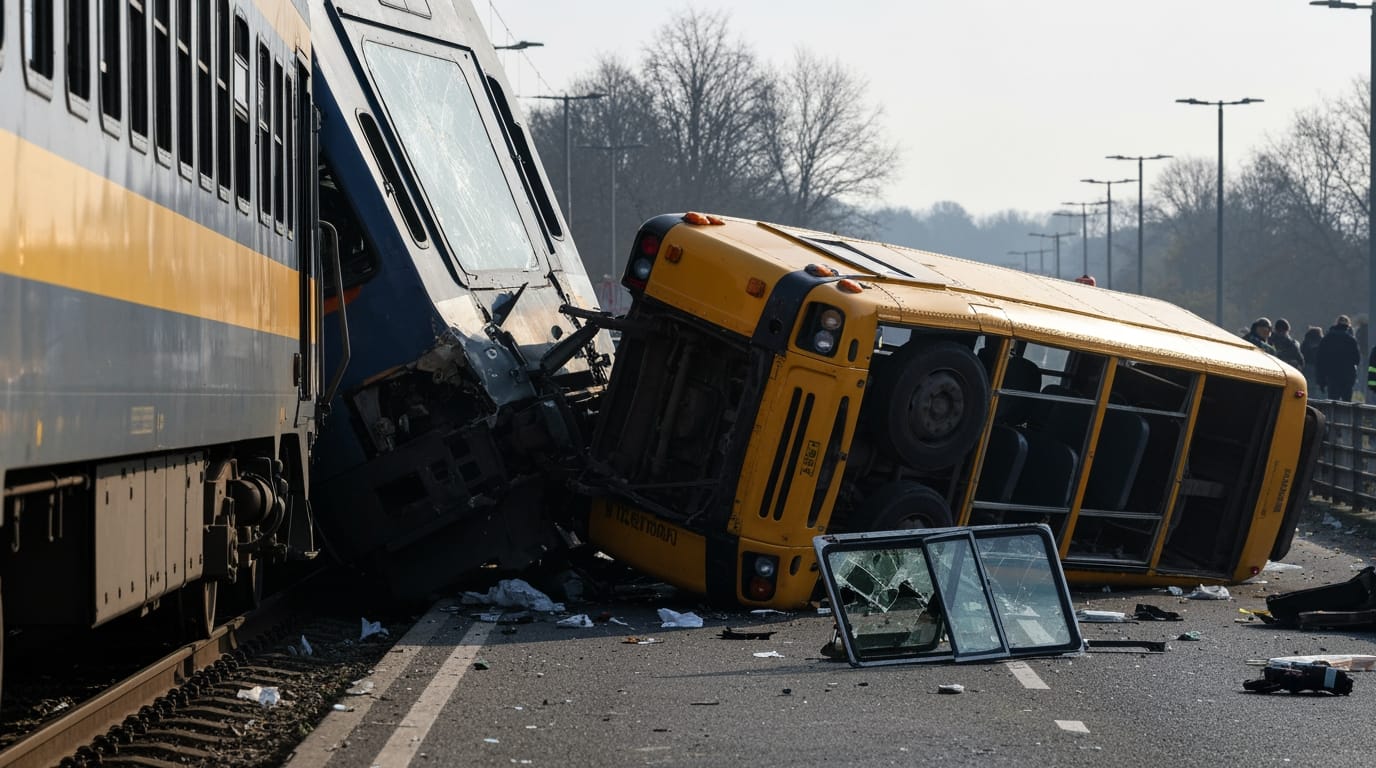
BUGGENHOUT, Belgium — A morning journey to school turned into an unimaginable tragedy Tuesday in Buggenhout, East Flanders province, when a train collided with a school minibus, claiming the lives of four individuals, including two teenage children. The devastating incident, which also left two others seriously injured, has plunged the small Belgian community into profound grief and sparked an urgent investigation into how the bus came to be on the tracks despite activated safety barriers at the level crossing.
The collision, occurring shortly after 8 a.m. local time, unfolded at a railway crossing near the intersection of Stationsstraat and Fierhuisen streets, an ordinary route now etched in collective memory as the scene of a horrific loss. The minibus was transporting seven high school students with special needs, accompanied by a driver and a caretaker, to the Buggenhout Campus, a specialized educational institution. The profound impact of the crash, which left the bus severely damaged and lying on its side, immediately raised questions about the circumstances leading to such a catastrophic event.
The Catastrophe Unfolds: Details of the Deadly Crash
Emergency services converged on the scene in Buggenhout following reports of the severe accident. Initial reports from local media and officials confirmed multiple fatalities, a number later solidified by Belgian Mobility Minister Jean-Luc Crucke. The victims identified were two children, the bus driver, and the adult caretaker, underscoring the immense human cost of the collision. The train, en route from Bruges and scheduled to stop at Buggenhout station just a kilometer away, was reportedly slowing down. However, the force of the impact was described by Frederic Sacre, a spokesperson for Belgian rail network operator Infrabel, as "extremely violent," leading to a "dramatic" toll. Fortunately, no injuries were reported among those on board the train.
The bus, a specialized minibus, was a vital link for its young passengers, providing transport for special needs students to their school. The identities of the victims have not been widely released, as authorities prioritize informing and supporting the grieving families. The close-knit nature of the community and the particular vulnerability of the students involved have amplified the shock and sorrow felt across Belgium.
The Enigma of the Level Crossing
A central, perplexing element of the tragedy is the state of the level crossing at the time of the collision. Infrabel, the national railway infrastructure manager, confirmed that preliminary investigations, including a review of CCTV footage, indicate that the railway crossing barriers were closed and warning lights were red when the accident occurred. Thomas Baeken, another spokesperson for Infrabel, reiterated that their system checks confirmed all safety procedures were functioning as intended. The train driver reportedly initiated emergency braking, but the close proximity made it impossible to prevent the collision.
This detail has shifted the focus of the ongoing investigation, led by police and the Prosecutor's Office, to understand precisely how the minibus came to be on the tracks. Questions are now being asked about potential driver error, mechanical failure of the bus, or other unforeseen circumstances that might have led to the vehicle bypassing or being caught behind the activated safety measures. The complexity of unraveling these details will be crucial in preventing similar incidents in the future.
A Nation Grieves: Official Reactions and Community Support
The tragic news elicited immediate reactions of shock and sorrow from across Belgium and beyond. Belgian Interior Minister Bernard Quintin expressed his "dismay" and extended his thoughts to the victims and their loved ones, wishing strength to the injured. Mobility Minister Jean-Luc Crucke described the incident as "tragic" and offered condolences to the families. Justice Minister Annelies Verlinden stated that "words fail" to describe the tragedy, acknowledging the swift response of emergency services. Deputy Prime Minister Maxime Prevot also confirmed the death toll, offering his condolences and thanking the emergency responders for their harrowing work.
The European Commission President, Ursula von der Leyen, joined the chorus of sorrow, expressing her heartbreak and stating, "Today, Europe grieves with Belgium." On a local level, the municipality of Buggenhout has established a hotline for affected individuals and their relatives. Psychological support specialists are also providing assistance to families at a nearby school, highlighting the immediate and ongoing need for community care in the wake of such a devastating event.
Belgium's Ongoing Challenge with Level Crossing Safety
This latest tragedy unfortunately adds to a history of railway incidents in Belgium, a country characterized by a dense rail network that crisscrosses numerous towns and villages. Accidents at level crossings have been a persistent concern for safety authorities. While railway infrastructure operator Infrabel reported a low of five fatalities in such accidents in 2025—the lowest number recorded since 2020—Tuesday's collision serves as a stark reminder of the inherent dangers that persist.
Previous incidents have often spurred discussions and initiatives aimed at improving safety, including upgrades to warning systems, increased public awareness campaigns, and the elimination of problematic crossings where feasible. However, the Buggenhout incident, with its perplexing detail of functioning barriers, suggests that while infrastructure plays a critical role, other factors like human behavior and potential equipment malfunctions remain areas of intense scrutiny. The ongoing investigation will undoubtedly contribute to broader discussions about enhancing safety protocols and preventing future tragedies on Belgium's rail network.
Conclusion: A Community Grapples with Unanswered Questions
The collision in Buggenhout stands as a somber moment for Belgium, a tragic reminder of the vulnerabilities inherent in daily life. Four lives, including those of two young students, were abruptly cut short, leaving behind a community in mourning and families forever scarred. While officials and railway operators have confirmed the activation of safety mechanisms at the level crossing, the precise chain of events that led the school minibus onto the tracks remains a subject of intense investigation. The answers sought will not only provide closure for those affected but will also undoubtedly contribute to critical re-evaluations of railway safety, aiming to prevent such a heartbreaking incident from ever occurring again in the future. The memory of this "pitch-black day" will resonate deeply as the country seeks to understand and heal.


