Four Years On: Ukraine Endures as Russia's Full-Scale Invasion Grinds into Fifth Year
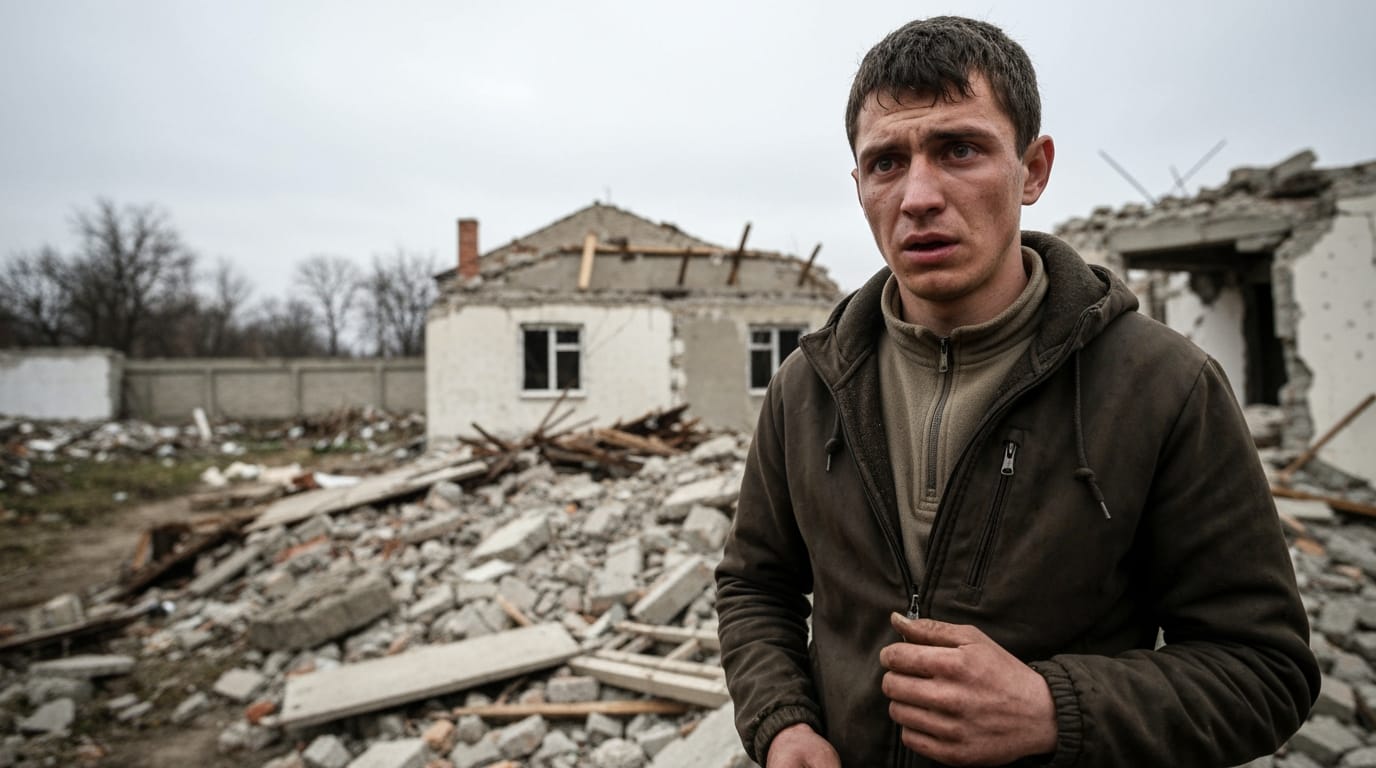
February 24, 2026, marks four years since Russia launched its full-scale invasion of Ukraine, a conflict that was widely anticipated to be brief but has instead evolved into a protracted and devastating war. What Russian President Vladimir Putin reportedly envisioned as a swift "special military operation" to seize Kyiv within days has transformed into a grinding struggle, fundamentally altering the geopolitical landscape and exacting an immense human toll. As the conflict enters its fifth year, a stalemate persists across a 750-mile front line, with Ukrainian forces demonstrating remarkable resilience despite continuous Russian offensives and escalating infrastructure attacks.
A War of Miscalculation and Enduring Resistance
The invasion began on February 24, 2022, with Russian forces advancing from multiple directions, including a direct push toward the Ukrainian capital of Kyiv, intending to install a pro-Russian government. Putin's initial assessment that Ukraine would fall quickly proved to be a profound miscalculation, met instead by fierce and unexpected Ukrainian resistance. Ukrainian forces, though outnumbered, successfully thwarted the initial advance on Kyiv, forcing a Russian withdrawal from the capital region by April 2022.
Following these early setbacks, the conflict shifted focus to eastern and southern Ukraine, where Russia aimed to consolidate control over the Donbas region and establish a land bridge to Crimea, which it had illegally annexed in 2014. Key moments included Russia's capture of the Zaporizhzhia Nuclear Power Plant in March 2022 and the annexation of Donetsk, Luhansk, Zaporizhzhia, and Kherson regions in September 2022, moves widely condemned by the international community. Ukrainian counteroffensives in late 2022 recaptured significant territory, including Kherson city, demonstrating Ukraine's capability to reclaim occupied lands. However, a substantial Ukrainian counteroffensive launched in June 2023 failed to achieve its long-term goals by the end of that year. By January 2026, Russia occupied approximately 20% of Ukrainian territory, having made limited but notable gains of about 1% in 2025, exceeding its combined territorial advances in 2023 and 2024. Despite these gains, Russian forces often advance at an exceptionally slow pace, sometimes as little as 15 to 70 meters per day in prominent offensives.
The Staggering Human and Infrastructural Toll
Four years of war have inflicted a catastrophic human cost on Ukraine. More than 15,000 civilians have been killed and over 41,000 injured since February 2022, with the vast majority of casualties occurring in Ukrainian-controlled territories. The UN Human Rights Monitoring Mission in Ukraine (HRMMU) reported a significant worsening of civilian protection in 2025 and 2026, with higher numbers of killed and injured individuals compared to previous years. The conflict has also triggered Europe's largest refugee crisis since World War II; as many as 6 million people are internally displaced within Ukraine, and another 4 to 8 million have become refugees abroad, primarily women and children. An estimated 12.7 million people in Ukraine are in desperate need of humanitarian assistance.
Beyond the immediate human suffering, Russia has systematically targeted Ukraine's civilian infrastructure, particularly its energy grid. As of January 2026, Ukraine had lost over half of its pre-invasion electricity generation capacity, leaving only 11 GW against a winter peak need of 18 GW. These deliberate attacks have led to prolonged electricity disruptions, with many Ukrainians experiencing only 3-6 hours of power daily during the harsh winter of 2025-2026. Thousands have suffered without heating in freezing temperatures after attacks targeted district heating infrastructure. The direct damage to Ukraine's infrastructure now exceeds $195 billion, with the total cost for reconstruction and recovery estimated at nearly $588 billion over the next decade. Housing, transport, and energy sectors are the most severely impacted.
Global Repercussions and International Support
The full-scale invasion elicited widespread international condemnation, leading to an unprecedented wave of sanctions against Russia and substantial military and financial aid to Ukraine. The United States has provided approximately $175 billion in aid, while the European Union has contributed around $197 billion by December 2025. International organizations like the United Nations and NATO have vocally criticized Russia's actions. The invasion also prompted a significant shift in European security policy, with Finland and Sweden abandoning decades of neutrality to join NATO.
Despite ongoing diplomatic efforts, including US-brokered peace talks in Geneva and Abu Dhabi in early 2026, a resolution remains elusive. These negotiations have yet to yield significant breakthroughs, with critical issues like territorial concessions and security guarantees remaining unresolved. The war has underscored the growing influence of the United States in European security affairs, reinforcing NATO's role and leading to increased European dependence on Washington for defense.
Russia's Economy Under Strain, Ukraine's Resilience
While Western sanctions aimed to cripple the Russian economy, it initially proved more resilient than many anticipated, experiencing a "wartime boom" in 2023-2024 driven by military spending. However, signs of stagnation are becoming increasingly evident in 2026. Economic growth has slowed significantly, with estimates for 2025 and 2026 at around 0.6% to 0.8%, a stark contrast to previous years. Falling oil prices and tightening Western sanctions continue to squeeze Russia's revenues, leading to higher taxes for ordinary citizens and increased military spending that drains other sectors. Russia has also suffered significant military losses, with independent Russian sources verifying over 186,000 combat deaths by February 2026, and overall casualties for Russian forces estimated at nearly 1.2 million since the invasion began. Ukraine, in turn, has intensified its drone attacks on Russian energy infrastructure and military sites, causing substantial damage.
Despite the relentless aggression, Ukrainians continue to display extraordinary resilience. Cities like Kyiv, once deserted, now bustle with activity, a testament to the country's spirit of defiance. Efforts are also underway to lay the groundwork for long-term democratic recovery and postwar reconstruction, with Ukrainian leaders and practitioners focusing on governance, economic development, and local capacity building even under wartime conditions.
A Protracted Struggle with No Clear End
Four years into the full-scale invasion, the conflict in Ukraine remains a grueling and unpredictable struggle. Russia continues its war of attrition, showing no indication of compromising on its stated goal of occupying all of Ukraine unless defeated on the battlefield. The human cost, infrastructural damage, and geopolitical ripple effects continue to mount. While Ukraine is exhausted by the relentless conflict, its spirit remains unbroken, buoyed by international support and an unwavering determination to defend its sovereignty. The path to a lasting peace remains fraught with challenges, emphasizing the urgent need for sustained international solidarity and effective diplomatic solutions to bring an end to this devastating war.


