Renault Accelerates Restructuring with Engineer Job Cuts Amid Fierce Chinese Competition
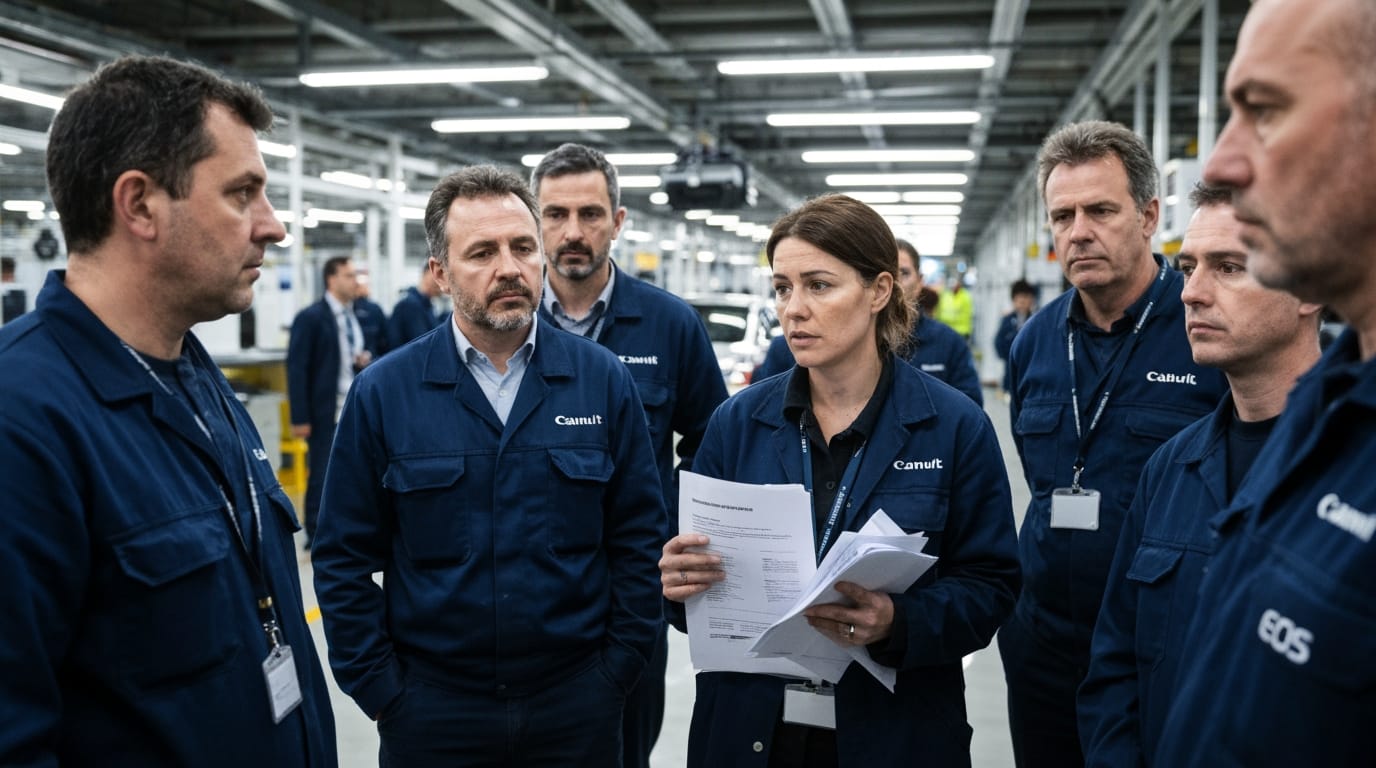
PARIS, France – French automotive giant Renault is embarking on a significant restructuring, announcing plans to reduce its global engineering workforce by 15% to 20% over the next two years. This strategic move, which could impact up to 2,400 engineering positions worldwide, underscores the intense pressure on European automakers to adapt to a rapidly evolving global market dominated by aggressive competition, particularly from Chinese manufacturers. The job reductions are part of a broader cost-saving and efficiency drive aimed at enhancing the company's agility and resilience in a landscape reshaped by electric vehicle (EV) innovation and competitive pricing.
The Scale of the Cuts and Strategic Rationale
Renault's decision to trim its engineering ranks comes as the company seeks to streamline operations and accelerate its shift towards electric vehicles and software-defined technologies. With approximately 12,000 engineering posts globally, the planned 15% to 20% reduction translates into a substantial workforce adjustment, projected to be achieved through voluntary redundancies and non-renewal of contracts, thus avoiding forced layoffs. While fundamental design and new technology development will remain centered in France, engineering centers in key international markets such as Brazil, India, Morocco, Romania, South Korea, Spain, and Turkey are also expected to see reductions.
This engineering workforce adjustment is not an isolated measure. It complements a larger cost-saving initiative dubbed "Arrow," which also targets approximately 3,000 global positions in support functions like finance, marketing, and human resources through voluntary departures. Additionally, in March 2025, Renault confirmed 300 job cuts at its Sandouville van factory due to declining demand in the commercial vehicle sector. Renault officials emphasize that these moves are critical for the company to remain competitive by speeding up development cycles and reducing overall costs, particularly in the burgeoning EV segment, where Chinese manufacturers have set new benchmarks for efficiency.
The Unrelenting Tide of Chinese EV Dominance
The backdrop to Renault's restructuring is the seismic shift occurring in the global automotive industry, driven largely by the formidable rise of Chinese carmakers. These manufacturers are rapidly expanding their footprint in Europe, offering highly competitive vehicles that combine advanced technology with significantly lower price points. Brands such as BYD, Nio, XPENG, and MG are gaining considerable market share, challenging traditional European incumbents.
Chinese automakers benefit from substantial cost advantages, estimated to be up to 30%, stemming from highly efficient manufacturing processes and significant government subsidies that have fostered a robust EV ecosystem. This allows them to offer well-equipped cars at prices many European brands struggle to match. Their agility in developing new models is also a key competitive edge, with Chinese firms often bringing vehicles to market in significantly shorter timeframes than their European counterparts. Recent data indicates that Chinese-made EVs are projected to account for over 25% of EV sales in Europe in 2024, a notable increase from 19.5% in 2023. Chinese brands alone could command 11% of the European EV market this year, with potential growth to 20% by 2027.
Despite the European Union imposing tariffs of 17% to 35.3% (on top of a standard 10% import duty) on Chinese EVs to counteract alleged state aid, these vehicles often remain attractively priced. In a strategic response, some Chinese manufacturers are beginning to establish production facilities within Europe, effectively circumventing these tariffs and further intensifying competition.
Renault's Strategic Counter-Offensive: Ampere and futuREady
In response to this intensifying competitive landscape, Renault has articulated a multi-pronged strategy, central to which is its dedicated electric vehicle and software subsidiary, Ampere. Launched in November 2023, Ampere is positioned as Europe's first specialist in intelligent electric vehicles, tasked with designing, developing, manufacturing, and marketing affordable EVs with cutting-edge technologies under the Renault brand.
Ampere's ambitious targets include selling one million EVs by 2031, with a strong focus on the B- and C-segments of the market. A cornerstone of its strategy is aggressive cost reduction: Ampere aims to slash battery costs by 20% by early 2026 and achieve a 40% reduction in variable costs for C-segment EVs by 2027 or 2028. This is being achieved through the adoption of Lithium Iron Phosphate (LFP) battery technology alongside Nickel Cobalt Manganese (NCM) cells, and pioneering Cell-to-Pack solutions to boost energy density and lower costs. Collaborations with battery suppliers like LG Energy Solution and CATL are crucial to establishing a robust European supply chain.
Renault is also acutely focused on accelerating its development cycles, aiming to match the agility of its Chinese rivals. For instance, the electric Twingo subcompact was developed in just two years, half the typical timeframe, through collaboration with Chinese partners. The company's "futuREady" plan emphasizes closing technology and cost gaps, capitalizing on lifecycle advantages, and expanding in markets where Renault has industrial depth. New CEO Francois Provost is spearheading this transformation, with a clear mandate to enhance profit margins and strategically navigate the evolving market dynamics.
Beyond technological advancements, Renault's strategy involves differentiating its products through superior design, quality, and fostering an emotional connection with consumers, rather than engaging solely in price wars. The company is also advocating for a more cohesive European industrial strategy to counter the impact of unfairly subsidized foreign imports and is open to partnerships with other European automakers, such as Volkswagen, to share EV platforms and achieve economies of scale.
Broader Implications for the European Automotive Sector
Renault's proactive measures reflect a wider reckoning within the European automotive industry. The influx of Chinese EVs, with their competitive pricing and rapid technological advancements, poses an existential challenge to legacy manufacturers. The European market, historically dominated by domestic brands, is now a crucial battleground where the future of mobility is being decided. Industry experts warn that without strategic adjustments, millions of European auto jobs could be at risk, and the continent's industrial self-sufficiency could be undermined.
The transition to EVs is not merely a technological shift but a profound economic and industrial transformation. European automakers face the daunting task of investing heavily in new technologies, retooling factories, and retraining their workforce while simultaneously competing with rivals who often operate with different cost structures and development philosophies. The outcome will depend not only on the individual strategies of companies like Renault but also on broader European policy responses aimed at fostering a competitive and sustainable domestic automotive industry.
Conclusion
Renault's decision to cut engineering jobs is a stark indicator of the profound competitive pressures confronting the European automotive industry. These measures, driven by the need for greater efficiency and accelerated innovation, are a direct response to the disruptive force of Chinese carmakers and their rapid ascent in the global EV market. While challenging for the workforce, the restructuring is intertwined with Renault's ambitious "futuREady" strategy and the development of its Ampere unit, signaling a determined effort to reposition itself as a lean, agile, and technologically advanced player in the electric age. The coming years will reveal whether these bold strategic adjustments, coupled with a renewed focus on cost efficiency and technological prowess, will enable Renault and its European counterparts to effectively navigate the intense competition and secure their place in the future of global automotive manufacturing.


