India Confirms Landmark BrahMos Missile Deal with Vietnam, Reshaping Regional Security Dynamics
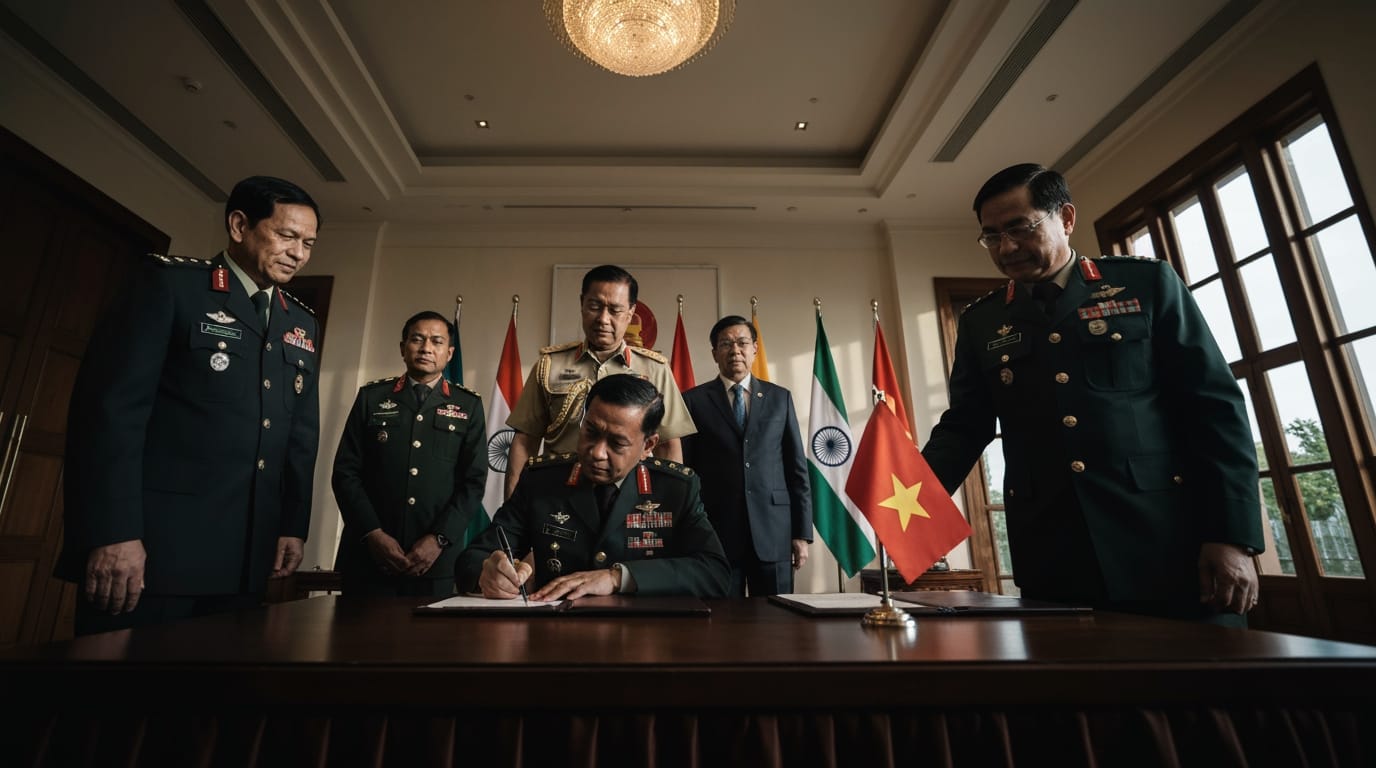
Singapore – India has officially confirmed a significant agreement to supply BrahMos supersonic cruise missiles to Vietnam, a move poised to bolster Hanoi's coastal defense capabilities and mark a pivotal moment in New Delhi's emergence as a key global defense exporter. The confirmation, made by India's Defence Secretary Rajesh Kumar Singh at the Shangri-La Dialogue on May 30, 2026, publicly acknowledges a deal reportedly signed last fiscal year, underscoring the growing strategic convergence between the two Indo-Pacific nations amidst evolving regional geopolitical landscapes. This landmark transfer signals an deepening of the "Enhanced Comprehensive Strategic Partnership" between India and Vietnam, with potential ramifications for stability and power dynamics in Southeast Asia, particularly in the contested South China Sea.
A New Chapter in Defense Cooperation
The BrahMos missile deal represents a substantial enhancement of Vietnam's military modernization efforts. While details such as the precise number of missiles and the exact signing date were not publicly disclosed, sources indicate the agreement for the 390-km range BrahMos missile system is intended for coastal defense. Previous reports suggest the deal could be valued at approximately 60 billion Indian rupees, or about USD 629 million, encompassing not only the missile systems but also crucial training and logistical support. The BrahMos, a joint venture between India and Russia, is renowned as one of the world's fastest supersonic cruise missiles, capable of reaching speeds of Mach 2.0-2.8, with some variants achieving up to Mach 3. Its "Fire and Forget" principle, stealth technology, and capacity to carry a 200-300 kg warhead make it a formidable weapon system for both anti-ship and land-attack operations. The agreement follows the Philippines' acquisition of the BrahMos system in 2022, marking it as the first foreign customer, and comes as Indonesia also nears a similar deal with India, further expanding India's defense footprint in Southeast Asia.
Vietnam's Strategic Imperative: Fortifying Maritime Defenses
For Vietnam, the acquisition of the BrahMos missile system is a crucial component of its ongoing military modernization, driven primarily by persistent tensions in the South China Sea. China's increasing assertiveness in the disputed waters has spurred Vietnam to significantly upgrade its defense capabilities. The BrahMos missiles are expected to bolster Vietnam's anti-access and area-denial (A2/AD) strategy, designed to deter potential adversaries from operating freely within its perceived maritime boundaries. The missile's supersonic speed and precision targeting capabilities make it extremely difficult to intercept, offering a credible deterrent. Vietnam's limited options for advanced supersonic anti-ship cruise missiles, combined with Russia's focus on the conflict in Ukraine and China's familiarity with Russian technologies, positioned the BrahMos as a uniquely viable choice. The new systems will complement Vietnam's existing coastal defense assets, such as Russian-origin Bastion-P missiles, introducing a more modern and rapid strike capability that expands Hanoi's layered maritime defense architecture. This strategic investment underscores Vietnam's commitment to protecting its sovereignty and national interests in a geopolitically sensitive region.
India's Ascending Role as a Defense Exporter
The BrahMos deal with Vietnam is a significant milestone for India's burgeoning defense manufacturing sector and its broader strategic goals. India has been actively pursuing an ambitious policy to transform from one of the world's largest arms importers into a prominent defense exporter. This initiative is a cornerstone of India's 'Act East' policy, aiming to deepen engagement with Southeast Asian nations and project its strategic influence across the Indo-Pacific. Defence Secretary Singh emphasized India's commitment to sharing advanced military technologies with trusted partners, particularly within ASEAN, viewing them as friendly foreign countries. India's defense exports have witnessed remarkable growth, increasing 34-fold over the past decade, reaching an all-time high of approximately USD 2.76 billion in FY 2024-25. The government has set an ambitious target of achieving US$5 billion in annual defense exports by 2025, further aiming for ₹50,000 crore (approximately US$5.2 billion) by 2029-30. These exports are increasingly seen as a strategic tool to enhance India's diplomatic influence and strengthen regional partnerships. The success of the BrahMos, which has also garnered interest from other nations in Asia, the Gulf, and South America, positions it as a flagship product in India's drive to establish itself as a major player in the global arms market.
Geopolitical Ripple Effects Across the Indo-Pacific
The BrahMos missile agreement carries substantial geopolitical weight, particularly in the context of the South China Sea. This sale creates a distributed network of supersonic coastal strike capabilities across Southeast Asia, which could significantly complicate the operational freedom of major naval forces in the region. By equipping Vietnam with advanced deterrence, India is indirectly influencing the strategic calculus in an area where China's maritime claims and activities are a persistent source of friction. The deepening defense ties between India and Vietnam are rooted in a shared apprehension of China's growing assertiveness. Their relationship has evolved significantly, culminating in an "Enhanced Comprehensive Strategic Partnership" in May 2026, which prioritizes maritime security and defense capacity building. This partnership includes regular high-level exchanges, defense dialogues, and capacity-building initiatives, fostering mutual trust and aligning their security interests. The BrahMos deal thus signifies not merely a commercial transaction but a strategic alignment that could contribute to a more balanced and stable regional security architecture in the Indo-Pacific.
The confirmation of the BrahMos missile deal between India and Vietnam marks a pivotal moment for both nations and the broader Indo-Pacific region. For Vietnam, it represents a significant upgrade to its defensive capabilities, crucial for safeguarding its sovereignty in the South China Sea. For India, it underscores its growing stature as a reliable defense exporter and a strategic partner, furthering its 'Act East' policy and aspirations for greater geopolitical influence. This agreement, following similar engagements with the Philippines and impending one with Indonesia, collectively establishes a layered maritime denial corridor in Southeast Asia. As India and Vietnam continue to deepen their comprehensive strategic partnership, this defense collaboration is poised to have lasting implications for regional security, fostering a more robust and resilient balance of power in one of the world's most critical maritime theaters.


