Fragile Ceasefire Takes Effect Between Israel and Lebanon Amid Wider Regional Tensions
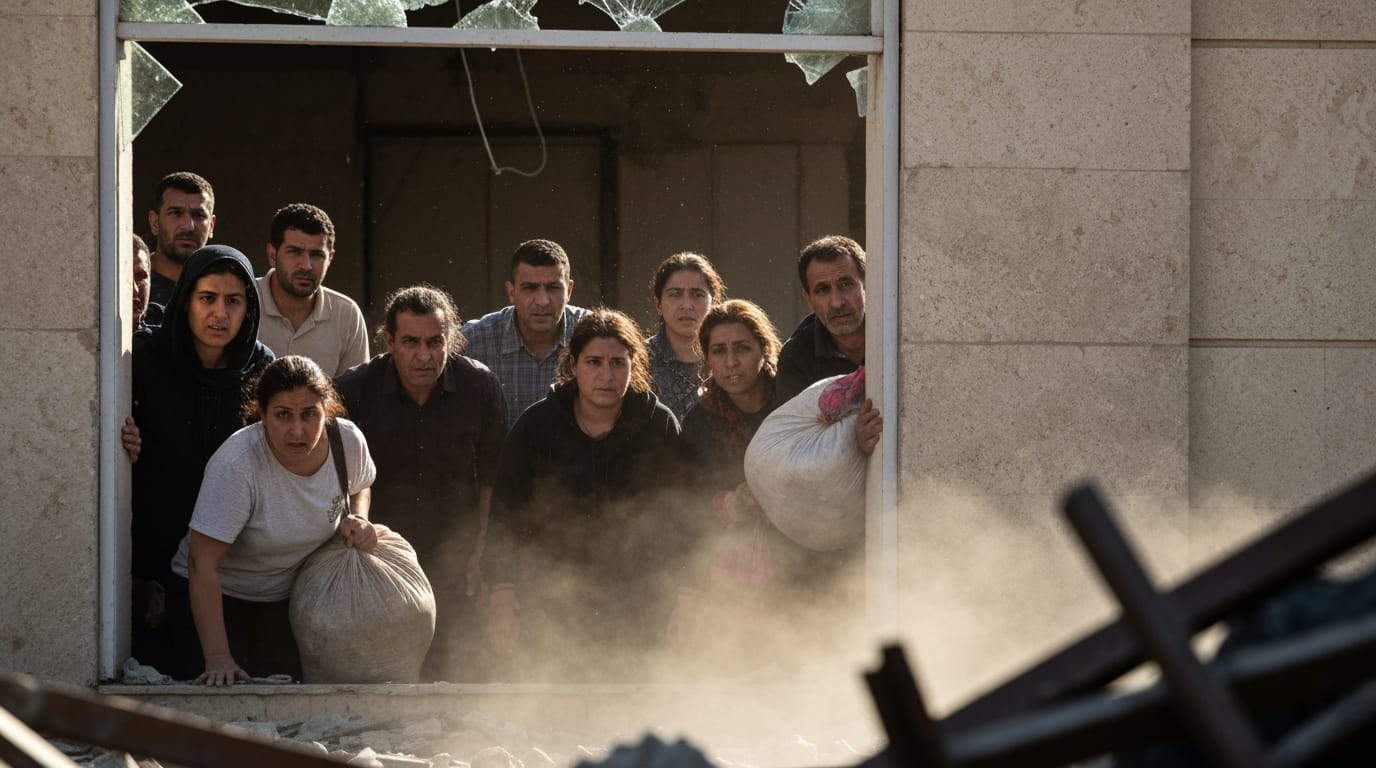
A precarious 10-day ceasefire between Israel and Lebanon officially took effect Thursday, April 16, 2026, halting weeks of intense cross-border hostilities that have claimed more than 2,000 lives and displaced over a million people in Lebanon. The truce, brokered and announced by U.S. President Donald Trump, aims to pave the way for direct negotiations toward a permanent security and peace agreement between the two historically adversarial nations. This significant diplomatic development unfolds against the backdrop of a broader "Iran war," with the cessation of hostilities in Lebanon seen as intrinsically linked to ongoing, high-stakes peace talks between the United States and Iran.
The Terms of a Temporary Truce
The cessation of hostilities commenced at 5 p.m. Eastern Standard Time (9 p.m. GMT) on April 16, marking a critical pause in a conflict that escalated dramatically since early March 2026. According to a statement released by the U.S. State Department, which was reportedly agreed upon by both Israel and Lebanon, the truce is intended as a "gesture of goodwill" to enable "good-faith negotiations." A key provision of the agreement stipulates that Lebanon will undertake "meaningful steps" to prevent Hezbollah and other non-state armed groups from launching attacks, operations, or hostile activities against Israeli targets from Lebanese territory.
However, the agreement explicitly states that Israel retains its "right to take all necessary measures in self-defense, at any time, against planned, imminent or ongoing attacks." Furthermore, Israeli Prime Minister Benjamin Netanyahu confirmed that Israeli forces would remain positioned in southern Lebanon, maintaining a "reinforced security buffer zone." This stance immediately drew a cautious response from Hezbollah, which warned Lebanese civilians to delay their return to southern areas and asserted the right of resistance if Israeli forces were to remain on Lebanese soil. The initial 10-day period of the ceasefire may be extended by mutual agreement, contingent on demonstrated progress in negotiations and Lebanon's effective assertion of its sovereignty over its territory.
A Wider Regional Chessboard
The conflict between Israel and Hezbollah, the Iran-backed Shiite militant group, is widely understood as a significant spillover of a larger regional confrontation, referred to in various reports as the "Iran war" involving the U.S. and Israel. Hezbollah initiated missile and drone attacks against Israel on March 2, 2026, following what it described as a response to the "US-Israeli war with Iran." This came after previous, fragile ceasefires in late 2023 and November 2024 had failed to hold, with UN peacekeepers recording thousands of violations, primarily by Israeli forces. The current 10-day truce in Lebanon is intimately connected to broader diplomatic efforts by Washington to secure a peace agreement with Tehran. Iran had reportedly insisted on the inclusion of a Lebanese ceasefire as a condition for any wider agreement to end the war, a claim initially rejected by the U.S. and Israel, but one that appears to have factored into the current arrangement.
The recent escalation saw Israeli ground operations commence in southern Lebanon on March 16, 2026, with objectives including establishing a buffer zone and pushing Hezbollah away from the border. Israeli officials, including Prime Minister Netanyahu, have consistently demanded the disarmament of Hezbollah as a precondition for any lasting peace deal. The Lebanese government, under President Joseph Aoun and Prime Minister Nawaf Salam, has faced internal divisions over engaging with Israel, particularly from Hezbollah itself, which condemned direct talks. Despite these challenges, the Lebanese government welcomed the ceasefire and called for its strict observance.
Devastating Humanitarian Toll
The six-week conflict preceding the ceasefire has exacted a catastrophic toll on Lebanon, plunging the nation into a rapidly deepening humanitarian crisis. More than 2,000 people have been killed, and a staggering 1.2 million Lebanese, roughly 20% of the country's population, have been internally displaced. The scale of displacement has been described as faster than during previous escalations.
Infrastructure across southern Lebanon has suffered immense damage, with official Lebanese government estimates indicating that approximately 37,000 housing units have been completely or partially destroyed, 70% of which are concentrated in the south. Hospitals and medical facilities, already strained by years of economic crisis, have struggled to cope with the influx of casualties, and aid workers have faced significant risks. UN experts have condemned Israel's actions, particularly intense bombing campaigns in early April that killed hundreds, calling for an immediate halt to hostilities, protection of civilians, and unimpeded humanitarian access. Concerns have also been raised by international bodies about Israel's creation of a "security zone" in southern Lebanon, which threatens to prevent the return of displaced civilians.
A Fragile Path Forward
The path to a lasting peace remains fraught with significant obstacles. The current ceasefire emerged from a "historic" Israeli-Lebanese meeting in Washington on April 14, 2026, the highest-level direct engagement between the two nations in decades, convened under the auspices of U.S. Secretary of State Marco Rubio. Following the ceasefire announcement, President Trump extended invitations to Lebanese President Joseph Aoun and Israeli Prime Minister Benjamin Netanyahu for further "meaningful talks" at the White House.
However, deep-seated disagreements persist. Israel's insistence on Hezbollah's disarmament remains a central demand, while Hezbollah continues to reject such calls as long as Israeli forces occupy Lebanese territory. The ability of the Lebanese government to assert its authority over Hezbollah and control its military activities is a critical question mark over the ceasefire's long-term viability. International actors, including Saudi Arabia, the Arab League, and Canada, have welcomed the ceasefire, urging all parties to adhere to its terms and engage constructively towards a more permanent solution. The coming days will be crucial in determining whether this temporary lull in hostilities can indeed lay the groundwork for a more stable and peaceful future for a region scarred by prolonged conflict.


