International Financial Institutions Re-Engage with Venezuela Amidst Political Shift
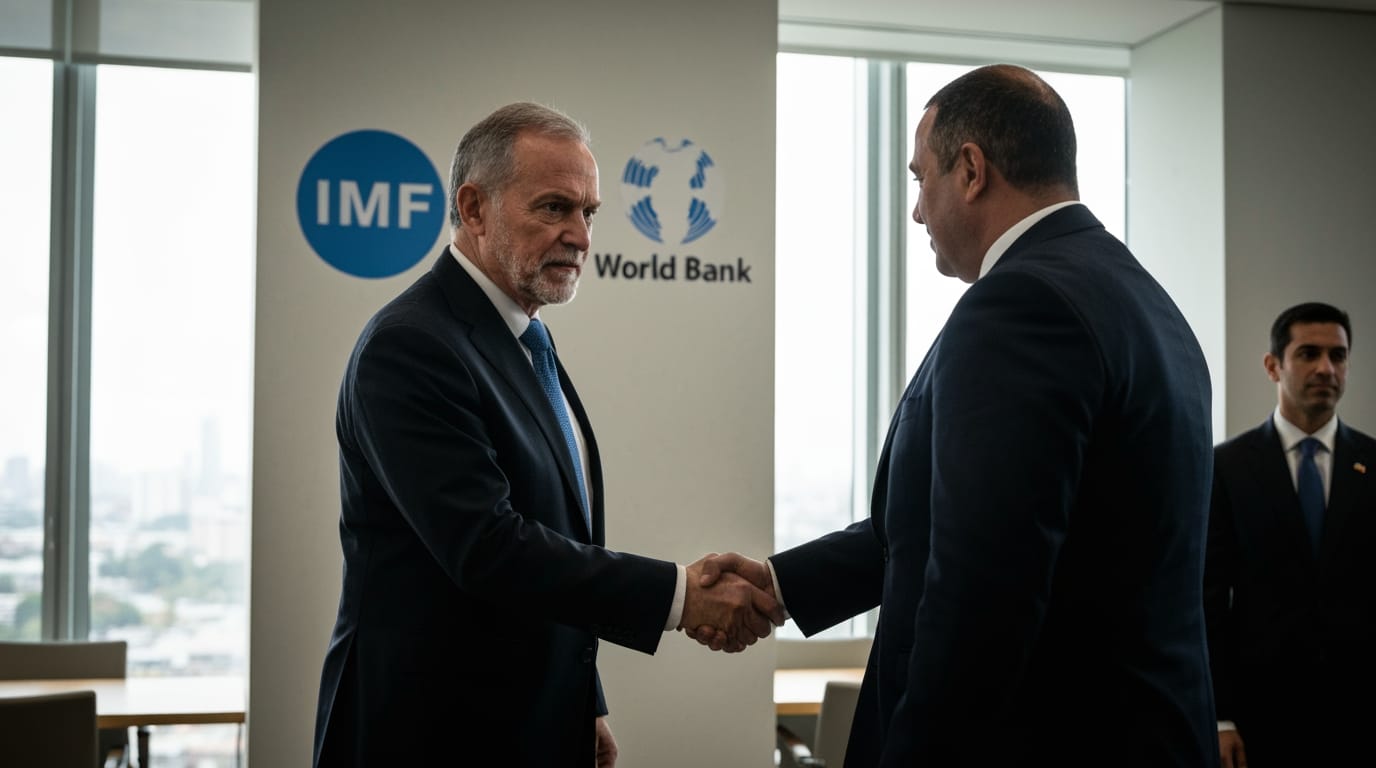
Washington D.C. – In a landmark development signaling a potential turning point for the beleaguered South American nation, the International Monetary Fund (IMF) and the World Bank have announced efforts to restore relations with Venezuela, further legitimizing its interim government and opening pathways to crucial financial support. This move comes after years of strained ties and a deepening economic crisis, offering a glimmer of hope for a country grappling with hyperinflation, currency depreciation, and widespread hardship.
The restoration of dialogue and the prospect of financial assistance mark a significant departure from the isolation Venezuela has experienced from these global financial bodies for over two decades. The developments follow a series of urgent high-level discussions and a major shift in Venezuela's political leadership, setting the stage for what many hope will be a comprehensive economic reconstruction effort.
A New Chapter: The Road to Re-Engagement
The formal announcement on Thursday from the IMF and World Bank confirmed their intention to re-establish ties with Venezuela. This decision directly acknowledges the interim government now in power, a critical prerequisite for international financial engagement. The groundwork for this rapprochement was laid earlier in the year, with extraordinary, unscheduled meetings convened by both institutions in January 2026 to assess Venezuela's dire economic conditions.
These pivotal meetings were closely followed by discussions between U.S. Treasury Secretary Scott Bessent and the heads of the IMF and World Bank. Secretary Bessent’s engagement underscored the United States' commitment to facilitating Venezuela's renewed access to international financial mechanisms. The U.S. has indicated a willingness to consider lifting additional sanctions on Venezuela to aid oil sales, a crucial revenue stream for the nation. Furthermore, there is a strong possibility that approximately $4.9 billion in Venezuelan assets, held as IMF Special Drawing Rights (SDRs), could be unfrozen to inject much-needed liquidity into the country's central bank. This financial maneuver requires resolving the complex international recognition status of Venezuelan authorities, a hurdle now seemingly cleared with the recognition of the interim government.
Adding to the momentum, the IMF initiated a survey of its member countries in April 2026, consulting on the feasibility of resuming relations. This internal consultation process is essential, as the IMF's regulations stipulate that formal contacts and access to financing are contingent upon a majority of member countries recognizing the governing authority. The positive outcome of this consultative process appears to have paved the way for the current restoration of relations.
Confronting an Economic Abyss
Venezuela's economy has been in freefall for years, and the crisis has only deepened. Recent data paints a grim picture, with the official dollar exchange rate reaching VES330.37 on January 13, representing a staggering 504% year-on-year depreciation. Economists have issued stark warnings about the risk of the country sliding back into hyperinflation, a devastating cycle that crippled the oil-rich nation between 2016 and 2019 and triggered a mass exodus of its population.
The local currency, the bolivar, has plunged by 20% on the black market since the recent political changes, pushing many Venezuelans to hoard U.S. dollars and avoid spending them, anticipating further devaluation. The IMF projects an alarming surge in yearly inflation, from an estimated 270% in 2025 to over 680% in 2026, highlighting the urgent need for external intervention. For context, Venezuela's central bank has not released official inflation figures since October 2024, further obscuring the true extent of the economic devastation.
Access to IMF programs offers a unique multilateral framework for Venezuela. This framework is vital for legitimizing deep debt restructuring and providing the necessary financing and technical assistance to implement critical economic reforms. The IMF's expertise in resolving complex debt situations and restoring macroeconomic stability will be instrumental in helping Venezuela navigate its current predicament.
A New Political Dawn
The re-engagement of the IMF and World Bank is intrinsically linked to a significant political shift within Venezuela. The change in the country's leadership, specifically the ousting of President Nicolas Maduro and the subsequent assumption of power by Vice President Delcy Rodríguez as the interim president, has been a pivotal factor. The international community's recognition of Rodríguez's interim government has been crucial in unblocking the institutional hurdles that previously prevented formal engagement with these global financial bodies.
Relations between Venezuela and multilateral lenders had deteriorated sharply from the 2000s, when then-President Hugo Chávez openly criticized the IMF and World Bank, even ordering the cancellation of Venezuela's debts to both institutions. Under Maduro’s administration, this isolation deepened, effectively cutting off Venezuela from vital international financial mechanisms. The recent political transition has created the necessary conditions for these institutions to reconsider their stance, providing a window for Venezuela to re-enter the global financial fold. The U.S. Treasury Department has expressed a strong willingness to convert Venezuela's SDR assets to dollars, specifically to support the country's reconstruction efforts, contingent upon the resolution of the Venezuelan authorities' international recognition status.
Historical Context and Future Hurdles
The current situation represents a drastic reversal from a period of profound estrangement. The IMF, for instance, has not conducted an economic assessment of Venezuela since late 2004, marking a 21-year gap in formal relations. This lengthy hiatus means that the capacity of Venezuela's government and central bank to implement necessary policies will need to be rigorously demonstrated, and statistical processes will likely require substantial rebuilding.
Despite the challenges, the path forward includes leveraging recent reforms within the IMF. The institution reformed its Lending into Official Arrears (LIOA) policy in April 2024, specifically to address coordination problems with large creditors in debt restructurings. This new mechanism could allow the IMF to lend to Venezuela even if official bilateral creditors initially resist restructuring, provided strong safeguards are in place. These safeguards include phased disbursements, program conditionality prohibiting preferential creditor payments, and quarterly reviews monitoring restructuring progress. Such a framework is critical for Venezuela, which desperately needs to attract foreign investment to revive its economy and oil production, and to do so, it must reduce its substantial debt service costs.
A Fragile Path to Recovery
The re-establishment of relations between the IMF, the World Bank, and Venezuela signifies a critical juncture for the crisis-stricken nation. While not a panacea, it provides a vital lifeline that could enable Venezuela to access much-needed financial aid, restructure its overwhelming debt, and begin the arduous process of economic stabilization and reconstruction. The unfreezing of assets, potential sanctions relief, and the technical expertise offered by these institutions are indispensable for a country teetering on the brink of economic collapse.
However, the road ahead remains fraught with challenges. The interim government will need to demonstrate strong capacity for economic governance, transparency, and the ability to implement difficult reforms. The success of this re-engagement will ultimately hinge on sustained political stability, diligent economic management, and continued international cooperation to steer Venezuela toward a more stable and prosperous future. This landmark development could mark the beginning of Venezuela's long journey back into the global economic community.


