France Expels Russian Media Commentator Amid Escalating Disinformation Battle
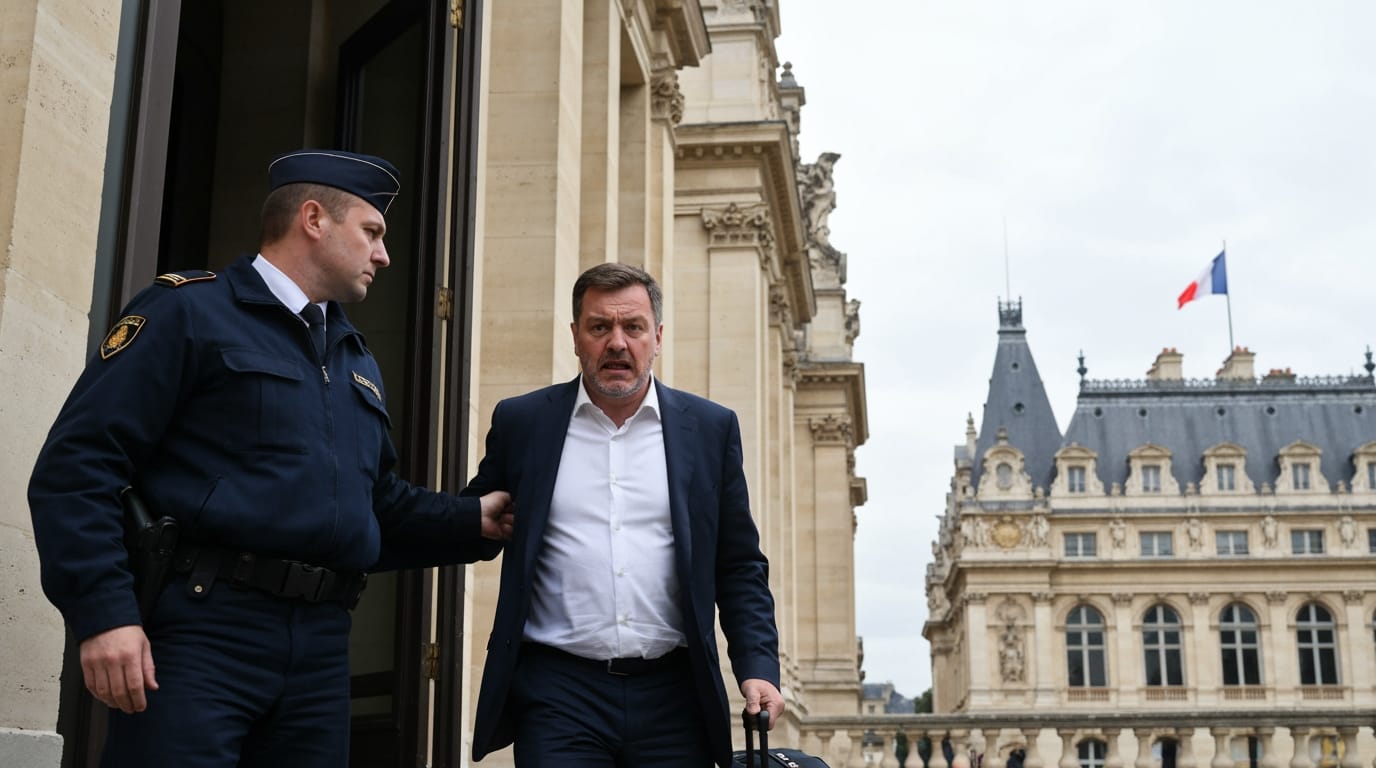
PARIS, France – In a significant escalation of France's battle against foreign interference, the French government on Wednesday ordered the expulsion of Russian media commentator Xenia Fedorova, accusing her of actively spreading Kremlin-orchestrated disinformation campaigns aimed at destabilizing public order ahead of the 2027 presidential election. The move, announced by the Interior Ministry, marks a definitive step by Paris to counter perceived threats to its democratic integrity, triggering immediate condemnation from Fedorova’s legal team who decried it as an attack on journalistic freedom.
The decision to expel Fedorova, a prominent voice on French conservative media outlets, highlights the growing tension between Western nations and Russia over the weaponization of information. French authorities assert that Fedorova's activities, including her regular appearances on television and radio, and her column in a national newspaper, have served as a conduit for narratives harmful to the state's fundamental interests.
The Accusation: A Conduit for Kremlin Propaganda
Xenia Fedorova, formerly the head of RT France until its shutdown in 2023 following Russia's full-scale invasion of Ukraine, has since remained a visible figure in French media. She has frequently appeared on the CNews television network and Europe 1 radio, and contributed to Le Journal du Dimanche, where French authorities allege she consistently promoted pro-Kremlin views on the conflict in Ukraine and broader Western affairs.
The expulsion order, cited by French newspaper Libération, explicitly accuses Fedorova of "acting as a conduit for disinformation campaigns orchestrated by the Russian authorities" with the clear objective of "destabilising public order" in France. Foreign Minister Jean-Noël Barrot previously described Fedorova in late May 2026 as an "outspoken propagandist" and a direct "conduit for Kremlin disinformation," further asserting that she promoted the Russian position regarding the war against Ukraine. French intelligence assessments reportedly link her to an "expansive Kremlin disinformation apparatus" and accuse her of orchestrating "sophisticated propaganda operations" through French networks. These actions, according to official documents, are deemed to "harm the fundamental interests of the state" and her continued presence is considered a "particularly serious and immediate threat to public order."
Fedorova's lawyer, Emmanuel Piwnica, swiftly announced plans to appeal the decision, vigorously defending his client's work as that of a "proper" journalist. Piwnica labeled the expulsion order a "serious infringement of the freedom of expression of a journalist who has always carried out her work in the most proper manner possible." Fedorova herself has consistently rejected such accusations, maintaining that her work constitutes legitimate journalism and critical analysis.
A Broader Battle Against Foreign Influence
This latest expulsion is not an isolated incident but rather the latest development in an ongoing, multi-faceted struggle between France and Russia over disinformation and perceived foreign interference. The concerns are particularly heightened as France prepares for its 2027 presidential election, an electoral cycle that disinformation experts warn could be a target for foreign influence operations.
The French government has been increasingly vigilant against what it perceives as Russian attempts to manipulate public opinion and sow discord. Following the 2022 invasion of Ukraine, France banned the operations of RT France in 2023, a move mirrored by broader EU sanctions against Russian state-controlled media. In February 2026, France's Audiovisual and Digital Communication Regulatory Authority (ARCOM) moved to block access to 35 websites of Russian media outlets and TV/radio stations, aligning with EU sanctions and efforts to combat Russian war propaganda. This proactive stance aligns with broader policies where the French government imposes strong internet content regulation on disinformation, particularly during political campaigns.
Past incidents have also underscored the depth of these concerns. In February 2025, France warned Russia of potential retaliation after Moscow revoked the press accreditation of Benjamin Quenelle, a correspondent for the French newspaper Le Monde, labeling it a "disguised expulsion." Russia justified this as a reciprocal measure, claiming France had refused visas to journalists from pro-Kremlin media, whom Paris accused of being "agents of Russian intelligence services." This diplomatic tit-for-tat highlighted the fragility of journalistic operations amidst geopolitical tensions.
Implications for Media Freedom and State Security
The expulsion of Xenia Fedorova reignites complex debates surrounding the balance between national security interests, the fight against disinformation, and fundamental principles of press freedom and freedom of expression. Critics of the French decision argue that such expulsions can be perceived as arbitrary and risk setting precedents that could be exploited by authoritarian regimes to silence legitimate journalism. The immediate appeal by Fedorova's lawyer underscores this tension, framing the government's action as an overreach that stifles critical commentary.
Conversely, French authorities and disinformation experts argue that the nature of state-sponsored disinformation goes beyond mere commentary; it is an active weaponized tool designed to destabilize societies and undermine democratic processes. The government's stance suggests that when media commentary crosses into systematic efforts to spread harmful propaganda, especially from a hostile state actor, it becomes a matter of national security rather than simple press freedom. This perspective emphasizes the need for sovereign nations to protect their information space and public discourse from coordinated foreign manipulation.
The decision also signals France's determination to reinforce its defenses against what it perceives as "cognitive warfare tactics" employed by Moscow. As democratic nations grapple with the pervasive nature of online disinformation and its potential to influence elections and public trust, the line between robust, critical journalism and hostile state propaganda becomes increasingly blurred and contested.
Conclusion: A Precarious Future for Information Sovereignty
The expulsion of Xenia Fedorova represents a critical moment in France's assertive policy to safeguard its information environment. It underscores a growing conviction among Western governments that addressing disinformation requires robust and sometimes controversial measures, even if they impinge upon traditional notions of press freedom. As France navigates a sensitive political period leading up to its presidential election, the government's actions reflect a hardening stance against perceived foreign interference.
While Fedorova's legal appeal will test the boundaries of this policy in the courts, the broader implications resonate across the international stage. The incident highlights the ongoing challenges of maintaining informational sovereignty in an interconnected world, where the flow of information can be weaponized. The French government's move signals a clear intent to draw a firmer line against what it deems state-sponsored propaganda, setting a precedent that will undoubtedly be watched closely by other nations facing similar threats. The global battle for truth and trust in the digital age continues, with national security and democratic resilience at its core.


