France on Edge as Macron Urges Calm Ahead of Rally for Slain Far-Right Activist
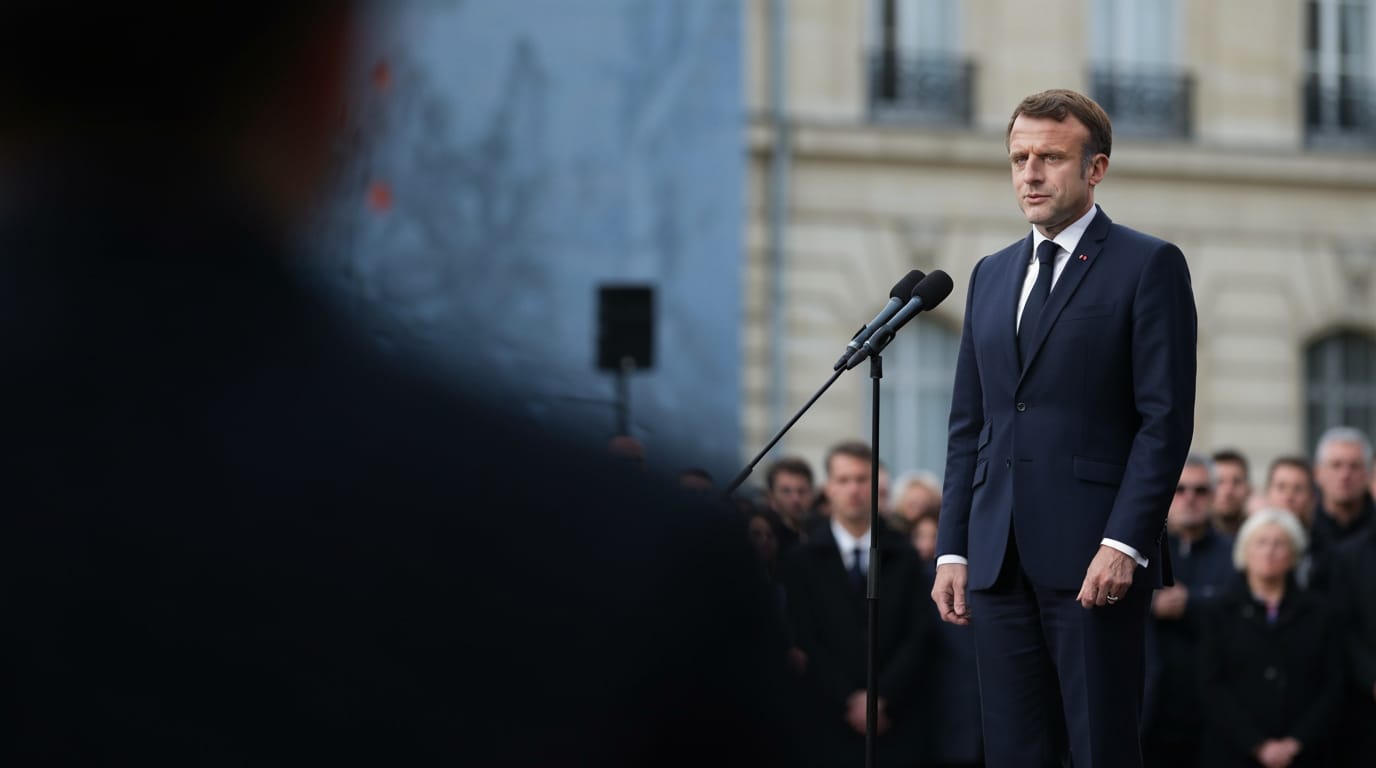
Paris, France – French President Emmanuel Macron has issued a fervent appeal for national calm, urging "cooler heads to prevail" as France grapples with escalating political tensions following the killing of a far-right activist. The death of 23-year-old Quentin Deranque in Lyon has ignited a fierce political blame game and brought societal divisions into sharp focus, particularly ahead of a planned memorial rally this Saturday that authorities anticipate will draw thousands. Macron’s call underscores the gravity of a situation threatening to further fracture the nation's deeply polarized political landscape as municipal elections loom and the 2027 presidential race draws closer.
A Fatal Confrontation Ignites National Debate
Quentin Deranque, a far-right activist and mathematics student, succumbed to severe head injuries on February 12, 2026, after a violent altercation in Lyon. The incident occurred on the periphery of a protest organized by far-right groups against a university conference that featured Rima Hassan, a prominent European Member of Parliament from the hard-left France Unbowed (LFI) party. Reports indicate Deranque was attacked by "at least six" masked and hooded individuals. He was reportedly present to provide security for members of the anti-immigration collective Nemesis, which was demonstrating at the event. The tragic death has prompted a murder investigation, with prosecutors seeking charges against seven suspects, primarily linked to far-left movements. Among those initially detained was an assistant to LFI lawmaker Raphael Arnault, who was subsequently dismissed from his position. Witnesses described a "pitched battle" involving individuals using iron bars, highlighting the brutal nature of the clash.
Macron's Plea for Unity Amidst Rising Divisions
President Macron, speaking from a farming trade fair in Paris, emphasized that "in the Republic, no violence is legitimate" and unequivocally stated that "there is no place for militias, no matter where they come from." His remarks highlight a deep concern within the government about the proliferation of violent factions across the political spectrum. Macron also announced that his administration would convene a meeting to address "violent action groups," signaling a proactive stance against political extremism. The president's call for unity and restraint comes as the upcoming rally for Deranque in Lyon is expected to draw between 2,000 and 3,000 attendees, prompting authorities to implement high security measures. Despite a request from Lyon's left-wing green mayor to ban the gathering, it will proceed as planned, raising fears of potential counter-protests and further clashes.
The Deepening Chasm: France's Polarized Political Climate
The killing of Quentin Deranque serves as a stark symptom of France's increasingly volatile political environment. The incident has exacerbated an already tense relationship between the nation's far-right and hard-left factions, a dynamic that is heavily influencing the political discourse leading up to the municipal elections in March and the crucial 2027 presidential election. Government spokeswoman Maud Bregeon has publicly attributed some moral responsibility for the climate of violence to the rhetoric of the hard-left France Unbowed (LFI) party. Conversely, leaders of the far-right National Rally (RN), including Marine Le Pen, have seized upon the incident, condemning the "barbarians responsible" and using it to galvanize their base. The RN, which has seen a significant surge in popularity, is widely seen as having its most favorable prospects yet for securing the presidency in 2027.
This cycle of mutual recrimination is not new. President Macron has consistently warned against the dangers posed by both the far-right and hard-left, arguing that their divisive policies risk pushing the country towards "civil war." His past statements underscore a long-standing concern about political extremism eroding national cohesion. The current climate of discontent, fueled by economic anxieties, immigration debates, and anti-establishment sentiments, has provided fertile ground for the growth of populist movements on both ends of the political spectrum.
International Repercussions and Calls for Responsibility
The fallout from Deranque's death has not been confined to France's borders. Italian Prime Minister Giorgia Meloni described the killing as "a wound for all of Europe," a statement that prompted a swift rebuke from President Macron. Macron urged Meloni to "stay in their own lane," signaling France's sensitivity to external commentary on its internal affairs and underscoring the incident's potential to strain international relations.
Within France, the incident has intensified calls for political accountability. The LFI party, facing accusations of inciting violence, experienced a bomb threat and evacuation of its Paris headquarters, illustrating the immediate and dangerous repercussions of the heightened political rhetoric. While LFI leader Jean-Luc Mélenchon condemned "all political violence" and acknowledged the attackers "dishonored" themselves, the party remains under scrutiny. Meanwhile, the far-right continues to portray itself as a victim of political violence, a narrative that resonates with a segment of the electorate.
Looking Ahead: A Nation at a Crossroads
As France prepares for the rally in Lyon, the nation stands at a critical juncture. President Macron's appeals for calm reflect a broader apprehension about the trajectory of French society. His government's commitment to addressing "violent action groups" signifies an attempt to curb the rising tide of extremism and protect democratic institutions. However, the deep ideological rifts, inflamed by incidents like Deranque's killing, present a formidable challenge. The political landscape remains fragmented, with strong populist currents on both the left and right vying for influence. The upcoming municipal elections and the anticipated 2027 presidential race will undoubtedly serve as further battlegrounds for these ideological conflicts, testing France's resilience and its commitment to republican values of unity and mutual respect. The path forward demands a concerted effort from all political actors to de-escalate tensions and foster a climate where democratic debate can flourish without resorting to violence.


