Ukraine Extends Reach with Deep Strike on Key Russian Missile Production Facility
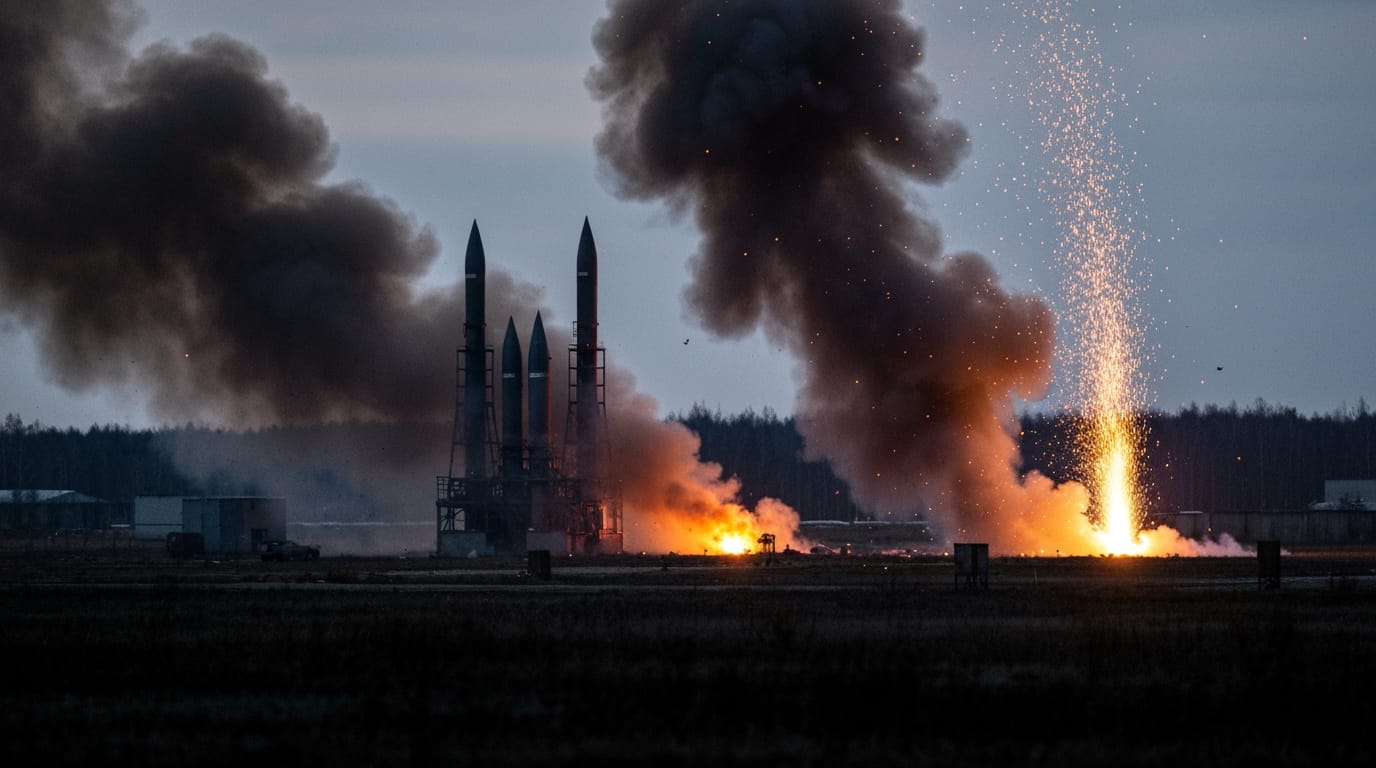
KYIV, Ukraine – Ukraine launched a significant long-range strike deep into Russian territory overnight on February 21, targeting the Votkinsk Machine Building Plant in the Udmurt Republic, a critical hub for Moscow's ballistic missile production. The audacious operation, employing domestically developed long-range Flamingo cruise missiles, marks a notable escalation in Ukraine's deep-strike capabilities and aims to disrupt Russia's ongoing missile campaign against Ukrainian cities and infrastructure. Explosions and a large fire were reported at the facility, located approximately 1,300 to 1,500 kilometers (over 800 miles) from the Ukrainian border, resulting in multiple casualties and significant damage to key production workshops.
Precision Strike Hits Strategic Target
The assault occurred shortly before midnight local time, with residents reporting multiple detonations and visible flames engulfing parts of the industrial complex. Russian authorities in Udmurtia initially downplayed the incident, but Governor Alexander Brechalov later acknowledged that a facility in the region had sustained "damage and casualties" from a Ukrainian strike. Independent Russian Telegram channels and OSINT (Open-Source Intelligence) analysts, including CyberBoroshno, identified the target as the Votkinsk Machine Building Plant, citing geolocated imagery and video evidence. These reports further indicated that production workshops No. 22 and No. 36 were among those hit. The attack also led to the suspension of operations at several airports in the region, including in Izhevsk, the capital of Udmurtia, due to a reported drone threat.
Medical officials confirmed that 11 individuals were injured in the strike, with three requiring hospitalization. One person was reported in serious condition and had to be airlifted for surgery, while two others sustained moderate injuries. Eight additional individuals received examinations and were released. Ukrainian military officials, specifically Ukraine's Armed Forces General Staff, confirmed their involvement, stating that the Votkinsk Plant was struck by long-range Flamingo missiles. This confirmation underscores Ukraine's growing capacity to project power far beyond the front lines, targeting Russia's defense-industrial infrastructure in its rear areas.
Disrupting Russia's Missile Arsenal
The Votkinsk Machine Building Plant is a cornerstone of Russia's military-industrial complex, playing a pivotal role in the production of some of its most formidable missile systems. The facility is known for manufacturing Iskander short-range ballistic missiles, which Russia has frequently used in attacks against Ukraine. More critically, it is also a key producer of strategic intercontinental ballistic missiles (ICBMs), including the Yars, Topol-M, and the suspected new Oreshnik ICBM, which are capable of carrying nuclear warheads. The plant also contributes to the production of RSM-56 Bulava submarine-launched ballistic missiles and other equipment for the oil and gas and nuclear industries.
The plant's location, historically considered safe due to its extreme distance from the Ukrainian border, highlights the evolution of Ukraine's long-range strike capabilities. By targeting such a vital production facility, Ukraine aims to directly impact Russia's ability to replenish its missile inventories, which have been heavily utilized throughout the ongoing conflict. Disruptions to manufacturing infrastructure at Votkinsk could affect maintenance cycles, delivery timelines, and the overall rate at which Russia can conduct its long-range missile strikes.
The Emergence of Ukraine's Deep-Strike Arsenal
The use of "Flamingo missiles" marks a significant development in Ukraine's indigenous defense industry. These long-range cruise missiles are reported to possess a range of up to 3,000 kilometers (approximately 1,864 miles) and carry a substantial warhead weighing around 1,150 kilograms. While some initial reports from Russian sources suggested the use of drones, Ukraine's General Staff explicitly confirmed the Flamingo missile system as the weapon deployed.
This strike is not an isolated incident but rather part of Ukraine's evolving strategy to target Russia's military-industrial base and logistics deep within its territory. Previous incidents have seen Ukrainian long-range systems targeting various Russian military and industrial sites, demonstrating a persistent effort to impose economic and operational costs on the aggressor. The development and deployment of weapons like the Flamingo missile underscore Ukraine's commitment to developing its own advanced military technology to counter Russia's ongoing aggression and compensate for limitations in external military aid.
Implications for the Broader Conflict
The successful strike on the Votkinsk plant carries significant implications for the trajectory of the conflict. For Ukraine, it represents a tangible demonstration of its ability to strike high-value, strategically important targets deep within Russia, thereby increasing pressure on Moscow's war economy and military planning. It also serves as a morale booster for Ukrainian forces and population, showing that Ukraine can project power and retaliate against the sources of Russian aggression.
For Russia, the attack highlights vulnerabilities in its deeply situated strategic assets and presents a challenge to its narrative of invulnerability within its own borders. While Russia's military-industrial complex has significantly ramped up production since the invasion, it still faces challenges, including reliance on third-party suppliers and the impact of international sanctions. A direct hit on a facility producing critical ballistic missiles could necessitate a reassessment of defensive measures for other strategic sites and potentially strain Russia's capacity to maintain its missile production rates, which are crucial for sustaining its assault on Ukraine. The incident underscores the dynamic and evolving nature of the conflict, where both sides continuously seek to develop and deploy new capabilities to gain an advantage.
Conclusion
The Ukrainian strike on the Votkinsk Machine Building Plant marks a pivotal moment in the ongoing conflict, showcasing Kyiv's enhanced capabilities to reach and damage vital military production facilities deep inside Russia. By targeting a plant essential for manufacturing both tactical and strategic ballistic missiles, Ukraine aims to degrade Russia's ability to sustain its aerial assaults. This precision attack, carried out by indigenously developed Flamingo cruise missiles, underscores the strategic shift in Ukraine's defense posture, emphasizing long-range strikes as a critical component of its resistance. The incident will likely force Russia to re-evaluate its internal defenses and potentially disrupt its missile production timelines, adding another layer of complexity to a conflict already defined by innovation and adaptation.


