Galápagos Witnesses Historic Return: Giant Tortoises Reclaim Floreana Island After Centuries
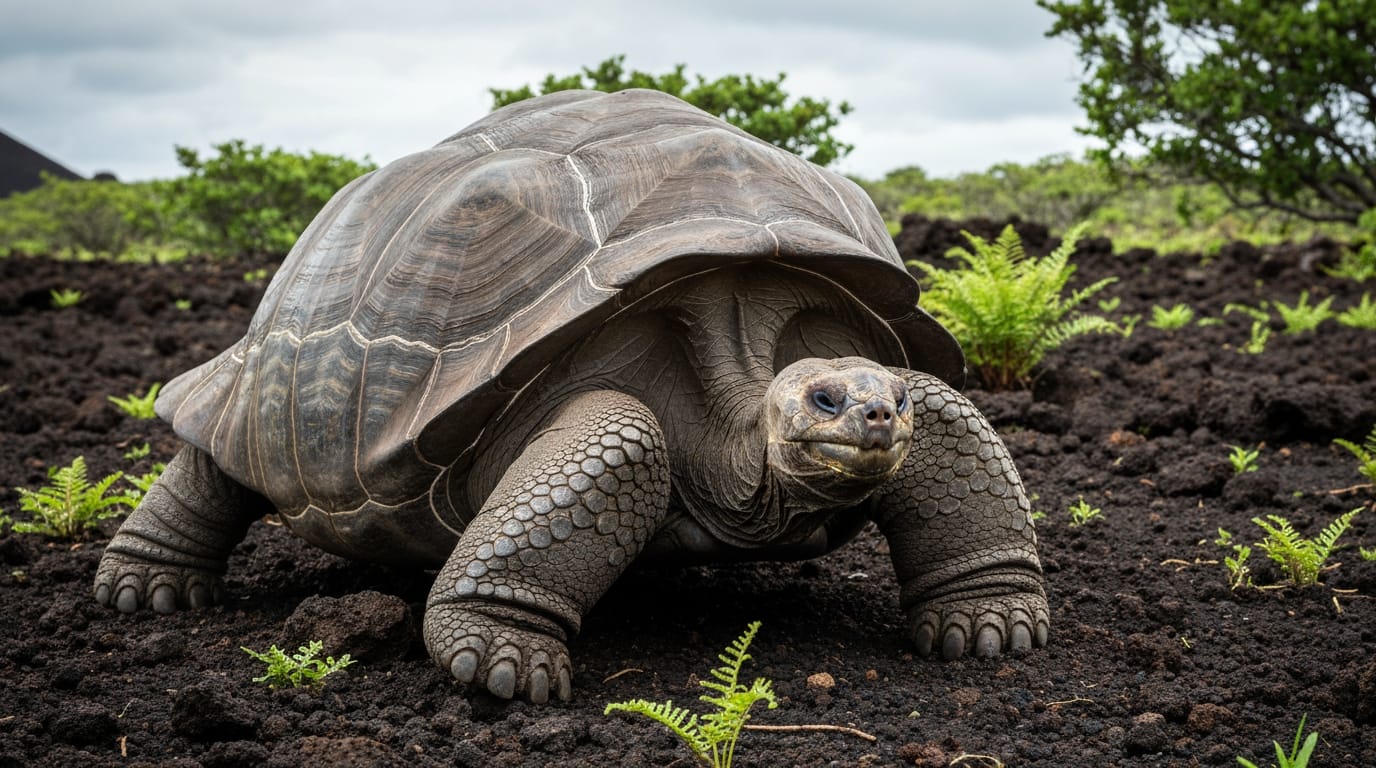
FLOREANA ISLAND, GALÁPAGOS – In a monumental triumph for global conservation, 158 juvenile giant tortoises have been reintroduced to Floreana Island, marking the return of these iconic "ecosystem engineers" to their ancestral home after an absence of nearly two centuries. The February 20, 2026, release signifies a critical milestone in one of the world's most ambitious ecological restoration projects, aiming to reverse the historical extinction of the Floreana giant tortoise subspecies (Chelonoidis niger niger) and rejuvenate the island's unique ecosystem.
A Historic Homecoming for Floreana's Giants
The reintroduction saw 158 juvenile giant tortoises carefully transported and released across Floreana Island by park rangers and conservation teams. This species, locally known as Chelonoidis niger niger, was driven to extinction on Floreana by the mid-1800s, primarily due to intense exploitation by whalers and settlers who used them as a food source, alongside the destructive impact of introduced invasive species. Their return ends an almost 180-year hiatus, symbolizing a significant step forward in restoring the natural balance of this remote Pacific archipelago. Each of the released tortoises, aged between 10 and 13 years, underwent extensive quarantine and was microchipped for identification and ongoing monitoring, with sexual maturity anticipated around 25 years of age.
From the Brink: A Breeding Program's Success
The path to this reintroduction began with a remarkable scientific discovery. In 2008, researchers identified a relic population of giant tortoises living on Wolf Volcano on Isabela Island that carried genetic traces of the long-lost Floreana subspecies. DNA analysis, comparing samples from the Isabela tortoises with bones of extinct Floreana tortoises found in island caves and museum collections, confirmed the genetic link. This breakthrough paved the way for a specialized "back breeding" program, initiated in 2017. Twenty-three hybrid tortoises most closely related to the original Floreana subspecies were selected, with the goal of genetically reconstituting a population as close as possible to the extinct native form. By 2025, the program had successfully produced over 600 hatchlings, with approximately 300 reaching a suitable size for release into the wild. This intensive breeding effort, a collaboration between the Galápagos National Park Directorate and numerous conservation organizations, provided the new generation for Floreana.
Architects of the Ecosystem: The Indispensable Role of Tortoises
Giant tortoises are recognized as "ecosystem engineers" due to their profound impact on the landscapes they inhabit. By grazing on vegetation, dispersing seeds through their movements and droppings, and creating pathways, they play a crucial role in shaping plant communities and fostering biodiversity. Their absence on Floreana for so many decades led to significant ecological degradation, including unchecked growth of dense woody vegetation that altered habitats.
The reintroduction effort on Floreana was strategically preceded by an extensive invasive species eradication program, launched in 2023, targeting rats and feral cats. These introduced predators were a primary cause of the native tortoises' decline by preying on eggs and hatchlings. The success of this eradication has already yielded positive results for other native species, including the unexpected rediscovery of the Galápagos rail, a small ground bird not recorded since Charles Darwin's visit, and resurgent populations of ground finches, geckos, and native snails. The returning tortoises are expected to further catalyze this ecological recovery, reopening vital corridors and restoring natural processes.
A Blueprint for Rewilding: Long-Term Vision and Global Implications
The return of the Floreana giant tortoise is a cornerstone of the larger Floreana Ecological Restoration Project, an ambitious initiative designed to reintroduce 12 locally extinct species to the island. This long-term commitment involves ongoing monitoring of the tortoises' health and adaptation, with dedicated teams ensuring their successful integration into the rewilded landscape. Conservation organizations, including Island Conservation, Galápagos Conservancy, and the Charles Darwin Foundation, are working in partnership with the Galápagos National Park Directorate and even utilizing NASA satellite data to assess habitat suitability and guide these complex reintroduction efforts.
This project draws inspiration from past successes, such as the recovery of the Española giant tortoise (Chelonoidis hoodensis). Reduced to just 15 individuals in the 1960s, a dedicated breeding program raised their population to over 1,000, allowing for the cessation of the captive breeding program in 2020. The lessons learned from Española provide a robust model for Floreana's future. The reintroduction on Floreana represents not only a local victory for the Galápagos but also a powerful testament to the potential for human intervention to mend damaged ecosystems and bring species back from the very edge of oblivion, offering a blueprint for rewilding efforts across the globe.
Conclusion
The release of giant tortoises onto Floreana Island marks a profound moment in conservation history, embodying decades of scientific endeavor, dedicated partnerships, and unwavering hope. This bold step towards ecological restoration in the Galápagos not only offers a second chance for a unique species but also underscores the vital role these ancient reptiles play in maintaining the health and biodiversity of their island homes. The long-term success of this initiative will serve as an enduring symbol of resilience and a powerful reminder of humanity's capacity to heal the natural world.